The adventures and various works of a photographer, road tripper, former patron of the local arts, aspiring app developer, and late night coffee drinker and conversationalist.
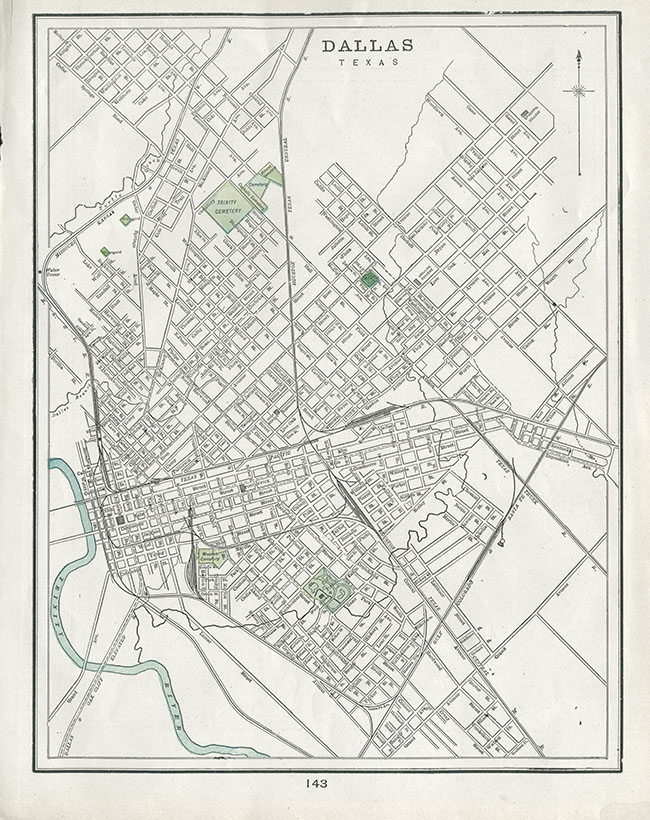
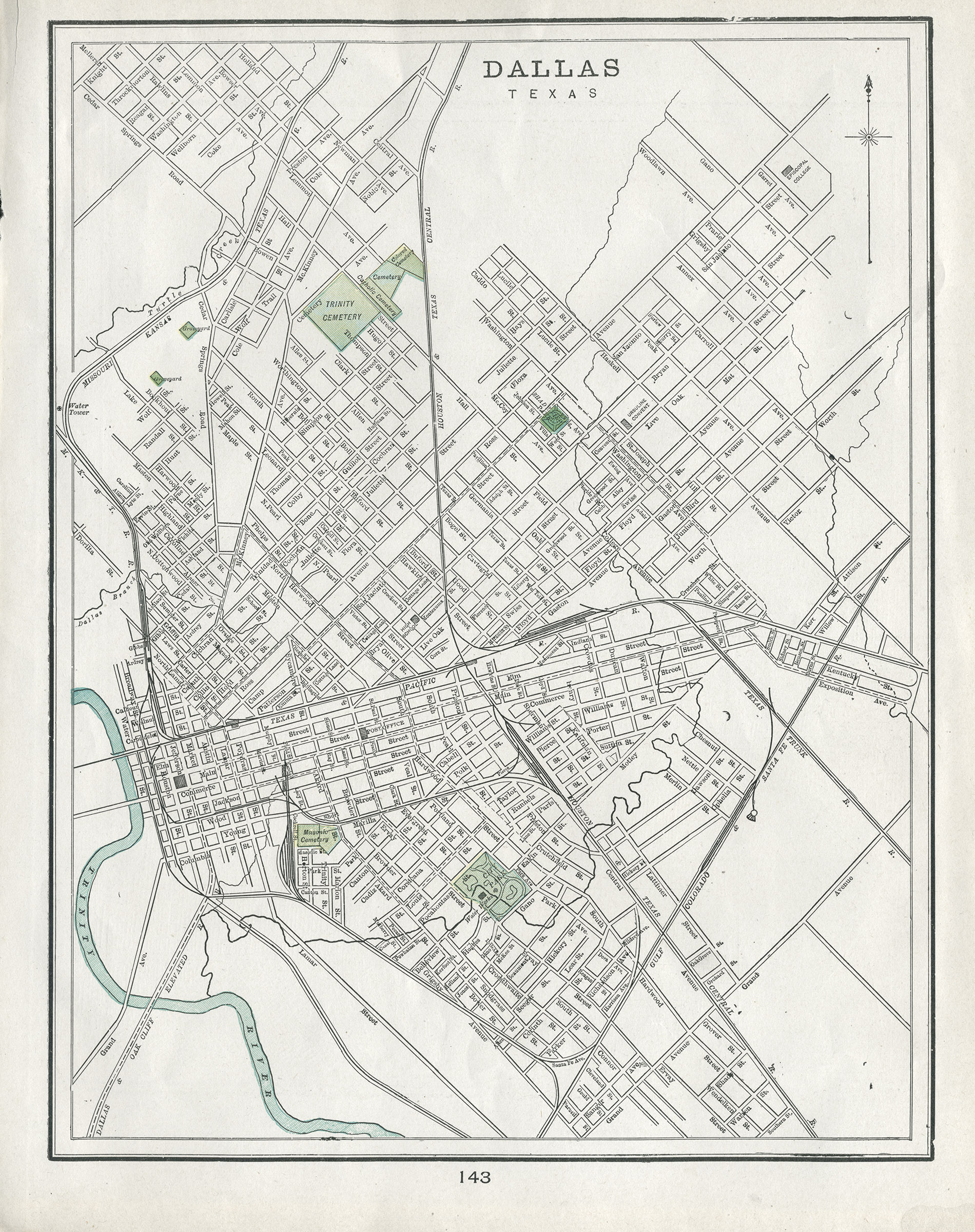
Some time ago I acquired this original copy of a map of early Dallas. The map was advertised as being from 1902, but the streets as laid out are more indicative of Dallas in the late 1880s. The map shows not only the layout of Dallas's road system as it existed in the late 19th century, but also shows the original names of a great number of streets before subsequent changes were made over succeeding decades. Sycamore north of Commerce Street hasn't yet been renamed to Akard, and Carondelet north of Pacific Avenue, by the Trinity River, hasn't yet been renamed as an extension of Ross Avenue. Present-day Record Street still shows as Jefferson, Ervay Street is still Oleander north of Pacific Avenue, and the route of present-day Saint Paul Street still exists as Masten and Evergreen Streets. Streets that are long gone, such as Calhoun and Walnut Streets north of Carondelet, are depicted. And there are also some slight inaccuracies: for example, Harwood is amusingly misspelled as "Hardwood" south of Commerce Street. Lastly, you can see the original alignment of the Trinity River before its relocation and straightening in 1928. Oak Cliff, Dallas's then-sister city and not yet annexed, is not represented.
The map page, which has a map of San Francisco on the other side, was one page of what was clearly a larger volume. It's likely that the same map was reproduced year after year in whatever volume this was (assuming it was a recurring collection). Thus, it's possible that my particular copy does indeed date to 1902. Without seeing the entire collection, I can't be sure.
You can download this scan in a larger size here. I've also uploaded it to the Internet Archive in an extra large size.
I believe this type of historical information should be made easily available and accessible to the public, not barricaded behind paywalls or hoarded behind closed doors by museums, archives, and collectors.