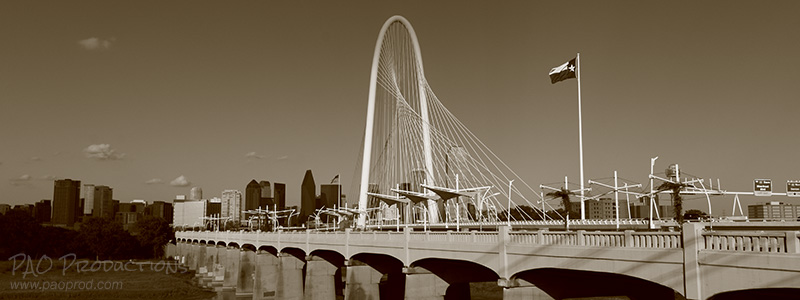

So let's kick back and revisit a time when people still went out to live shows put on by people who played real instruments, when the audiences weren't getting older and local live music attendance wasn't on the decline, when (at least in the beginning) people gave their attention to the performance rather than obsessing over their smartphones and constantly drowning in social media. It was a time when cash was still king and you could still smoke in Dallas bars and clubs, when most local venues were still amenable to professional cameras, and Deep Ellum in particular was in one of its low periods before the reopening of Trees and the district's subsequent recovery and transformation to whatever it is today. This is the story of my former career as a local band photographer.
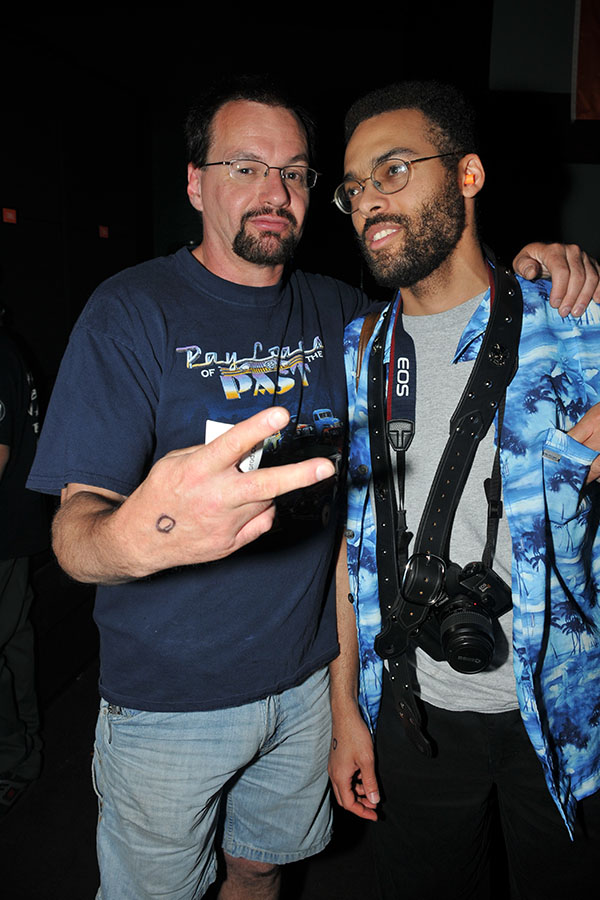
In late 2006, I got my first real introduction to the current local music scene through DEEP, otherwise known as the Deep Ellum Enrichment Project. DEEP was an organization of people working toward the "revitalization" of Deep Ellum, which at the time was in the midst of one of its cyclical periods of decline. They'd been promoted on the radio, and my long time friend (and eventual Lost Art Open Mic co-runner) Alex Pogosov had suggested going to the meeting being held at July Alley. In the beginning, the intent really did seem to be to breathe new life into the neighborhood via promotional campaigns and by staging events to encourage people to come back out. At the time I threw in my lot with the project, it was known as Save the Scene, but soon afterward the name would be officially changed to the Deep Ellum Enrichment Project. Our first event was a moderately successful haunted house, held inside the Club Clearview building from October 26-31, 2006. I played a kind of imp in a black jumpsuit and mask who sprinted toward unwary house-goers as they walked down a long, dark hallway illuminated only by a lone strobe light. The trick was very effective – I distinctly remember more than one grown man jumping back with a shriek upon my appearance. After the haunted house came a DEEP-sponsored show on December 21st, featuring four bands and held at the same venue. I have only vague memories of the first three acts, which failed to make much of an impression on me, but the headliner that night was a band called Meat Goat. Clearview closed down less than two weeks afterward, but the seed had been planted for my "career" as a local band photographer.
In truth, I had photographed a band before – all the way back in 1995, to be exact. During my senior year at Mesquite High, two school compatriots and a third guy by the name of Greg decided to get together and form a power trio called "Rubber Band." Rubber band included Scott Frederick on bass and Frank "Wesley" Bueno on drums, with Greg on guitar; there was no vocalist. On one occasion, I used my mom's 110 Instamatic camera to photograph a jam session in Scott's garage. The film cartridge went missing before I could get the pictures developed, and unfortunately it never turned up again, meaning the photos were never actually seen. Scott's band was plagued by interpersonal conflicts and internal problems and didn't last very long, breaking up completely mere months after its formation. Fast forward to 2007, and, thanks to my involvement in DEEP, I had gotten a taste of the active local music scene. Soon afterward I would be a regular presence in it with my camera.
Sometime around mid-February 2007, I was attending a show at the Curtain Club when this guy in a hat came up to me and started talking. "Do you just like to hang out down here and go to shows?" he asked. I didn't quite know what to say, other than "yes," since that was after all the truth. "I was just wondering," he continued. "Every time I come to a show, you're down here." He seemed personable and friendly enough, so I wondered who he was and what this was all about. "I'm Jeremiah," he said. "I play in a band called Reverent." Reverent? I had seen them before, when they'd played Curtain in January as part of a "chick-themed" show, and again not too long afterward when they played the Galaxy Club at one of the last shows ever held there. We shook hands, and I made a mental note to myself to give Reverent a closer look.
The above paragraph was how I introduced the original Reverent photo gallery back in January 2008 when this website first went live, and it remains the best introduction to this part of the story today. My involvement with DEEP had motivated me to attend a few Deep Ellum shows at the Curtain Club and one at the Galaxy Club. Of these, the first to stand out was a January 21st "chick themed" show at Curtain that introduced me to two bands that would figure prominently in my photography over the next few years. By sheer coincidence, a band called Reverent played both that January 21st show and a subsequent one I attended at the Galaxy Club about three weeks later, five days prior to the one described in the introduction. I told Jeremiah that I'd probably be attending the Curtain Club show on March 10th, where Reverent would be opening for Neverset. As I recall, Neverset was one of the bands that Mark Traynor of DEEP had spoken many times about booking for a DEEP-sponsored show. Mark Whitford, manager of the Curtain Club, was involved with the organization, and many of the shows I attended at Curtain during my earliest days in the scene were Sunday night shows put on by DEEP.
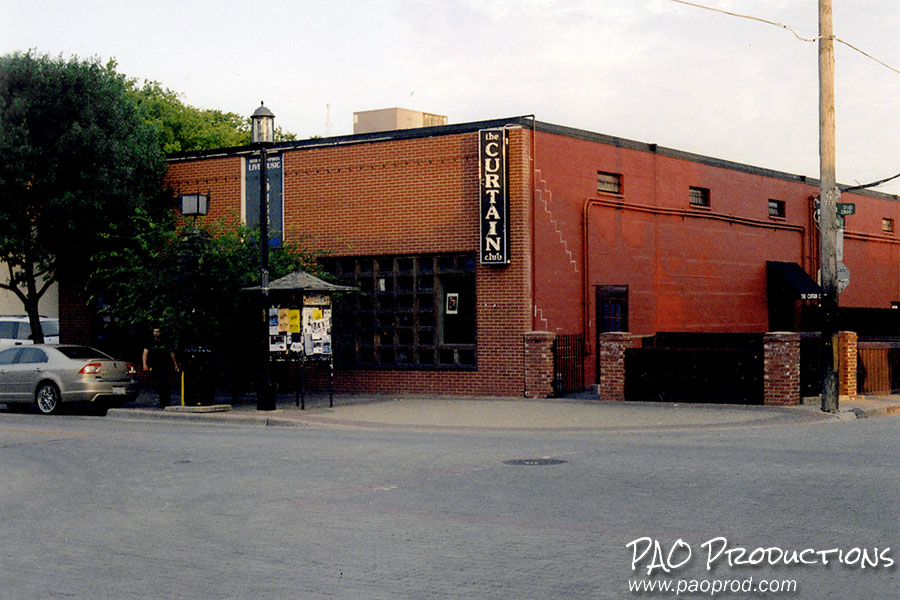
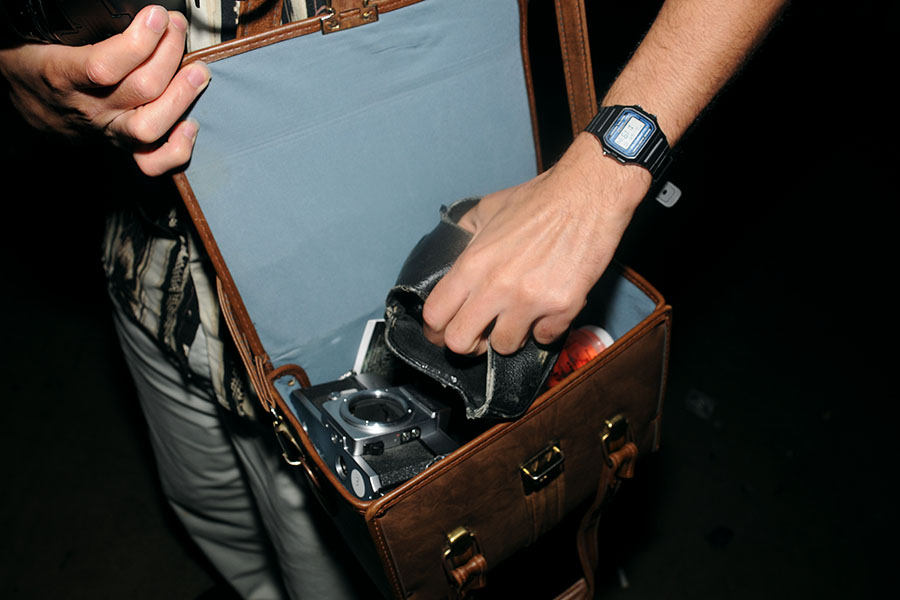
Aside from the Neverset show, March 10th was the date of a DEEP-sponsored gallery walk around Ellum. I gathered up camera gear and film into the vintage leather camera bag I had at the time from my early days shooting at Bill's Records and packed it into my car with a tripod before heading down. At the time I was living in Allen, so it was about a thirty minute drive to get to my destination, but once there I could generally park on the street at a meter as activity in Ellum was almost at a nadir in early 2007. After participating in the gallery walk and shooting three film rolls' worth of photos, I fetched the tripod from my car and headed over to Curtain. I set up the tripod and camera from a perch on the second level and pointed it down toward the stage, and proceeded to burn through twenty-five frames of film for the Reverent performance. At some point afterward I found myself on the floor in front of the stage, and the band's singer saw me and approached. She had noticed that I had added Reverent's "Innocence" demo recording to my Myspace page (at that time you had the option of "pinning" songs that could be listened to in an embedded player), had actually taken the time to look at my page in return, and had recognized me. Two people from one fledgling group on the west side of town had now come up and spoken to me, unprompted, which couldn't fail to make an impression. My opinion of the band, as I would eventually tell Melody much, much later, was that they were sloppy but had potential. That potential had been sufficiently impressive that I had added their song to my Myspace page, and had come out to Curtain to see them perform for a third time. I left for home; I don't remember if it was before or after Neverset began to play, but in any case I didn't stay for their performance. My first photographed show was in the bag, both figuratively and literally.
One of the lessons I learned early on was that attitude and how you carry yourself make a big difference. Venues could fill up with people, but if you carried a camera that suggested professionalism and you moved toward the stage with the bearing of someone who had a right to be there, people automatically moved out of your way. Another lesson I learned was that making yourself stand out – gifting people something that made them remember you, in my case – could be extremely effective for opening doors in an environment in which a growing number of audience members were putting low quality photos on the web. I hit upon a strategy that made me stand out in a crowded field: I printed a choice shot from Reverent's March 10th performance using my HP Photosmart 8750 – I had a high quality, dedicated photo printer back then – and at the next Reverent show on April 7th at Reno's, I gave copies of it to the band. That, I think, was the moment where things began to come together for me in the scene, and this tactic would serve me quite well in the early days. In today's digital age, people rarely get physical photographs anymore. This was already the case as early as 2007, when Myspace was still a powerhouse and the era of everybody having a touch operated camera (e.g., a cell phone) in their pocket was still a few years away. Kodak Easyshares and similar pocket digital cameras were all the rage at the time, and people were already accustomed to looking at images on computer screens rather than storing them in physical albums. Gifting a physical photograph was the key to making myself stand out.
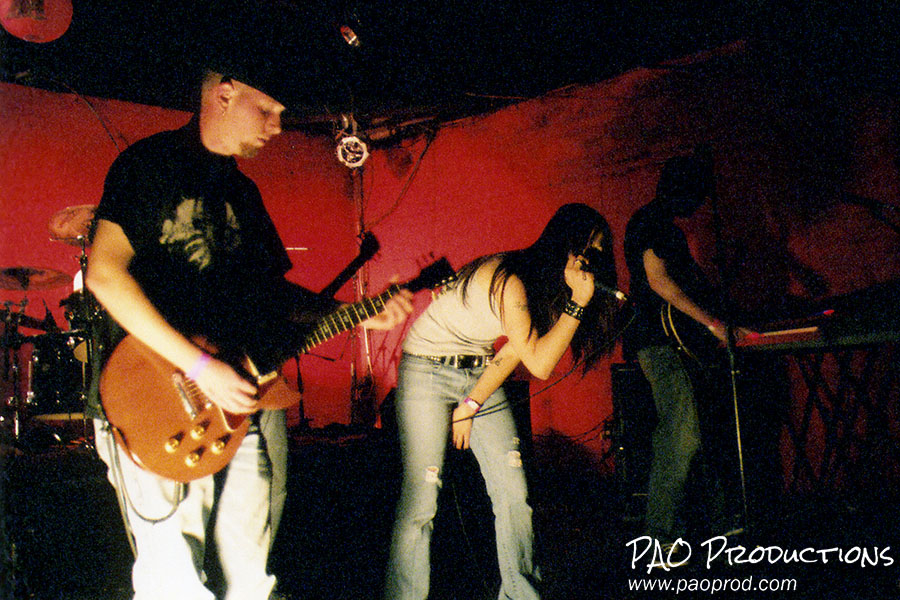
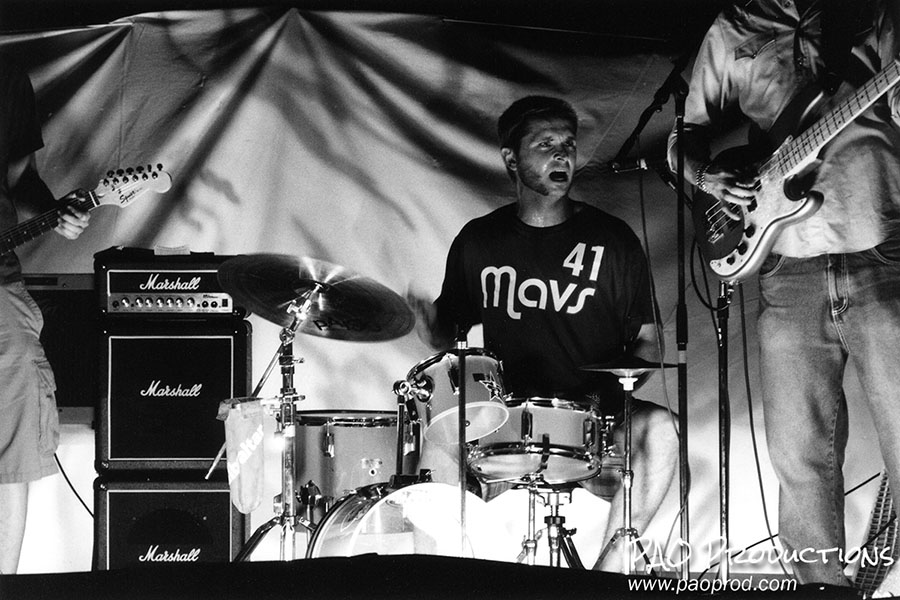
Although I photographed dozens of different acts during 2007, my first calendar year in the music scene was defined primarily by eight bands, of which six are the most important: Reverent, With These Words, Mourning Fury, Holy Diver, the Razorblade Dolls, and Dark Sol (more on them later). Reverent and With These Words first came to my attention through the January 21st show at Curtain, and my first exposure to Mourning Fury had been at that February show at the soon to be closed Galaxy Club on Commerce Street. Vocalist Chase Ditto had gone to school with my friend Alex, and Alex facilitated an introduction outside the venue. Chase had recently begun dating eventual fiancée and later wife Vivi Dávila, whom I also met at the show. I would be a guest at their wedding seven years later. Holy Diver and the Razorblade Dolls I fell in with through DEEP, as various personalities from those two acts were involved. Holy Diver was not a bona fide Dio tribute band, but rather a party-style cover band and power trio specializing in lighthearted half-sendups of classic rock and R&B tunes. They would eventually change their name to Manifesto Destiny, and then change it again to "Stew!" Holy Diver was anchored by John and Joe Hardy, brothers who routinely played together in various groups for many, many years, and also included Lee May on guitar. All three band members took turns on lead vocals, and their principal gimmick was the use of undersized instruments and/or equipment: Joe's drums were child sized, and John and Lee both used miniature practice amps onstage. John was present at several early DEEP meetings which I attended, and Holy Diver played at least one DEEP-sponsored show at the Curtain Club.
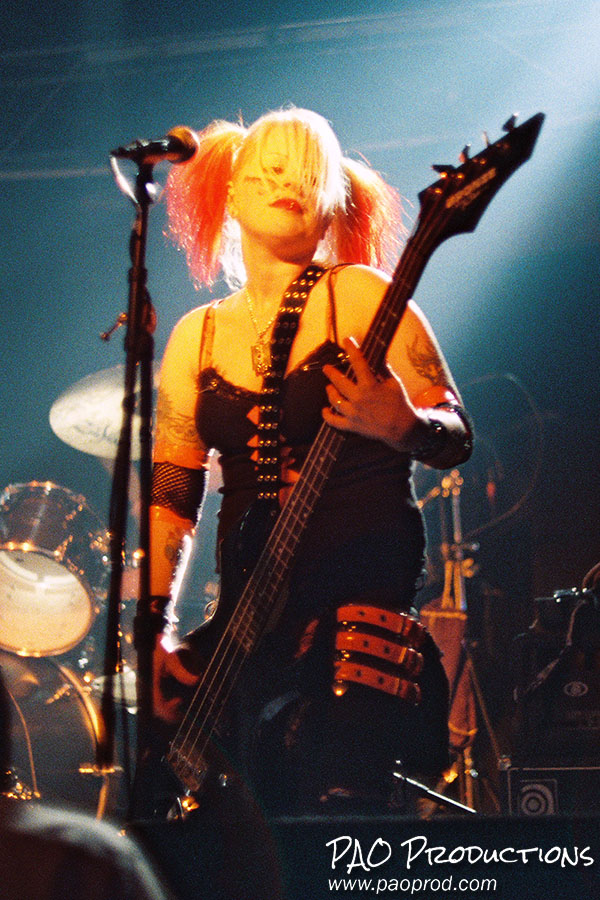
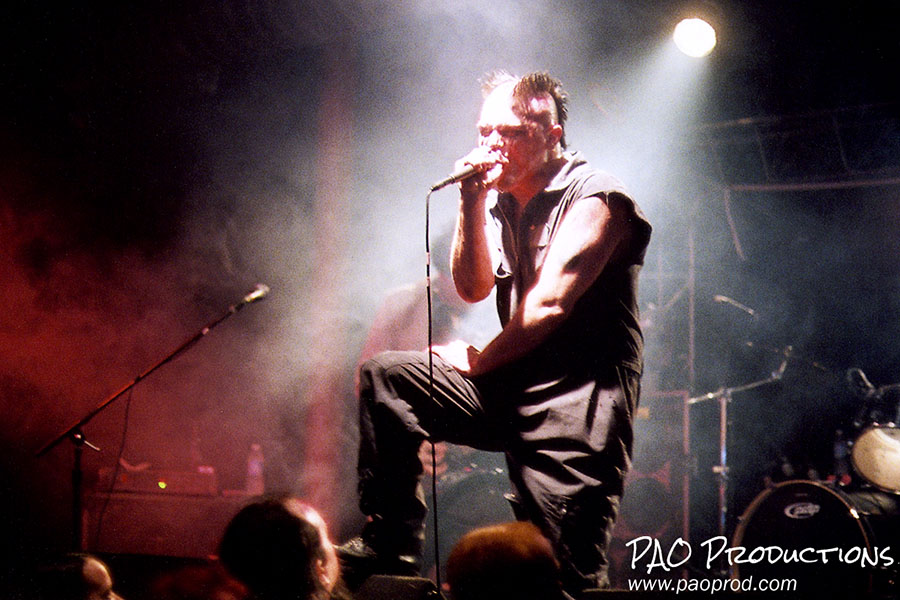
My acquaintance with the Razorblade Dolls came about through interactions with their keyboard player and self-described individualist, Scott. Scott was one of the principal members of DEEP, heavily involved with organizing the art walk and a frequent advocate for local bands and music, not to mention the keyboard player for the Razorblade Dolls. He wasn't in the band for very long, but I was intrigued enough to check out the group's performance (along with a second helping of Meat Goat) in mid-January at the Curtain Club. I was a bit unconvinced of the Dolls' appeal at that early stage – their soon to be staple song "They Kill" was new at that point and it was the one thing about them that most resonated with me – but I found the sound and spectacle of the Razorblade Dolls enticing enough to see them play three more times that year. They, and their eventual offshoot group Designed in Kaos, would eventually become some of my closest associates in the scene, and I would see the Dolls play a total of forty-four times between 2007 and 2019. Their bassist Rah Stitchez would become a friend of mine and remains so to this day.
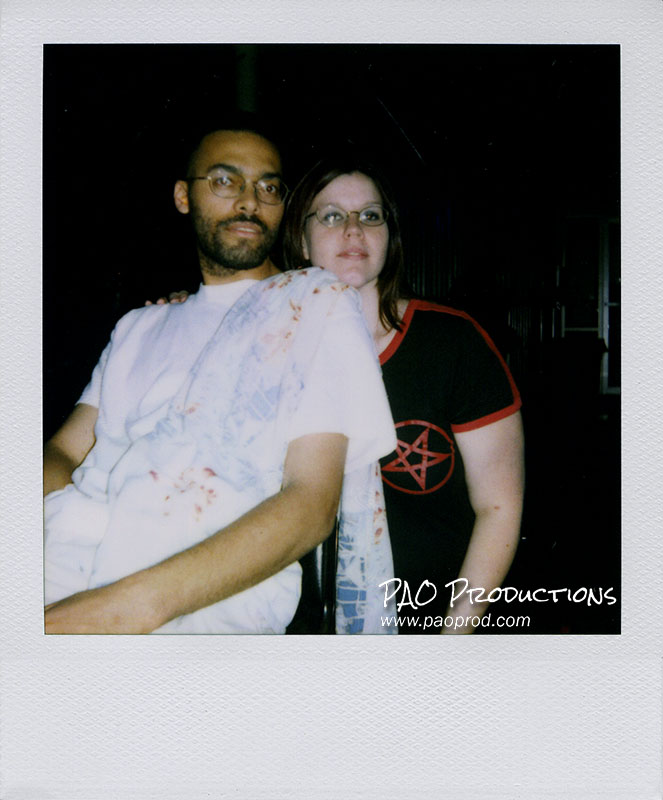
By mid-June I'd had a loose association with Reverent for three months, an association in the sense that they knew who I was and I was somewhat acquainted with them. But then something happened which changed things between us forever and gave me a bona fide "in" with the band. It happened 130 miles from home, in East Texas. For some reason, Reverent ended up booked in Kilgore at a place called the Side Pocket Lounge. It was a small, hole in the wall bar with the standard pool tables and a performance area – I wouldn't call it a stage – of probably eight to ten inches' elevation save for the drum riser. The sound system was nothing special, the kind you would expect in a hole in the wall establishment far from a major urban area. And there was no reason to expect that anyone from home would make the drive out to Kilgore, or that anyone local would know who a small startup band from the west side of the DFW metroplex was. But it was a Saturday and I had no shortage of free time, and I liked the band, so I figured, "why not?" and became the one local person to actually make that drive. When I arrived I found them all sitting together, seeming a bit out of their element and isolated, wallflowers who didn't know anyone else there. Melody called out my name with a smile and I saw her light up at seeing a familiar face from home... a home which was more than two hours away. The only camera I took along with me was a Polaroid One 600, a toy I'd recently taken to playing with knowing that the format would not be around for much longer, and I used it to take a few pictures of their performance... why the hell not? From that night forward, Reverent became my closest of all the bands and performers I would shoot, a relationship which lasted all the way through the band's breakup in December 2007 and their subsequent re-formation in late 2009. But that's getting a bit ahead of things, and is a story for a later installment.
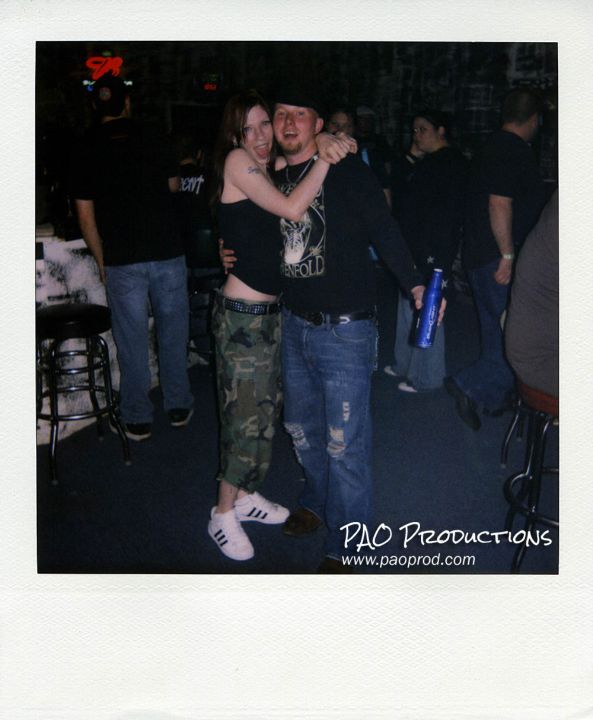
My first year behind the camera was characterized by a lot of ineptitude and floundering about, and a lot of generally sloppy work. I was new at shooting in clubs and didn't really know what I was doing, and wouldn't for a long while to come. A lot of shots came out bad, which is normal at a live show regardless of how long you've been doing it or how much experience you have, but when you're shooting film it gets very expensive very quickly. I stubbornly held onto my 35mm equipment because it was what I knew, and what I had, and I wasn't convinced that digital was superior even though deep down I knew it would eventually surpass 35mm film. In time I would get a more modern SLR camera with autofocus, which drastically improved many aspects of the picture taking experience, but that wouldn't happen until 2008. In the meantime, I worked with what I had and made the best of it. There were some highs, like a May 25th Mourning Fury performance at Tomcats Deep Ellum and a July 21st show with Reverent at the Ridglea Theater. And there were some definite lows, notably a disastrous May show at the Curtain Club where I accidentally double exposed one roll of film and underexposed another by a full stop, ruining a huge amount of material.
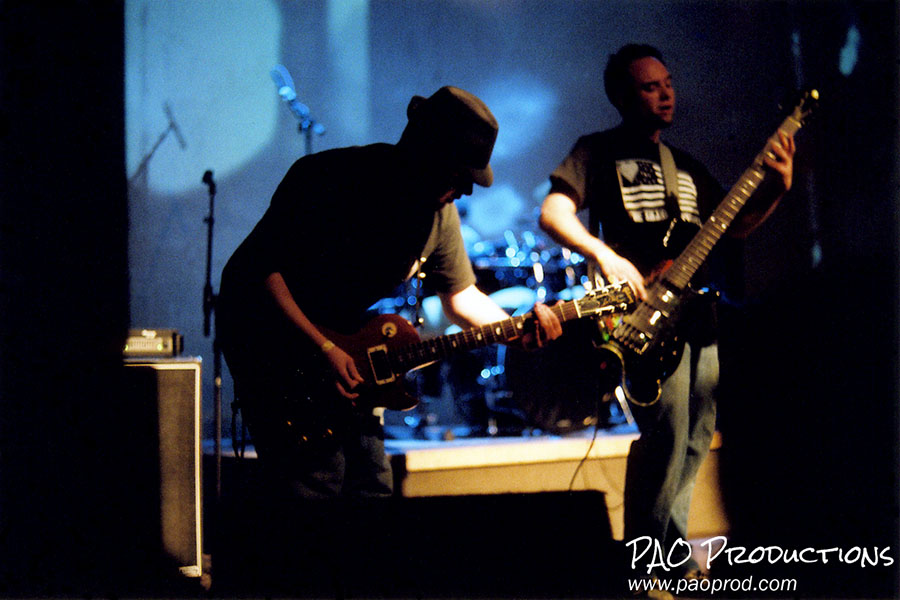
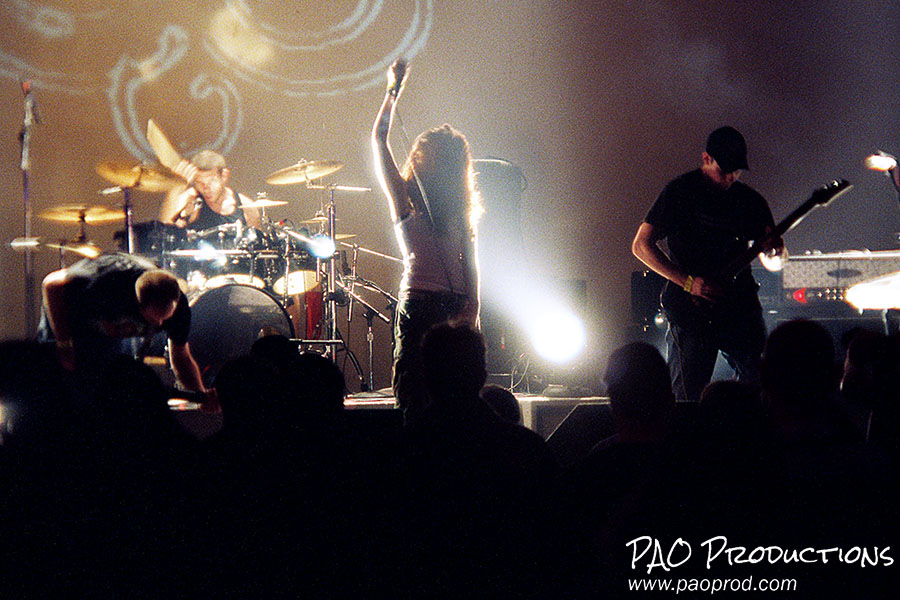
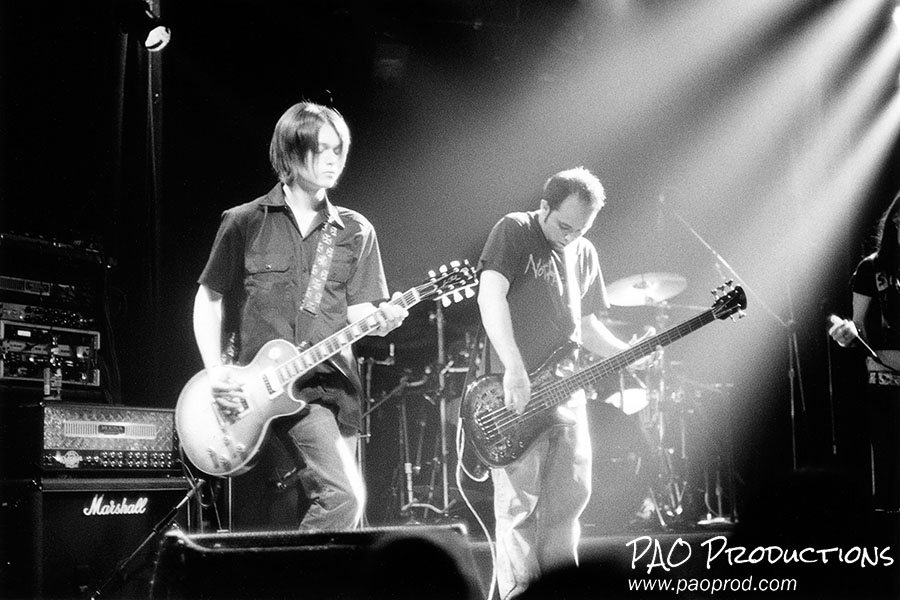
The Mourning Fury show at Tomcats yielded one of my favorite and most iconic live photos of this particular time period, one which I have framed on my wall and which I continue to use to this day in connection with my photographic galleries. Back in the day, meaning from 1995 until about 2003, my "stock" black and white film was Kodak T-Max, with occasional forays into various Ilford formulations. By 2004, problems getting quality developing prompted a switch to mostly C-41 stock for my b&w work. Simply put, C-41 refers to the chemicals and process used to develop most color film stocks, so C-41 black and white is black and white film that's chemically formulated to be developed using the same chemicals and equipment as color films. This confers the not insignificant advantage of being able to get the film developed practically anywhere that develops film; you lose a bit of potential sharpness and quality, but gain massively in convenience and turnaround time when you lack the facilities to develop film yourself. The biggest problem with C-41 films was that, in a lot of cases, in-house labs would return prints with a characteristic greenish or purpleish hue to them. They would still be monochromatic, but not true black and white. A flatbed scanner and Photoshop could be employed after the fact to correct this, but by this time the lab I most regularly used had told me they could compensate for this printing defect if so requested.
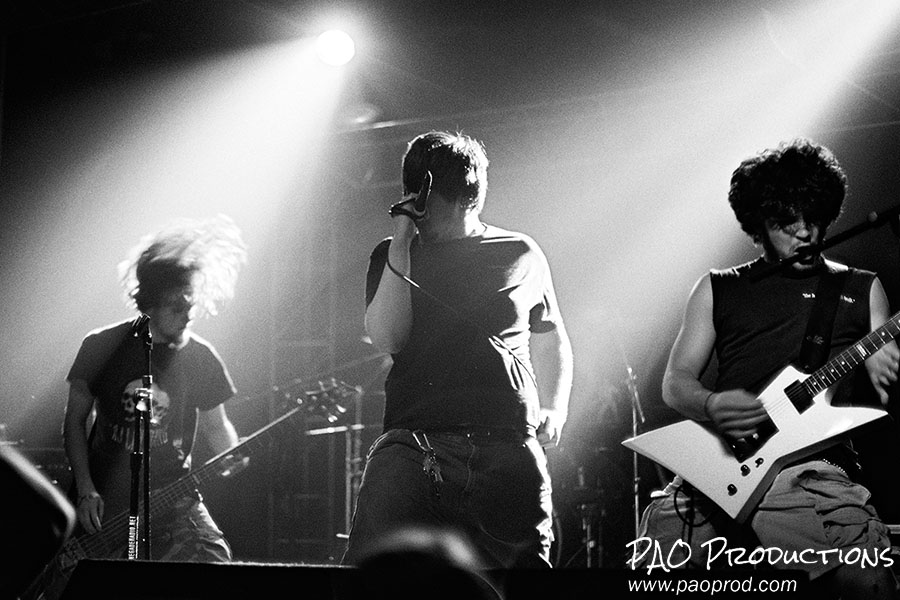
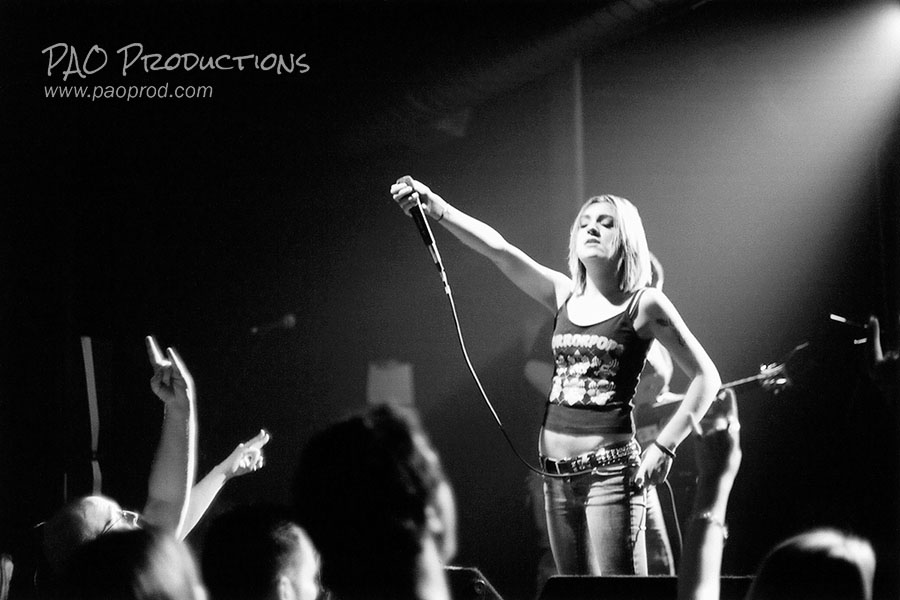
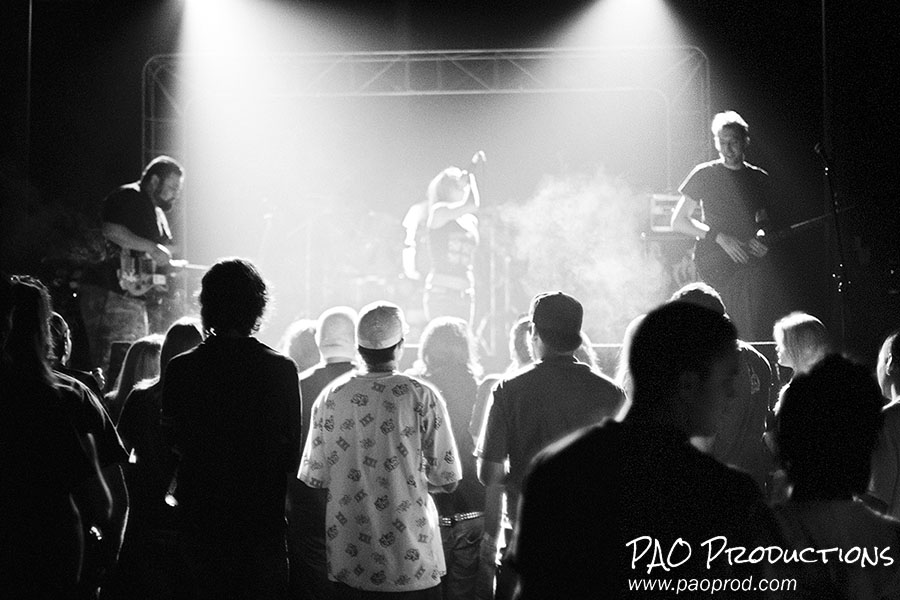
One day, I dropped off multiple rolls of film and made that request: print everything in actual black and white. What I didn't remember at the time was that two of those rolls actually had been shot on color film stock, Fuji Superia 800 to be exact, and in accordance with my request the lab ended up printing everything I'd given them in black and white. I wouldn't discover this reality until years later, when the films were put through a scanner and digitized. But I've always thought that most of the shots from those rolls work more effectively in black and white, and I continue to present them in that format to this day.
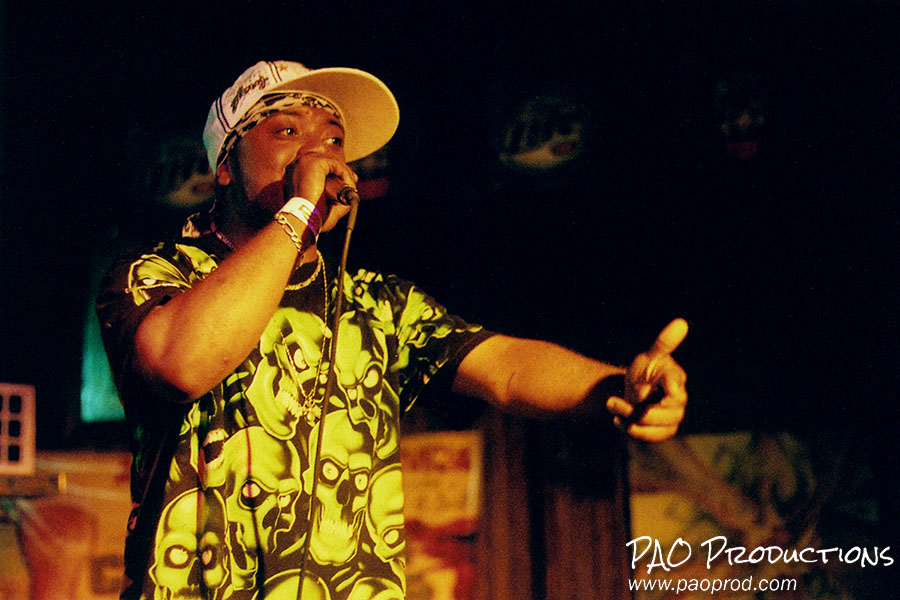
It was also around this time that I did the only rap/hip hop show I've ever done. A former coworker of mine was managing an up-and-coming rapper who called himself Guillotine, and I photographed one show of his as a favor to that former coworker. Many years later, in 2022, I was surprised to stumble upon a CD by Guillotine the Kasino Champ while perusing the shelves at the Horror Freak video store in Bedford. I never expected him to have such longevity, no disrespect intended.
The remainder of 2007 saw me attending (and shooting) shows at a gaggle of other venues featuring acts as diverse as Fishing for Comets, Melissa Engleman, SiK, and Immortal Soul (a Christian rock band). At that time and for some time to come, I typically photographed any acts that were playing the same bill as the performers I specifically went to see. I was introduced to a band called Dark Sol (later to change its name to Eden Falls) at a Tomcats show at which With These Words played. Dark Sol was led by keyboardist Chip Wood and guitarists Chris Kinsey and Andrew Erwin. Andrew was very opinionated and sure of himself (and, incidentally, the person who would loan me the first digital camcorder used to take video at the Lost Art Open Mic in September 2010). Andrew's wife Bethany was singer, and was probably the one I ended up connecting with the most out of the group with the possible exception of Chris. I would see the band, both as Dark Sol and as Eden Falls, a grand total of eleven times in 2007 and fifteen times altogether, before they called it quits for good in mid-2008.
2007 was a good time to be a local band photographer in Dallas. In those days, most venues didn't care about "professional" cameras being brought to local shows. It had been years since Dimebag Darrell had been murdered onstage in Columbus, Ohio, and tensions had eased considerably. As I said earlier, Deep Ellum was close to its nadir, and in many instances you could park at a parking meter one or two blocks from a venue. We were just on the cusp of the iPhone and smartphone era, and you could still go out to a show and expect to be able to see the stage and the performers on it without having to peer through a wilderness of arms and phones and even tablets. People went out to legitimately socialize, allowing themselves to get into the moment and become part of what was happening. Yes, there was social media, but it was something you engaged with on a desktop computer at home, not something you obsessively scrolled through throughout the day while tethered to your smartphone. It wasn't all about staying abreast of the latest political outrage or the most recent, insipid updates from your parasocial relationships online. And people weren't pulling out phones to capture every single thing they saw so they could post it online, but they functioned as actual participants, partaking in the moment. For local show photographers, it really was the tail end of the golden age; we just didn't realize it yet.
The year ended with a weekend-long music festival held at Tomcats, featuring thirty-four bands over a total of three days. For months the city of Dallas, in association with real estate developers, had been attempting to alter (some said to "clean up") the character of the neighborhood. SUPs, or special use permits, had been employed to shut down some businesses and to keep other "undesirable" ones from opening. In the context of DEEP, these efforts were viewed with suspicion or outright hostility, and were seen as attempts to gentrify things by eliminating establishments and people who didn't fit with the developers' vision of the neighborhood. An illustration depicting a reimagined version of Deep Ellum, one populated by upscale restaurants and "higher end" businesses and clientele, was circulated by DEEP via Myspace, resulting in a temporary explosion of new interest in the organization. Word on the street within DEEP and the arts community was that Tomcats, the latest casualty of the SUP ordinance, was being forced to close down due to alleged complaints from residents of the loft apartments across the street. This was despite the existence of a longstanding city ordinance recognizing Deep Ellum as an "entertainment district" in which higher noise levels were to be expected. However it came about, December 28-30 of 2007 saw the last hurrahs of one of my favorite, and most prolifically attended, venues in the neighborhood.
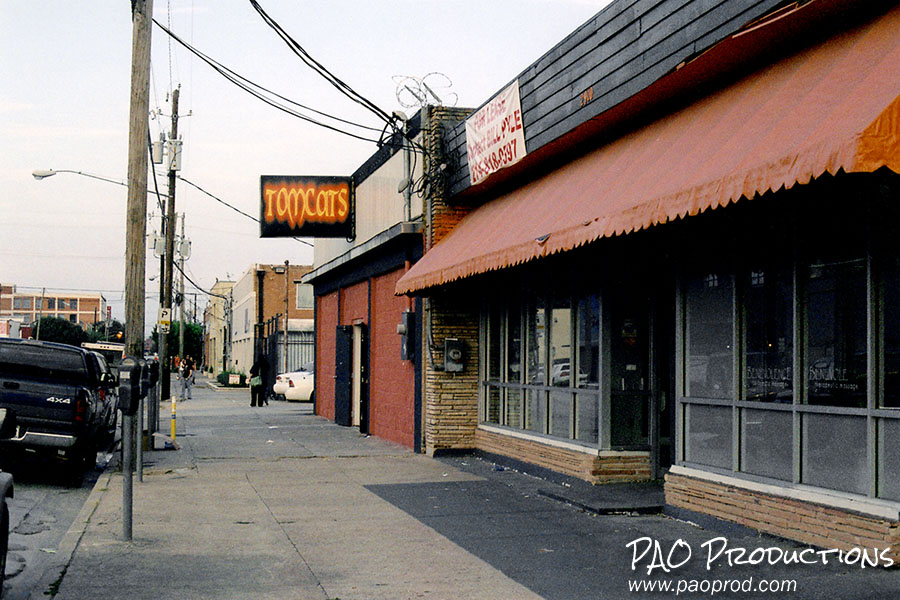
I attended the music festival on its final night, which wrapped with performances from six bands. One of these six would figure very prominently in my future. Some acts, such as Mourning Fury, were relegated to the dinky secondary stage off to the side, while others, such as With These Words and Fallen South, took the main stage with the spotlights. A funny thing I'd learned over my twelve previous visits to Tomcats was that the el cheapo film stock Kodak Max was ideally suited for that second stage, and it's what I used for Mourning Fury's set. Opening act Obsidian Throne wasn't to my liking at all, but their drummer would later be an on again, off again part of Silver Loves Mercury's live shows, alternating between bass and drums as needed. Fallen South, which would for a time (part of 2008) employ Chase Ditto as vocalist, did the official handoff between outgoing vocalist Brady Ditmars and his replacement Shelton midway through their set. And, significantly, With These Words introduced their new guitar player Justin Golden at the start of their performance. And with all that completed, Tomcats closed, never to reopen as a music venue. To this day, it still doesn't feature bands or musical performers, instead being home to the VisitDallas Mural.
Reverent, the band which indirectly ushered in my career as a show photographer, broke up following a tense and sloppy performance at Fat Daddy's Sound Shack on December 15th. Band leader and songwriter P.J. Blackburn didn't show up, and Jeremiah had long since been replaced by someone I never clicked with and found to be insufferable. I'd seen the band play a total of twenty-three times, ultimately making an appearance at all except their very first public performance.
All told, 2007 was kind of a banner year for me as far as rediscovering photography, a starting point for what would hopefully be better creative output to come. I'd gotten my feet wet and then dived right in. These days I don't think very much of the material I produced during that year, and very little of it ever sees any life outside of my photographic archives (and rightly so). As 2007 gave way to 2008, I didn't have reason to believe anything would be exponentially different, other than the loss of my heretofore favorite local band having left a bit of a gaping hole. What I didn't realize at the time was that I had concluded what would be the last full year I would ever use film as a primary medium for capturing any of my images. Eventually, my handling of film-based material would be almost exclusively done in a historical context, be it through digitizing vintage and antique images of yesteryear or simply revisiting my old material in search of the few diamonds in the rough that I deem acceptable enough for public presentation.
Every single photo I'd taken in 2007 had been on film, either 35mm or Polaroid. 2008 was the year that I made the switch over to digital... finally. I believe I was the last active show photographer in Dallas to leave film behind. But at the start of the year, I was still firmly entrenched in celluloid based pursuits. I kicked things off with a show at Curtain which featured performances from Mod Effect, a group whose music I was extremely taken by but who didn't play nearly enough shows; and a new rockabilly outfit called Polly Wants a Popgun. Polly consisted of Yvonne and Derik Long, guitarist "Smokey Roach," and drummer Robert Burnz. Vocalist Yvonne and I hit it off right away. I like to think I can recognize genuine people, and I strive to be genuine myself, so it makes sense. I would see Polly play a total of seventeen times, sixteen of them in 2008, and they would be one of the last bands added to my roster of "regulars" before I acquired my first real digital camera. That first real digital camera was a Kodak Easyshare C613, a pocket, battery-powered point and shoot with an optical zoom. I didn't use the Kodak for live photography; rather, it was used for audience and crowd shots and casual pictures taken of me with others. For the "important" pics I still utilized my film cameras. And this led, indirectly, to an acquaintance with another prolific photographer in the scene.
During these early days, one of the regular faces I saw around the scene was Scott Mankoff. We moved in some of the same circles, though he had been around longer. I first met him at the very end of 2007. I remember us talking camera gear while he was still using a Sony Cybershot point and shoot and I was using my original vintage Mamiya/Sekor 1000 DTL film SLR. He told me how he often missed getting shots he wanted because of the long shutter delay, and I showed him how the film SLR instantaneously captured images, with the shutter firing immediately upon a push of the shutter release button. Not long afterward, Scott would upgrade to a Nikon D300 DSLR and continue shooting as a very prolific member of the unofficial (and sometimes official) local music "press corps" for some years to come. His lens captured Spector 45 and Polly Wants a Popgun along with a truly impressive collection of other performers, not to mention events at the Kettle Art Gallery and even the Ride for Dime events. In time he would be honored with his own photographic show at Kettle, an honor higher than anything I would ever achieve. To this day he claims all he ever really knew how to do was point and shoot, but you still have to have some kind of eye for a good picture in order to be successful. And he was quite successful in his time.
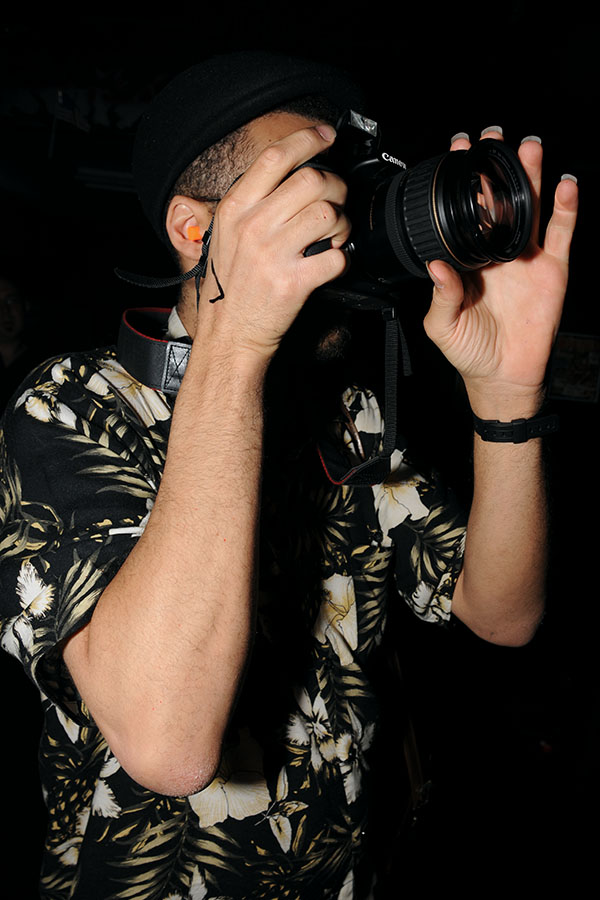
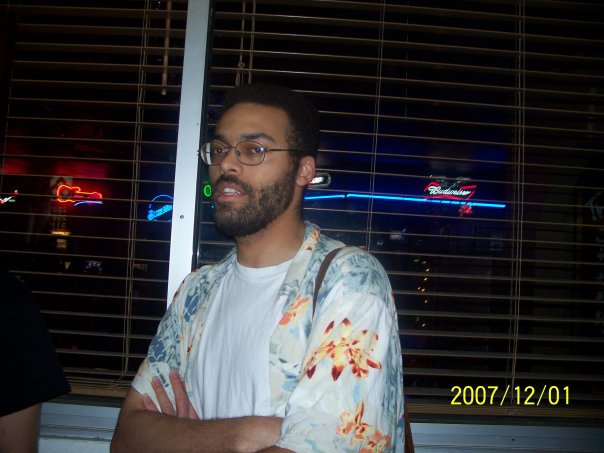
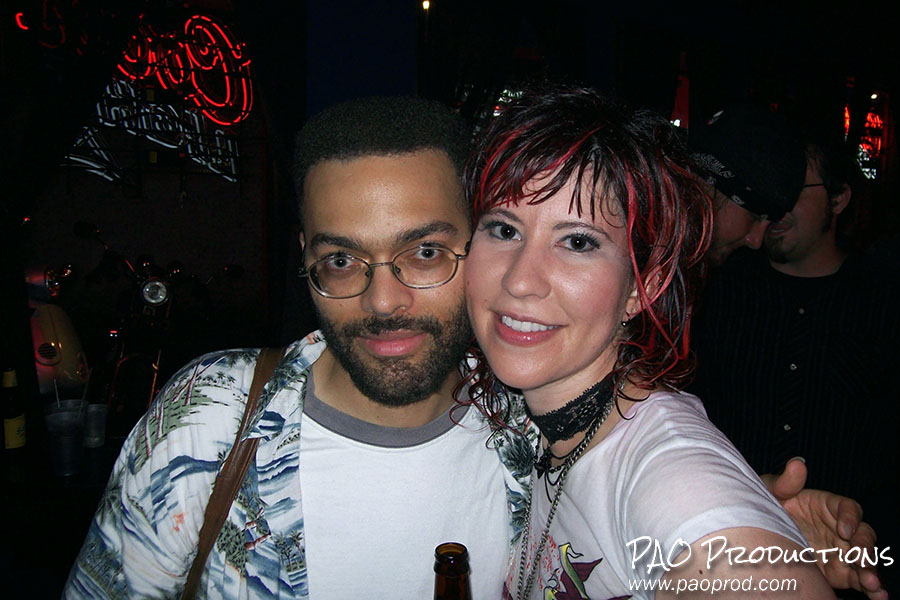
Mankoff was the only one to really capture my likeness during this period, and most of the existing shots of me hobnobbing about the scene in 2008 were taken by him. There aren't a lot of pictures of me from 2007, aside from a small number of Polaroids and a couple of shots taken by Maeleigh Brisbon, Reverent's de facto official photographer. Scott specialized in capturing crowds and audience members and scene-goers, while I focused my efforts on capturing the stage shows. I never really bothered photographing people I didn't know unless they were performing on stage, and in those days I was still obsessively shooting every band I saw live. It helped me get a grasp on how to shoot live performances. I won't say I had truly learned the ropes just yet – that was still quite a ways off. But shooting a wide variety of bands in a series of difficult venues helped me improve my technique a little bit at a time even while dealing with new and greater challenges following the closure of Tomcats, my heretofore best venue.
![Me with members of the Razorblade Dolls, [January] 2008. Photo by Scott Mankoff.](/images/blog-images/My-Years-Concert-Photographer/Me-RBD-2008.jpg)
Curtain in particular could be a challenging venue, as could its sister club, the Liquid Lounge. One of the most challenging, however, was a club called the Anex, located some 160 miles southeast of Dallas in Nacogdoches. I've always remembered that March 2008 shoot as one of the most difficult ones I've ever done – the stage was right in front of a wall which was plastered with huge windows, and the spotlights in front of the stage shone right onto them, making it very difficult to work around all the glare and reflections. Shooting 35mm, there was no way to preview and adjust based on what I was getting in camera, so I had to try to negotiate the light problems by timing shots to when enough performers were positioned in front of the glare, with only a finite number of attempts possible. To this day I don't think I've ever been in a more challengingly designed venue. It definitely wasn't laid out in such a way as to be friendly to photographers, especially ones who utilized a flash (I didn't at the time, quite fortunately in this instance).
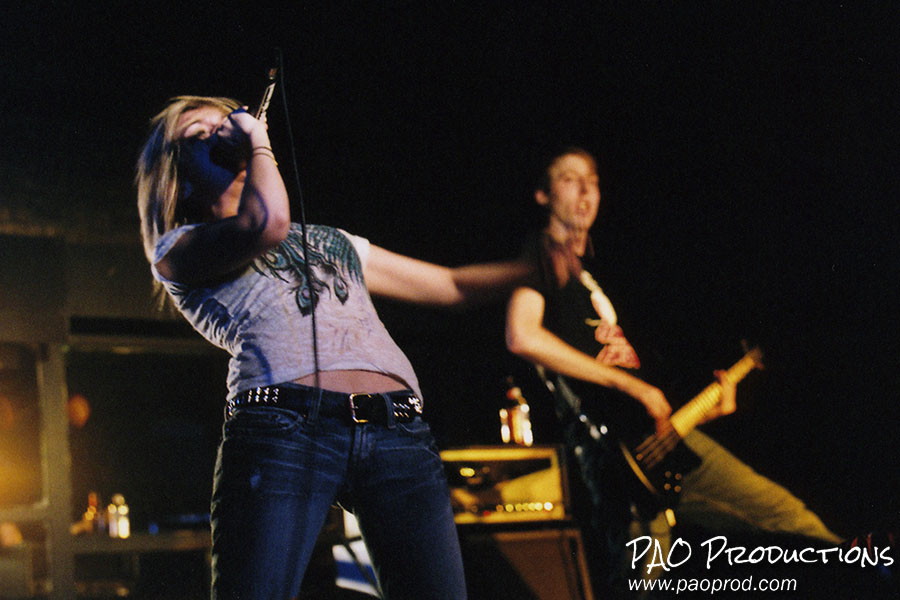
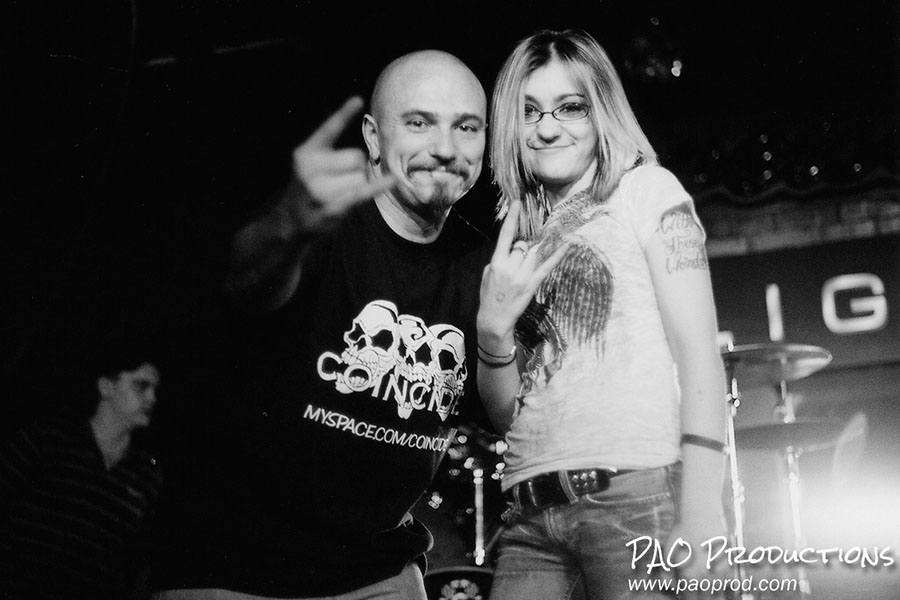
In the spring of 2008, I supplemented my venerable Mamiya/Sekor camera with a much newer model, a Canon EOS Rebel G. I purchased this camera with its included 35-80mm f/4-5.6 kit lens secondhand, and it quickly became my primary camera for most performance photography. I continued to utilize the vintage camera for just a little bit longer, but in truth not that much longer – finally having autofocus was a veritable godsend when dealing with moving performers. I believe the first live show for which I utilized the Canon was a Fallen South performance on April 5, 2008, alongside the old workhorse. The workhorse camera would be almost fully supplanted within two months. It was around this time that I also took to carrying around the old Nikon Zoom-Touch 470 AF that I'd used back in the mid to late 1990s as a teenager. I found that, loaded with black and white film, the old point and shoot was well suited for a certain class of more intimate venues, given its lens's wide angle. This camera was never a primary piece of equipment for me, just something I used on a few occasions when I could get away with it. Otherwise, it functioned similarly to the Easyshare as a camera for less "serious" work.
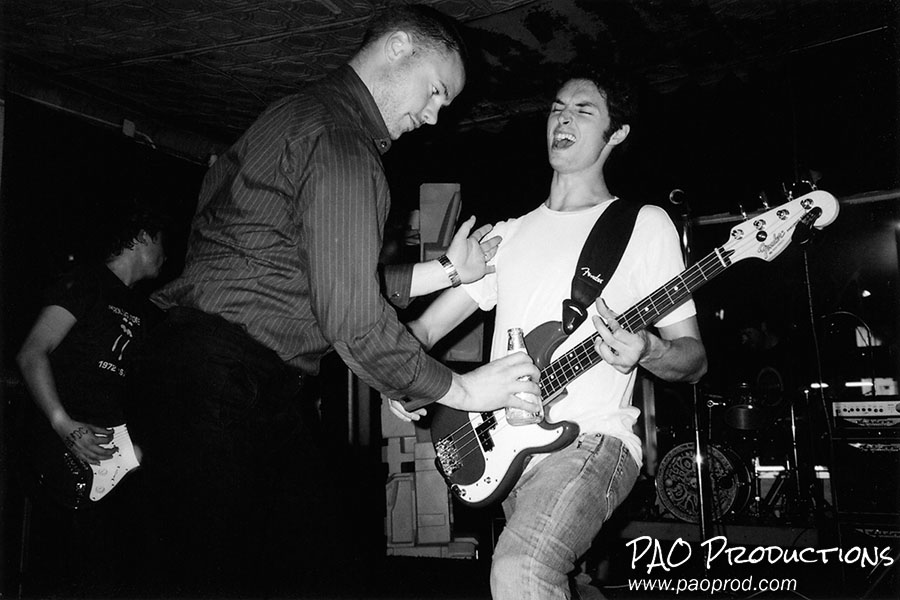
With Reverent now a thing of the past, my two most photographed bands during 2008 were Polly Wants a Popgun and With These Words. I started shooting Polly while I was still using manual focus lenses on vintage gear. By May, everything Polly was taken using the newly acquired Canon. I also took the opportunity to do a bit more black and white than before, black and white having always been my preferred medium up until then (and still today, to some extent). The number of venues and, most notably, the number of shows I attended during that year also greatly increased. My total number of live music shows for the year numbered seventy-seven, more than ever before or since. I was going out nearly every weekend to at least one, it seemed, and carrying my camera gear along in almost every case. My relationships with certain bands deepened as a result, with With These Words and Eden Falls coming to the fore in this respect. I would take video footage of Eden Falls shows at the Liquid Lounge on back to back weekends, the dates being June 27th and July 4th, using a Hi8 camera perched on a tripod on the upstairs level. For two songs performed during the latter show – the lion's share of Eden Falls song "Tragedy" and nearly the entirety of the Danzig cover "How the Gods Kill" – Melody took the mic. It was good to see her perform again; Melody was actually slated to be the original singer for the band (as Dark Sol), but was poached away from them late in the game by P.J. Blackburn for Reverent, leading Bethany to step into the role instead. The July 4th performance proved to be the final one for Dark Sol/Eden Falls. Bethany told me later that a major issue she faced was having to arrange child care for Andrew's and her two girls on nights when both had to perform with the band. Also losing their bassist, who simply decided not to show up one night and never came back to the band, couldn't have helped.
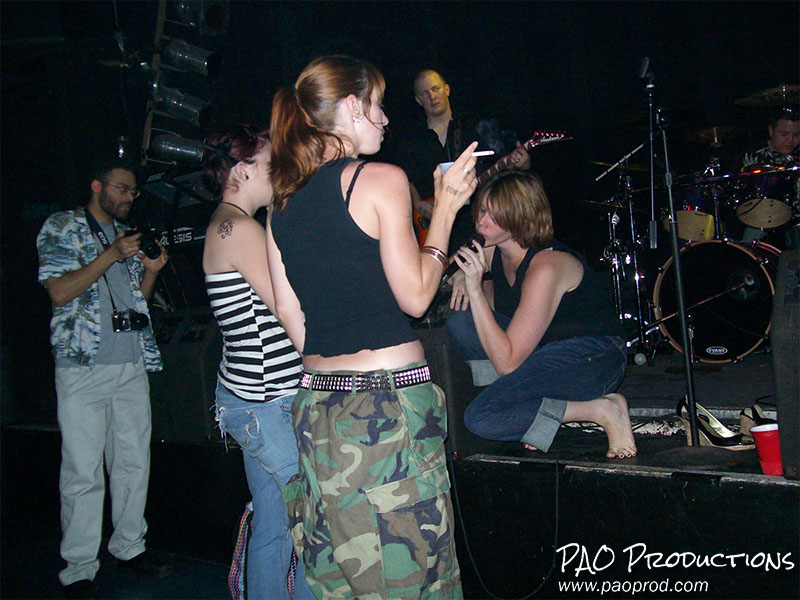
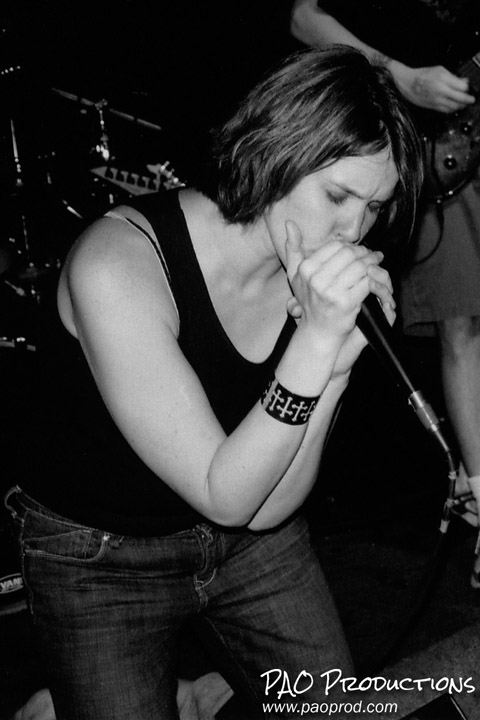
Over time, my interest in DEEP fizzled out. The meetings had become, in my opinion, unproductive and pointless, mere perfunctory exercises in which a regular coterie of speakers would retread the same tired ground over and over again without professing any new ideas or exercising any real organizational muscle. The breaking point for me came in the form of a proposed "pub crawl," a colossally stupid idea wherein participants would visit one bar or club for fifteen minutes or so, get drinks, then move on to the next club, and then to the next one, and the next one, wash, rinse, and repeat, supposedly discussing DEEP business all the while. To me this was the very picture of asininity, little more than an excuse to imbibe alcohol, and a complete mockery of the organization's supposed purpose. DEEP had become a joke, and I made my exit with a long-winded, admittedly self-indulgent and righteous post on Myspace announcing my departure. There was some sense of loss to be sure, but I had long felt that I wasn't getting anything out of my participation other than my time being wasted, and there was always a lot of talk from the same few people with nothing really being said. There was a good deal of discussion about replacing the old Deep Ellum sign which welcomes visitors coming from Downtown into Deep Ellum, but hardly any of meaningful ways to improve the district itself. I felt the organization had become essentially a sinecure with compensation earned in (largely imagined) social status. In time, it dissolved. I've always assumed the reason was a lack of any real activity or purpose.
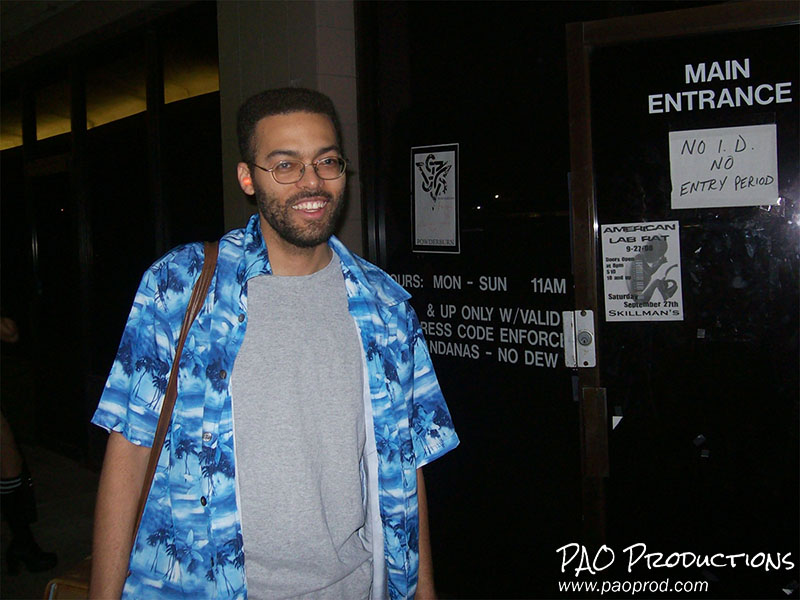
For most of 2008 and all of 2009, my primary venue was the Skillman Street Pub. After Tomcats folded, things moved to a Skillman Street shopping strip just north of LBJ Freeway. Rob, who was managing With These Words at the time, set things up with management to allow me cover-free entry whenever I went, so the SSP became my primary destination as far as band photography from that point forward. The Pub was a large 4,800 square foot venue that had a good-sized stage area on one end with ample seating and floor space in front. Farther in the back were pool tables and a large bar. The surrounding neighborhood could be a bit sketchy, but parking was excellent and, even better, it was free. The Pub was a popular venue for local acts because it paid well, with the highest performing band getting all of the take from the door. There would be no shortfall, as the management would more than make up for this with alcohol sales. The number of shows, and thus the number of stickers and demo CDs added to my collection, increased exponentially due to the sheer number of acts I saw perform at the SSP night after night. The sound was initially fairly mediocre, but once soundman James McWilliams, formerly of the Curtain Club, was secured, the audio experience rivaled anything one could hear at a full-fledged "professional" venue. At least one live recording from the SSP ended up being given a commercial release by the band who performed it. The sound was that good.
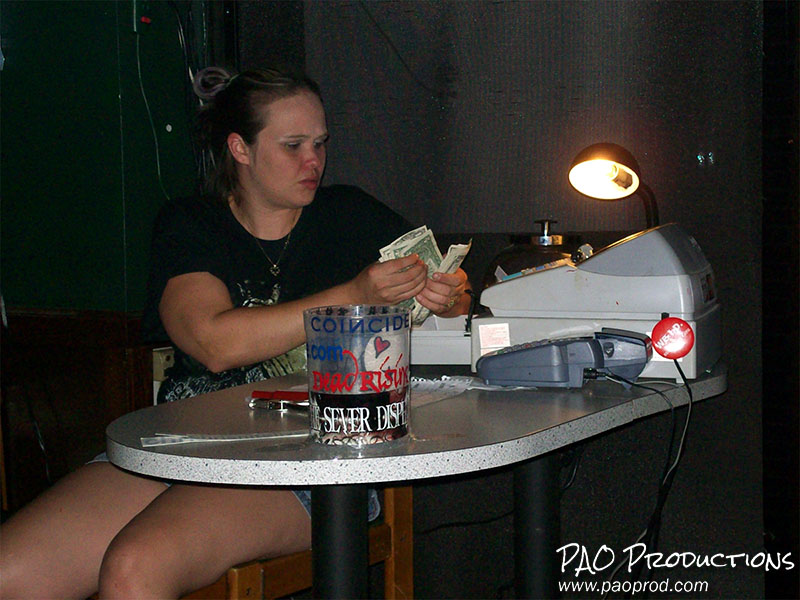
As far as the bands went, a huge number of them were best described as cookie cutter. No disrespect to any of the acts who performed, but to this day I honestly can't remember much about most of them with respect to either sound or presentation. Perusing through the long list of mostly cookie monster styled metal bands I saw at the Pub, I don't even recognize most of them by name. Despite this, there were some that did manage to stand out to me. My first time seeing (and photographing) RivetHead was at the SSP in May of 2008. The SSP was where With These Words participated in an online radio show that was set up by Rob (I was present and took a few pictures of the event). And one of the most memorable performances I witnessed there was by a funk/R&B group group by the name of Six Point Hollow, sandwiched in between a host of stereotypically hardcore metal acts. Presumably the person booking the show misinterpreted the meaning of the name, or perhaps woefully misjudged the type of music they played; however it happened, it was one of the most memorable sets I ever saw at the Pub. "I bet you guys have never heard a Stevie Wonder song played in this place, but we're gonna do it now!" announced the singer before tearing into a searing rendition of "Superstition." Good times, because Stevie Wonder is awesome.
Many of my old favorite musical artists frequented the SSP and took to its low stage, and so did two or three new favorites. Adakain was always a good time, and Coincide featured a singing drummer who used a headset microphone and kept Karen Carpenter-level perfect time and breath control. One of my favorite drummer shots that I've gotten was of Coincide's Chris Bell, albeit at the Curtain Club and not at the SSP. Mourning Fury played their final ever show at the Pub, with Chase getting his hair cut on stage in "preparation" for starting a new job. Polly Wants a Popgun, With These Words, and the Razorblade Dolls all played sets at the SSP, and scene regulars such as Robert Miguel made the occasional appearance. Miguel's girlfriend at the time, Lauryn, even worked for a while at the Pub running sound. It was commonplace for me to run into scenesters and various other individuals I knew on nights when mutual acquaintances were performing.
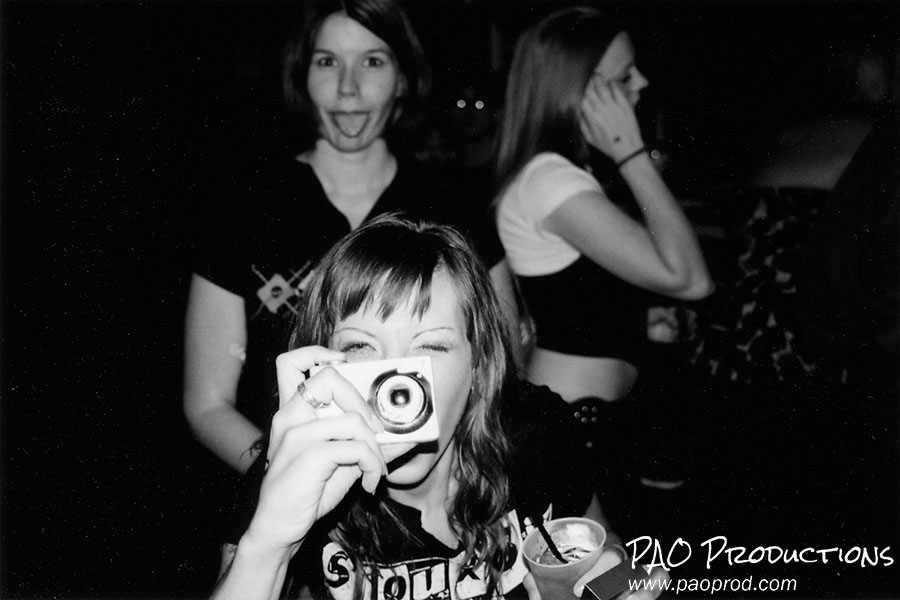
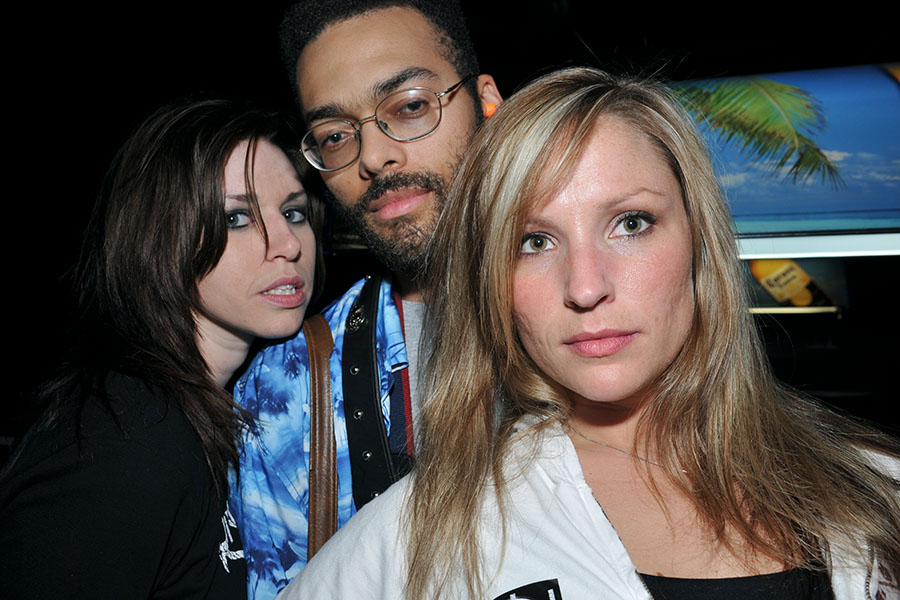
One notable night at the Pub was the one of the benefit show for Suborne bassist Mike Gomez. Mike's wife and child had been injured in an auto accident, and a group of other metal bands, in a show of solidarity, had organized the benefit show to raise money to help with the medical bills. Mike, the original bass player for Dark Sol, was an acquaintance of mine, and the Pub was a regular hangout, so it was natural for me to be in attendance on that night. Due to the nature of the event, I insisted on paying the cover charge, but they wouldn't take my money; thus, when I ended up winning a custom guitar strap in one of the raffles, I didn't feel it was appropriate to accept it. I did accept it in the end, not wanting to cause a scene. Years later I gifted it to a coworker friend who, unlike me, is an actual guitar player and not a one time drummer. Scott Mankoff was moving about at the benefit, and he made sure to snap a couple of pictures of me amongst the hundreds of others he took that night. The most noteworthy of these was one with the Empire Leather Girls that became the recipient of much attention, mostly from other men, when it went up on social media. All I remember of the shoot was hearing Mankoff's voice calling me over and being pulled into a photo pose. I hardly even knew what was happening when he did it. Sadly, the gal on my left, Summer Amshoff, ended up taking her own life five years later. I don't know what her reasons where, but it always seemed to me to be a completely unnecessary loss.
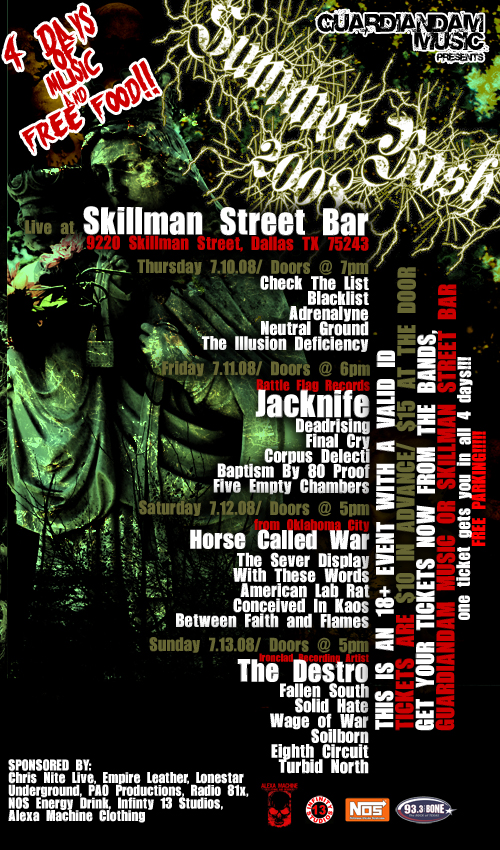
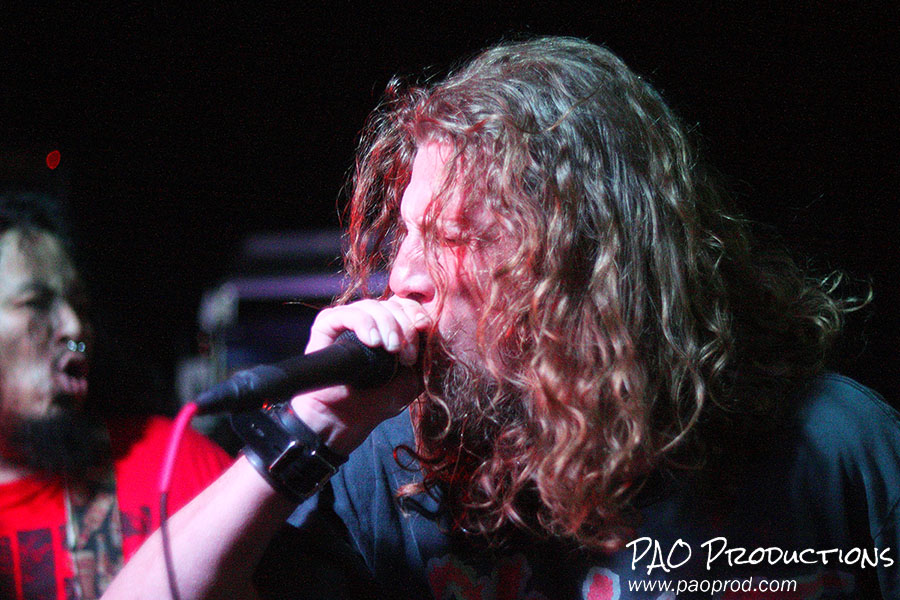
After the show, walking to my car, I tried as best I could to avoid Shelton, but he caught sight of me and immediately came over. What did I think of the show? I did what I've always done when cornered by a performer who knows his performance was bad: I spun, trying to put as positive a light on things as I could. I didn't lie, but I spun. The guitars didn't seem heavy enough for the vocals. Shelton was going in one direction while the music seemed to be going in a different one. These were true statements, after all, no prevarications to be found here. Shelton seemed as uplifted as could be given the circumstances, and I made my way to my car and on back to Allen. As far as I know, that was Idea Killer's only show, and I never saw Shelton again.
Of my three years shooting at the SSP, I have surprisingly few "essential" photos to show off, surprisingly little output I would hold up as representing some of the best I could do or my proudest pieces of work from the period. I remember it mostly as an era defined by a string of essentially nameless, faceless, generic metal bands, punctuated by the occasionally memorable act like Silver Loves Mercury, Deaf Angel, or Six Point Hollow; and by performances from personal favorites who were actually talented at producing memorable music. A full fifteen of those performances were by With These Words, which is not surprising given Rob's involvement with both them and the venue. In 2009 I photographed Taproot, an actual national act that was booked to play the Pub. Pub manager Vince even signaled his okay to the band's security for me to approach close to the stage for better photos. And on one occasion, the venue's lighting director asked if there was anything he could do to make things easier for me. "Cut out the red light," I responded, and lo and behold, it was done. Any show photographer will tell you that red light in particular is the absolute bane of our existence in a live setting. Overall, I'd say the SSP experience was a net positive, though it was hardly the only place I took my camera during the years of 2008 through the end of 2010. But I don't want to get too far ahead of the story.
In September 2008, I finally took that most consequential step of my photographic career: I transitioned from film to digital. It wasn't an all at once changeover, as I did shoot some performances at least partly on film for a couple of months after getting my DSLR, but by the end of the year I was pretty much exclusively digital (there were a couple of one offs, but that's a story for a later installment). As I indicated before, what is most clear to me when looking back at this time period is how much I really didn't know what I was doing. I had come out of a three year run at the original open mic at Bill's Records with an unwarranted confidence and, indeed, arrogance about the equipment and techniques I was using. With my first DSLR I was about to learn a hard lesson. Upon receiving approval for a $1200 line of credit, I purchased a brand new Canon 40D from Wolf Camera on September 12, 2008. The first show I shot with it was a Hawk vs. Dove performance at the Prophet Bar that very same night. I had the kit lens that came included with it, but I thought I could get away with manual focus and, not long afterward, with my vintage screw mount lenses via an adapter ring.
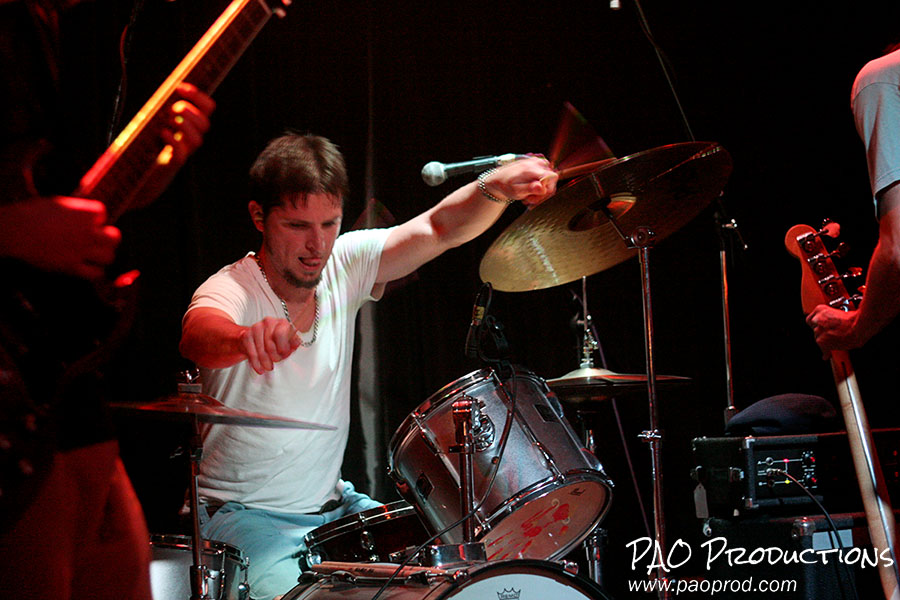
That first show at the Prophet Bar was a bit of a lesson to me, but it was the Ridglea Theater show the following day that drove the brutal reality home: digital photography wasn't as forgiving of mistakes or lack of accuracy in camera settings as film had been, and now there wasn't somebody at the lab to compensate for exposure mishaps or white balance errors. Barely any of the more than six hundred pictures taken that day at the Ridglea were usable. Years later, my skills in post processing having been developed and improved, I would be able to go back to a lot of my early material and, after the fact, correct some of the mistakes I had made. Thankfully, my tendency toward forward thinking convinced me to start shooting in RAW format only one week into my new digital odyssey, and this has proven to be a godsend today when it comes to this early material. What I did have coming to digital from film was an understanding of the interplay between exposure time, aperture setting, and ISO – how they relate to each other, their impacts on the final image, and, by extension, how there are many possible combinations of the three that can be used to get that final image. I was never just a point and shoot guy when it came to using a DSLR, just as I hadn't been one with a film SLR, and that was an invaluable skill when it came to shooting live performances where you so often need to adjust things on the fly. But with my new Canon 40D, I felt I essentially had to learn the ropes all over again, and this time the right way, without any kind of safety net coming by way of the film lab. I did manage to get some good shots during this period, though they weren't nearly as good as what would come later.
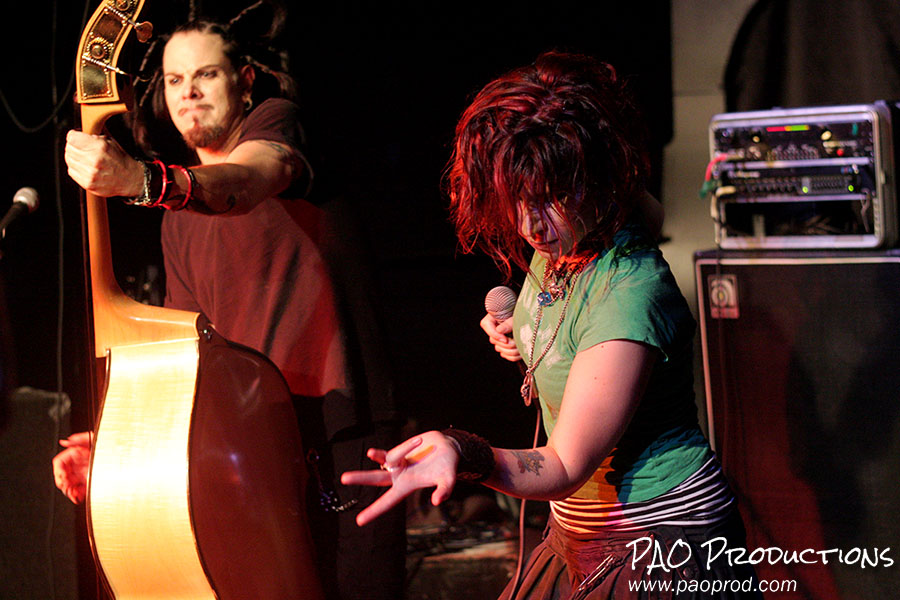
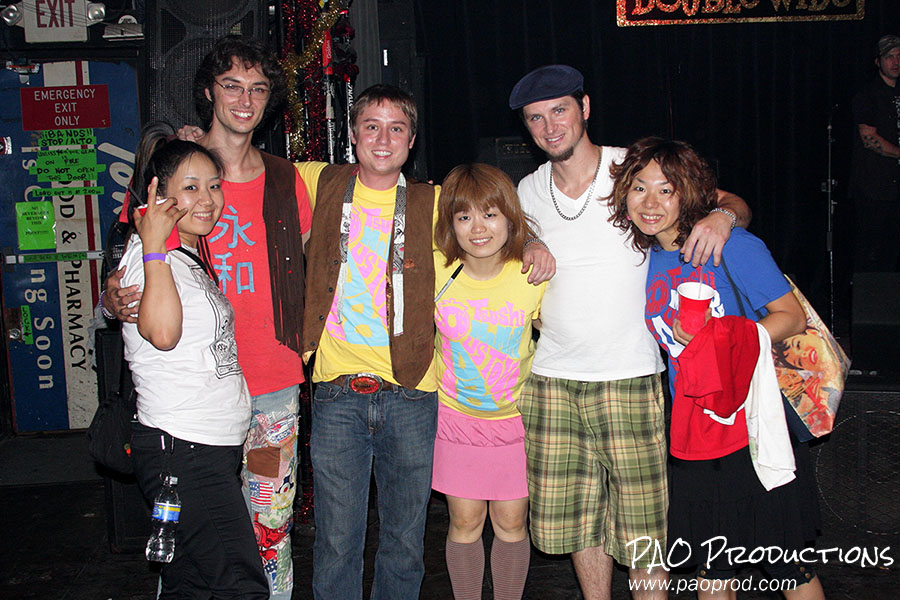
By this point, I had begun easing Holy Diver out of my circle of "regular" bands. I liked them as people, but the gimmicks of over the top performances and tiny equipment had begun to grow stale. I only saw them play a total of five times in 2008, four of those times at places that could hardly be considered major local venues. The fifth time, however, was special. It was a punk show held at the Double-Wide with Japanese power trio band TsuShiMaMiRe. I didn't know what to expect, and hesitated to make the trip down from Allen after receiving a text message from John Hardy, but I ultimately decided to go and wasn't disappointed. Holy Diver played their usual set, warming up the audience, and when they were succeeded by the headliners the place rapidly transitioned to standing room only. I'd never seen such an intensely addictive performance as the one put on by these three very rambunctious punk rockers. I couldn't understand a word of the lyrics, but it didn't matter. The singer's dexterity with her instrument, plucking at the strings with perfect precision as she sang, was nothing short of phenomenal, and the energy on stage was off the charts. I ended up leaving the Double-Wide with three CDs, turned on to the whimsicality of the music and lyrics (apparently the lyrics are quite ironic and satirical in the original Japanese), though not before snapping a photo of the two bands together. I distinctly remember Joe Hardy telling the girls that I was a "professional." It was high praise, though not quite deserved.
During all this time, I had continued to shoot shows at the Curtain Club, Reno's, the Liquid Lounge, and at a host of other venues I visited only once or twice during the year. I racked up my last of three total shows at Deep Ellum's Darkside Lounge, a miserable hole of a venue on Elm Street with poor lighting and horrendous internal temperature control. There were shows at the (new) Prophet Bar and the Ridglea Theater, and I attended a John and Joe Hardy Halloween house party in Irving followed immediately by a trip to Reno's to see the Razorblade Dolls. And then there was a venue on the south side of Fort Worth called the Rockstar Sports Bar. The Rockstar was your typical sports bar establishment with an open performance area in the back, nothing remarkable. The 60+ mile drive required to get there from home made the trip a bit of a chore, so I restricted my outings to when bands I knew well were on the schedule to play. In July, this meant Polly Wants a Popgun; in August, it meant the Razorblade Dolls and Wolfcult Choir; and, for my final time, in November, it meant With These Words and Fallen South, now with Chase Ditto on vocals. All three shows were generally good, with out of town band DIHYF's vocalist accidentally bumping into me during their set, and afterward apologizing like a gentleman.
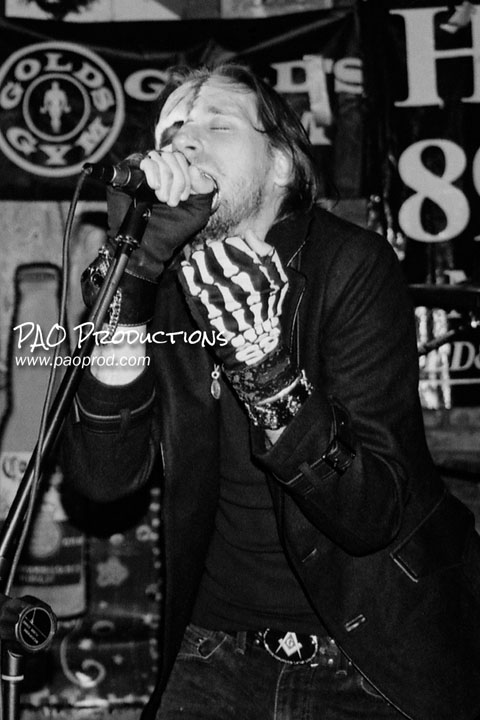
The August 15th show at the RSB was one of the last ones I shot using film as my primary medium, and the results were some of the best I'd gotten in a long while. The Skillman Street Pub could be challenging thanks to its low stage, close crowds, and lighting idiosyncrasies, but the Rockstar (despite sharing some of the same characteristics) proved to be a breeze. I appreciated getting some good photos of Wolfcult Choir, a dark, moody act featuring Kurtz Frausun on drums. I had seen them perform in 2007 as Hour of the Wolf before they changed their name, and their brooding intensity across two other shows since that time had made me a fan. Kurtz would later go on to release over a dozen albums of experimental synth music as well as to compose and perform a live score for F.W. Murnau's Nosferatu. His Facebook page once boasted of a number of venues where his somewhat questionable fetish and BDSM-themed live shows had been banned, a boast accompanied by one of my photos. At one time this very website included a promotion for his artistic alter ego Frausun. Wolfcult Choir fell apart in early 2009 due to a love triangle between Kurtz, vocalist/guitarist Lex, and keyboardist/vocalist "Sin." But there was no denying that their live shows had made a very distinctive impression.
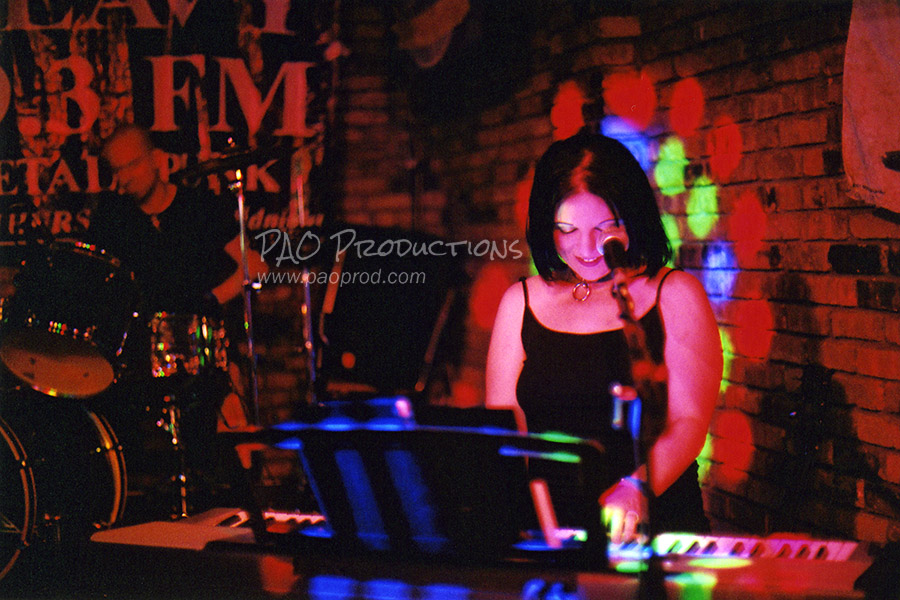
The Rockstar's brick walls made for some very striking backgrounds, rendering especially well when using black and white film, but I hated making the drive all the way out there and back. Another venue with a striking look on the inside was the Vampire Lounge, which opened in mid 2008 at Harry Hines Blvd. and Joe Field Rd. in northwest Dallas. The inside was dark and the ceiling outfitted with black lights, which infused the interior with an appropriate gothic style vibe. The layout, however, was ridiculous: the stage area was to the right upon entrance, so oriented as to be situated along the long side of the venue when it should have been at the farthest end of the front door. The Harry Hines location was the successor to an earlier location at Skillman and Abrams which was forced to close in 2000. I didn't know that at the time, however. What I did know was that my experience shooting there was miserable with that godawful lighting and hideous interior layout. Eventually the latter problem would be rectified via a remodel, which positioned the stage in its more appropriate location. In the beginning, I tended to stick with black and white, because I had to use a flash in order to get anything remotely decent, and I didn't like the color reproduction that I got on film when I used the flash there. After the remodel, this problem was also largely alleviated.
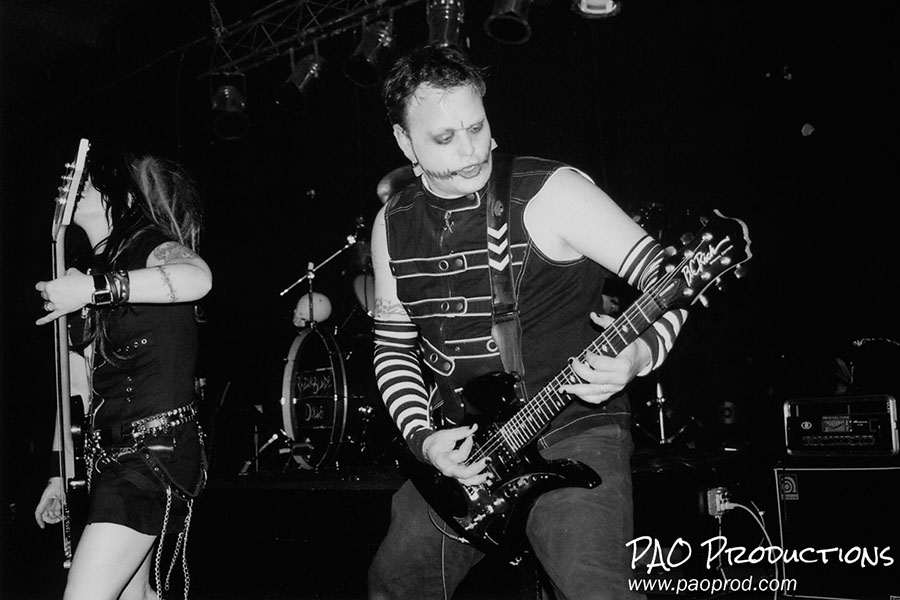
It was at the Vampire Lounge that I would see out 2008 and see in the new year, but before that, there are two shows worth mentioning as they would become somewhat important years down the road. In November, I had a small birthday get-together at Cafe Brazil in Deep Ellum. One of my coworkers brought along a high school friend who would figure very prominently in my life for the next several months, Cassie B. We would become very close, eventually going on a couple of weekend road trips together and confiding heavily in each other, but at the end of 2008 we were just getting to know each other. Our first outing together – though not exactly together given that we met up there along with her ex-boyfriend – was at Lola's Saloon in Fort Worth. This was the original location on 6th Street, and the bands playing that night were self-described "psycho garage-a-billy" band Johnny Hootrock, a quite tight rockabilly outfit going by the name of Sawed Off Sick, and a greaser punk/rockabilly power trio from Dallas that you've surely heard of if you're at all familiar with local flavor, Spector 45. Spector 45 was helmed by charismatic frontman and guitarist Frankie Campagna, son of the great Frank Campagna of the Kettle Art Gallery in Deep Ellum and prime mover behind the influential Studio D, one of Ellum's first notable punk clubs.
Sadly, Frankie would take his own life on the night of December 31, 2010, just hours after a performance at the Bone in Deep Ellum. Foundation 45 would be formed in honor of him; of Spector 45 bassist Adam Carter, who tragically followed him into suicide three months later; and of all the other area musicians and creatives lost to mental health struggles. If you're reading this, you have probably seen the foundation's logo, the number "45" inscribed inside a heart, painted prominently across buildings and affixed onto signposts. The organization changed its name (and focus) in 2025 to Amplified Minds, a move I strongly disagree with, and I know for a fact that I'm not the only one who feels this way. I didn't know Frankie all that well, but we recognized each other, and he gave me one of his cards which I still have to this day. When I donated a collection of period memorabilia to Top Ten Records in Oak Cliff for their local history archive, I withheld a select few items to keep as my own mementos. One of them was Frankie's business card.
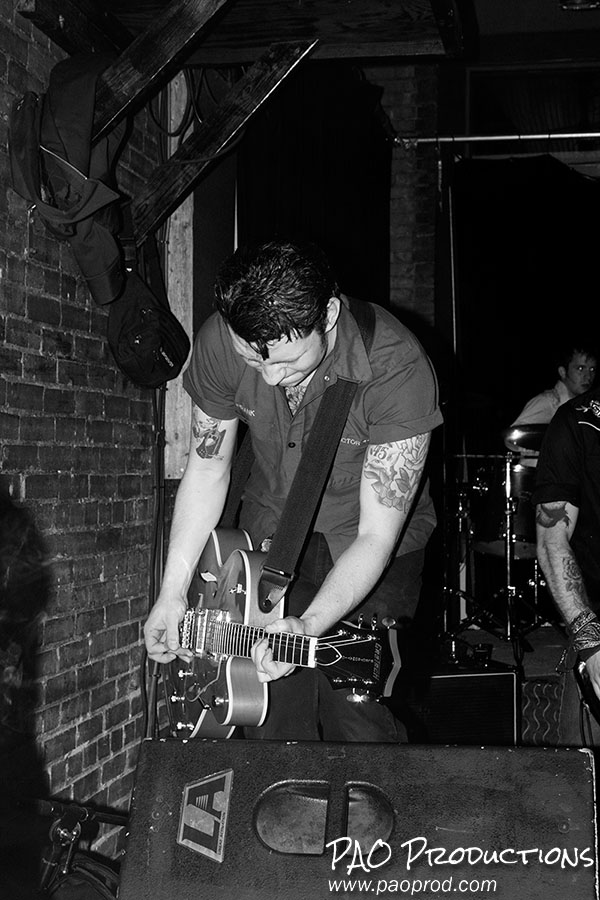
I would see Spector 45 perform only one other time after Lola's, and it was on December 27th at Club Dada, my next to last show of the year. Polly Wants a Popgun also played, and Spector 45 was the headline act. It was here that I spent my only real time photographing the band – I had snapped some pictures at Lola's, but only a handful, and the results weren't very good with the poor lighting and the moshing crowd (moshing at a rockabilly show?). The Dada pics represented the best I ever had to offer when it came to Frankie, Adam, and Anthony, as I never availed myself of another opportunity to see them play. These photos would remain largely unseen for more than sixteen years until my friends Rah Stitchez and Allison Gordon convinced me to publish them formally, with some post production work to bring them up to snuff as best I could. The revamped Spector 45 photo gallery went up "officially" in March of 2025, and I was pleased to hear that the elder Frank was appreciative. In 2012, I printed out one of the better photos of Frankie onto high quality photographic paper and gave it to Frank at the Kettle Art Gallery. Ever the consummate artist himself, he insisted I sign the back.
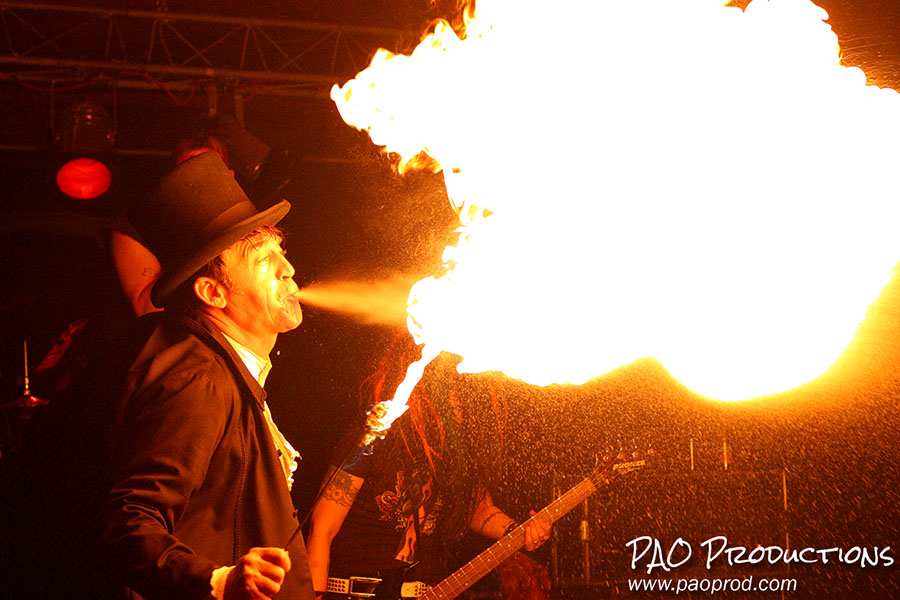
December 31st found me at the Vampire Lounge to see the Razorblade Dolls. Creeper and RivetHead also played the show, but this was before I fell in with RivetHead, and I had never heard of Creeper at the time. The Razorblade Dolls had previously gotten into trouble with the venue over their impaled pig head spectacle and the mess they made during the associated live show. This routine was a staple in their performances for some time, initially conceived as a kind of middle finger to one particularly troublesome venue but still practiced long afterward as a crowd pleaser. I actually took a couple of photos of vocalist Chris "Smitty" Smith wielding a mop following that earlier performance. Apparently, whatever issues that may have arisen between the band and the Vampire Lounge due to that earlier kerfuffle had been worked out, and the Dolls rang in the new year with a wild and totally unexpected stage show that made me wonder if the fire marshal was privy to any of it. "Get back," Smitty admonished the audience. There was a moment's pause, then a "No, really, get back." Out stepped a fire breather armed with a flask of alcohol as propellant, and a massive show of fire ensued. It was a crazy thing to do inside an indoor venue, and I don't know if they ever actually got approval for it, but it made for some spectacular photos. Initially doubtful of my ability to capture the scene, I recalled a quote from an old military photographer who had filmed atomic bomb detonations in the 1950s, suggesting that he would expose for "somewhere within" the brightness range and the exposure would be correct... somewhere. I tried to channel that advice into my own shooting for those two or three minutes where it mattered. I think I did pretty well in the end.
TO BE CONTINUED. . .
Interesting how I accidentally stumbled upon your blog. I don’t go looking. It’s hard to look back at Deep Ellum and look at it now. There’s some good things but there’s a lot of bad things that kind of suck the soul and atmosphere out of it. My name is Cabe Booth. I arrived in Deep Ellum in 1985. Had a KNON radio show when I was 15. Anyway I started off at Theater Gallery & Twilight room and hanging out with many interesting people who continued on and didn’t drop off the face of the planet. For a good 20 years to 25 years I was down there just about every night. Unless I was in Denton. I was involved in live music and booking bands or setting up shows. I did some booking at curtain Club in the first years of the millennium. But what people knew me from even if they didn’t know my name or ever met me. Was all the portraits that curtain Club that were painted and autographed. Then I did a bunch of trees and a bunch of Palladium Ballroom and a ton of them out in Grand Prairie at whatever they want to call that venue that was Verizon Theater. It’s like I want to sit down and read your whole blog And I have looked a lot of it. Wish I had the drive you have to blog about it I guess I was too busy painting and when I write I have too much to say. Anyway it’s late and I just wanted to drop a message saying hello. Nice blog. Very thorough and I recognize some names of course. I hope you keep at it. And I will subscribe. I hope you continue and maintain your drive. I know I did. Thank you for creating this.