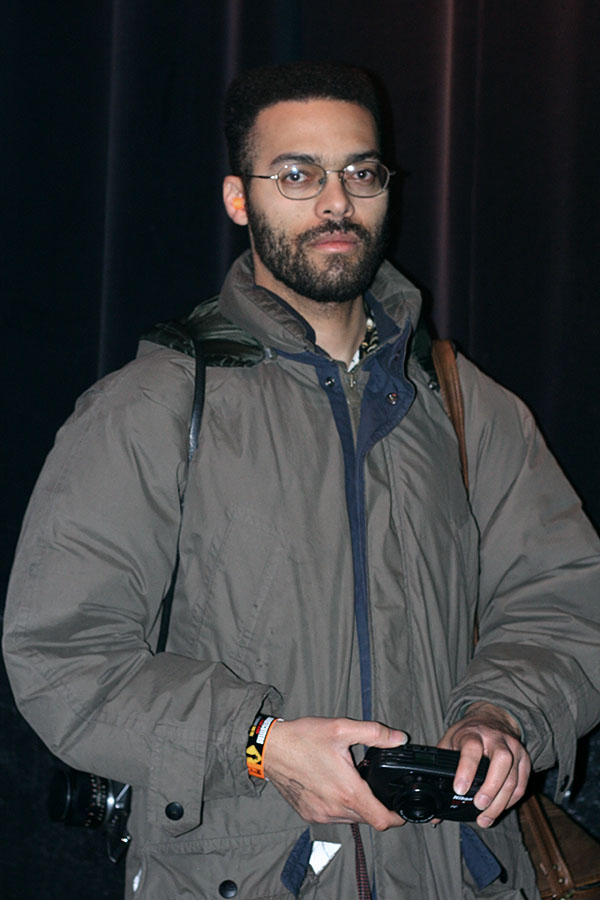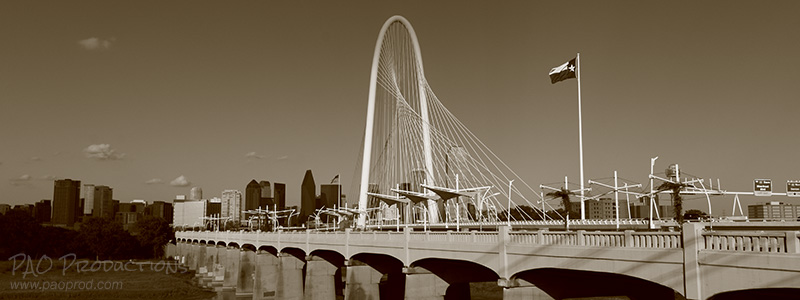

By early 2014, I'd been photographing live performances for a full seven years. Deep Ellum was "coming back," on the upswing again following a years' long period of decline. I was back where I had begun in terms of the types of venues and musical genres I was shooting, but my skill level had improved dramatically compared to the early days. The two years from 2014-2016 heralded the end of my regular activity in the scene, and a period during which I captured many of what I consider my best ever shots. The plug had been pulled on the Lost Art Open Mic in 2011, and after having largely turned my back on the spoken word scene by this time, my non-travel photography was once again singularly focused on live music. And, by and large, the live music was centered around a handful of bands with whom I had personal relationships. The bands were familiar, as were most of the venues by this time. But despite this, the act of shooting them with my camera often remained an adventure.
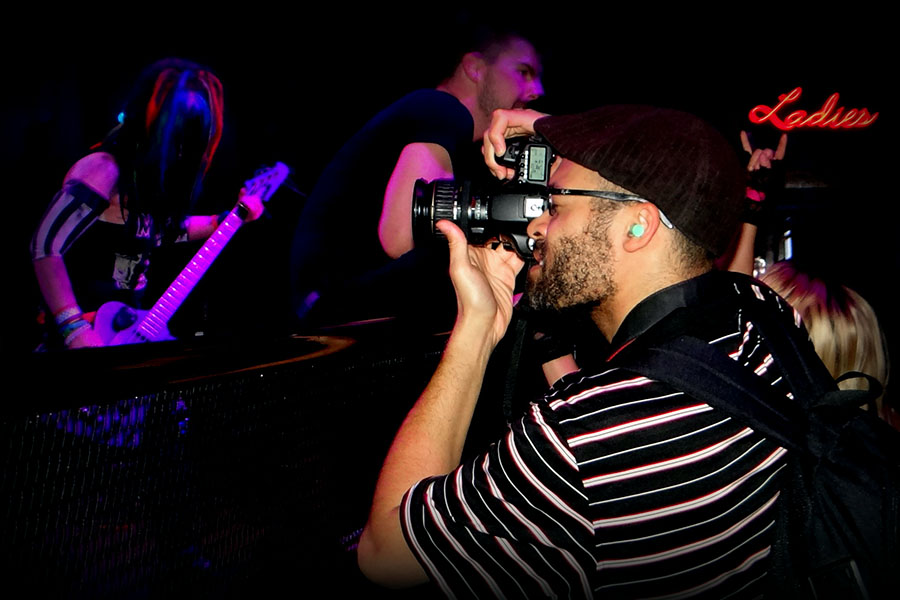
All too often, musicians clad themselves in black or lingered in dark areas of the stage where lighting was poor. Slick Lady Six was an early example of this for me: in 2007 I had struggled a lot with them because everyone in the original lineup had dark hair and dressed in black, making them frustrating to shoot without using a flash. J.T. of Kittyviolet and Silver Loves Mercury likewise habitually dressed in black or at least in dark colors, and he seemed hell-bent on lurking inside the darkest possible corner of the stage (this was in fact a deliberate choice to avoid being photographed, as he later admitted). It was often easier to shoot the drummer than it was to capture some of the performers standing near the front, at least when performing at a "big" venue like the Curtain Club. At small places like sports bars and tiny hole-in-the-wall clubs, everyone was much closer together on stage (if there was in fact an actual stage) and there was no place to hide. This was an advantage of shooting in places like City Tavern the old Rockstar Sports Bar. Familiarity with a performer's was another advantage, as it enabled me to anticipate where I needed to be and what I needed to do to get a shot.
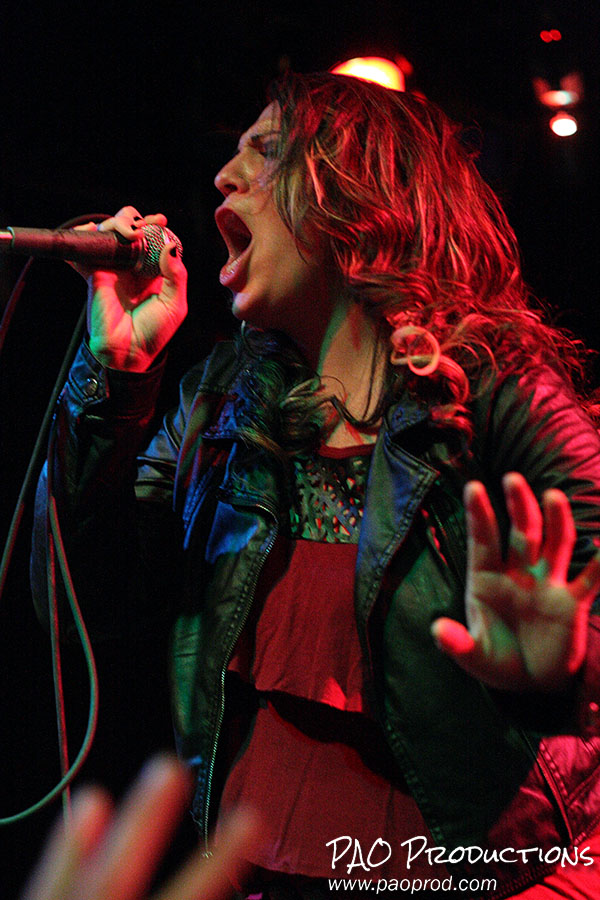
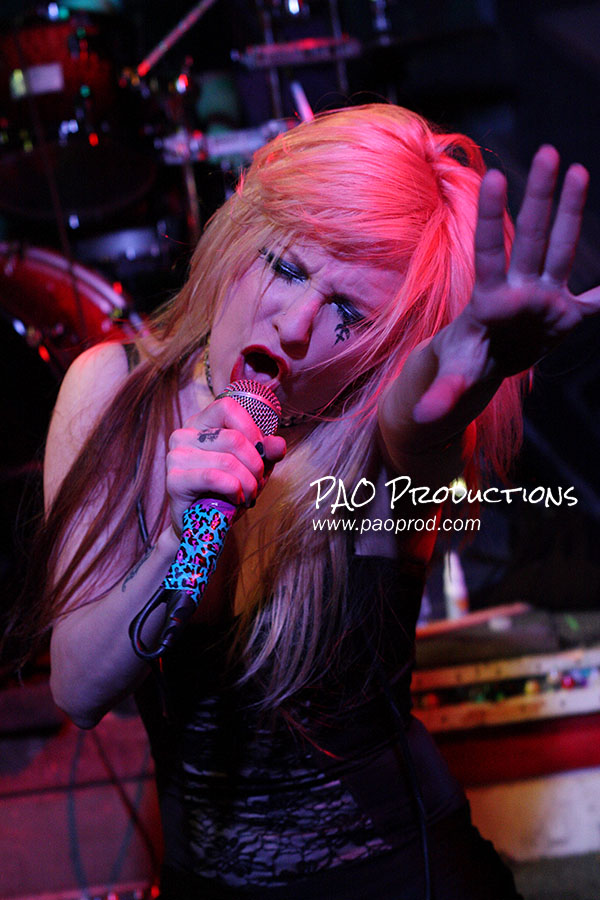
Photograph a performer often enough, and eventually you become attuned to their characteristic moves and mannerisms. You get to where you can anticipate certain poses or certain actions at certain points in the set, or the moves made in harmony with certain notes in a song, and in time you recognize everything that is unique to him or her. Some performers, Emmeline being a good example, only have one or two defining poses they strike during a performance – in Emmeline's case, it's obvious in a photo when she was performing "Shout!" or "Not That Girl," but not at all obvious what song she was performing at any of the other times. I knew all of Chase Ditto's poses, all the most common poses for Melody of Reverent and Yvonne of Polly Wants a Popgun, everything for Josh of Red Pyramid and for Scotty of Ten Can Riot. Andrea was a more unique case. Her moves were animated, often aggressively suggestive, and overall very charismatic onstage, and the audience, particularly the guys, just loved her. The camera loved her, too; she was one of those eminently photogenic people you're just drawn to as a photographer because it's so easy to get a good photo. With some performers that time is when they're fervid and intensely focused; with others it's when they're playing directly to the audience. Andrea had it for all of those instances and then some. And she was the only performer I ever had a problem shooting because of too much light – that near-platinum blonde hair and fair skin could actually cause her facial details to get blown out when she was directly under bright stage lighting. The Silver Loves Mercury performance at Wit's End in February 2014 was one of the only times I remember having to stop down the aperture to get usable photos. Ordinarily you're struggling to harness every bit of available light inside a club, even when using a flash, and high ISOs, wide apertures, and as slow a shutter speed or exposure time as you can get away with are just par for the course.
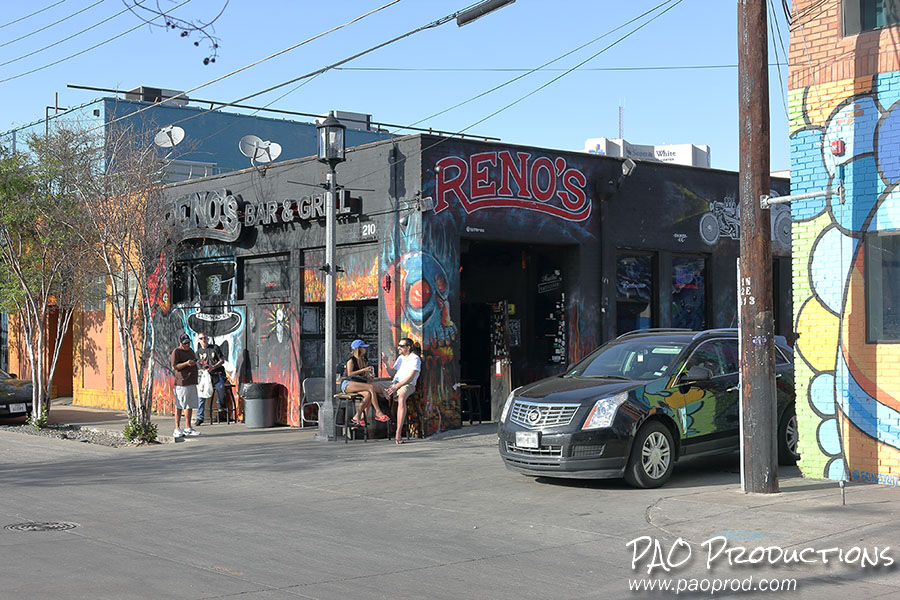
One venue I always found difficult to shoot in was Reno's Chop Shop in Deep Ellum. The performance room in the back was always either too dark, too crowded, or else too reflective of light for a flash with the paint and logo on the wall behind the stage to make my job as photographer very easy. DIK's inaugural live show was at Reno's; in fact, quite a few of the metal/industrial acts I followed loved the place and played there frequently, a source of continuing vexation for me as a photographer. Reno's had beaten the SUPs back in 2007 and 2008 by annexing the restaurant next door and rebranding as "Reno's Bar & Grill," something many viewed as means of sidestepping the new ordinances by presenting as a food establishment that also happened to have a club and live music stage attached to it. If that was indeed the strategy, it was a successful one.
The night of the DIK debut was a twofer for me, with a performance at the Gas Monkey Bar N Grill by Nevermind the Darkness immediately preceding it. I didn't know it at the time, but I was close to the end of my association with the NTD crew. I'd kicked off the new year with a NTD show at Poor David's Pub, right next door to my old Lost Art haunt Bill's Records, and I drove out to Shreveport for a performance at the Riverside Warehouse the following month. Ater that, I didn't see them again until a show at the Door nearly four months later. The show was one of those "pay to play" affairs where performers had to sell tickets to get onto the bill, basically a scam perpetrated by predatory promoters against hungry local acts. If a band sold enough tickets, they'd be good; if not, they had to eat whatever losses they incurred because they were forced to buy all the tickets beforehand. It's a despicable practice that no self-respecting musician should ever have to endure, and promoters who endorse this type of exploitation are scumbags. Naturally, I had purchased a ticket, but things didn't seem quite right with the band that night. Their performance wasn't anything earth shattering, but that happens sometimes and wasn't a great concern. What was a concern was the attitude I felt when I hung out with them after the show. I don't know what was going on that night, but whatever it was, it soured me enough that I made that my last time seeing or supporting the band. Maybe it was a feeling of ennui stemming from the "pay to play" situation, or maybe there were things going on behind the scenes that I wasn't aware of. Whatever was behind it, I had enough to deal with in my life already, and I walked away.
In truth, it was no great loss. To be brutally honest, NTD's material was not particularly arresting or memorable, and I don't have strong recollections of any of it now more than a decade after that final show. Unlike Reverent, With These Words, or the Razorblade Dolls, their music just didn't make any real impression on me. This isn't to say that it was bad, per se, or incapably performed, just that it wasn't particularly noteworthy. My association with the band was based more on an affinity for some of the personalities involved than it was on anything intrinsic to the music itself. And that's fine – it doesn't always have to be about evangelizing the greatness of someone's material when you're supporting them, or vice versa. But this cutting of ties, coupled with my rapidly diminishing enthusiasm for live photography, had an adverse impact on my show-going. Following the snafu at the Door, my show attendance for the rest of 2014 began a decline from which it never really recovered. Up through the end of May, I attended twenty-five total music shows, including one in Canada during an April jaunt Toronto. From June 1st through the end of the year, the number fell to sixteen, another of which was in Canada for the annual Celtic Colours festival. My music shows for the entire year of 2015 totaled only thirty, compared to the 41 of the year prior and including two that took place at Celtic Colours during another of my road trips to the Great White North. Things were close to winding down, but I'm getting slightly ahead of the story.
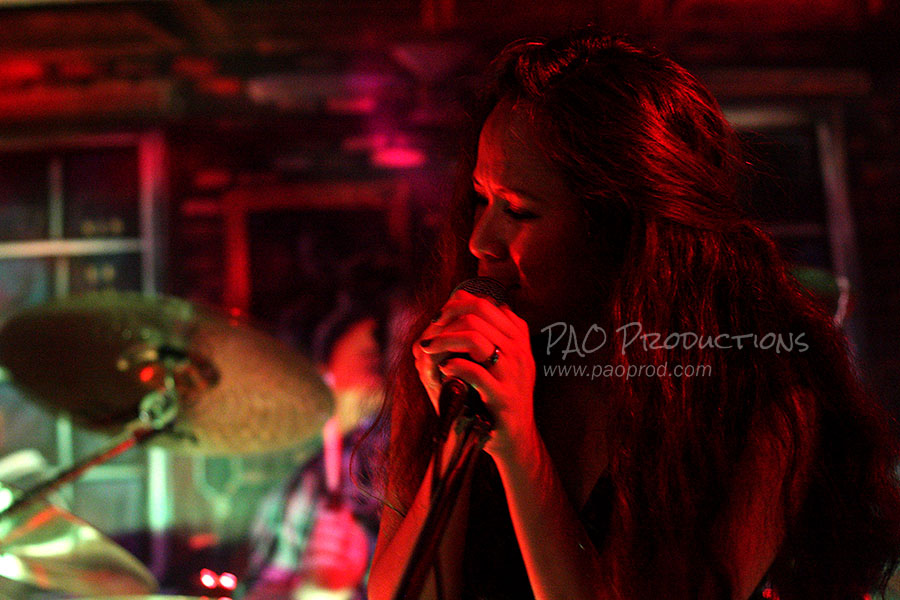
It was in 2014 that the RBC became a favorite spot of mine. It was underground, dimly lit, and the vibe was more punk and underground than the other venues in Deep Ellum. The RBC had gained notoriety many years earlier when, under its original name of Red Blood Club, an altercation took place that culminated in a stabbing, leading in time to the closure of the venue. The new owners made sure to stress that the new incarnation's official name was "RBC" and not the Red Blood Club, but this apparent attempt to distance the new club from the old didn't seem to be gaining any traction. I liked the RBC because the sound was great. On the other hand, it could be royal pain in the ass to shoot in. I had a lot of my attempts inside the RBC come out disastrously bad, but when they hit, they could really hit. Some of my favorite ever shots of Silver Loves Mercury came from this venue. The ambience of the lighting and the electric, near kinetic quality of the energy were perfectly in keeping with what an underground punk club should have. This is not to say that the acts booked to play the RBC were always punk or even punk adjacent; DIK, RivetHead, and Storm the Sun all played shows I attended at the venue. Love Stricken Demise, the hard rock band fronted by American Idol finalist Nikki McKibbin (who died from a brain aneurysm in 2020), also played the RBC. I had first encountered them at the Rail Club in late 2012, and got a second go at shooting them at the RBC in mid-2014.
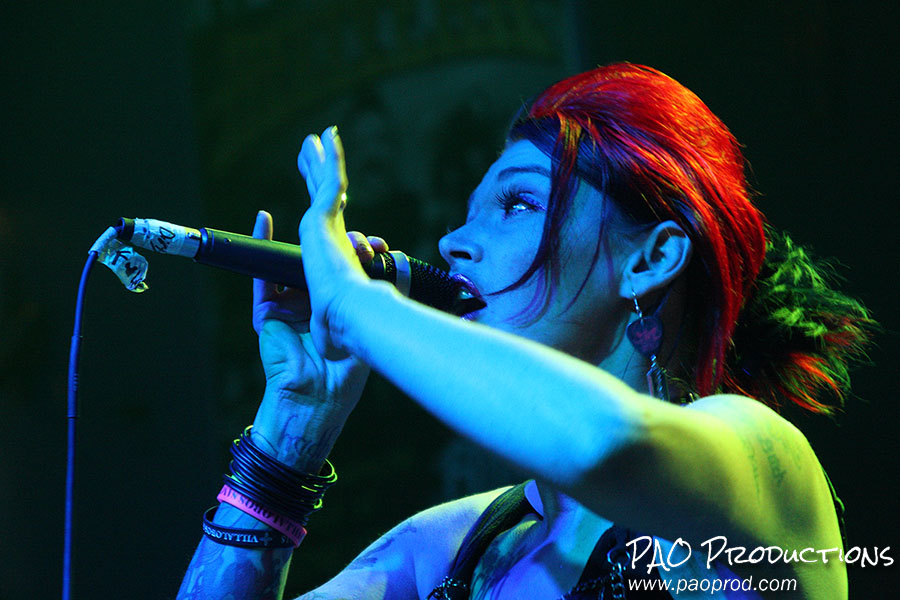
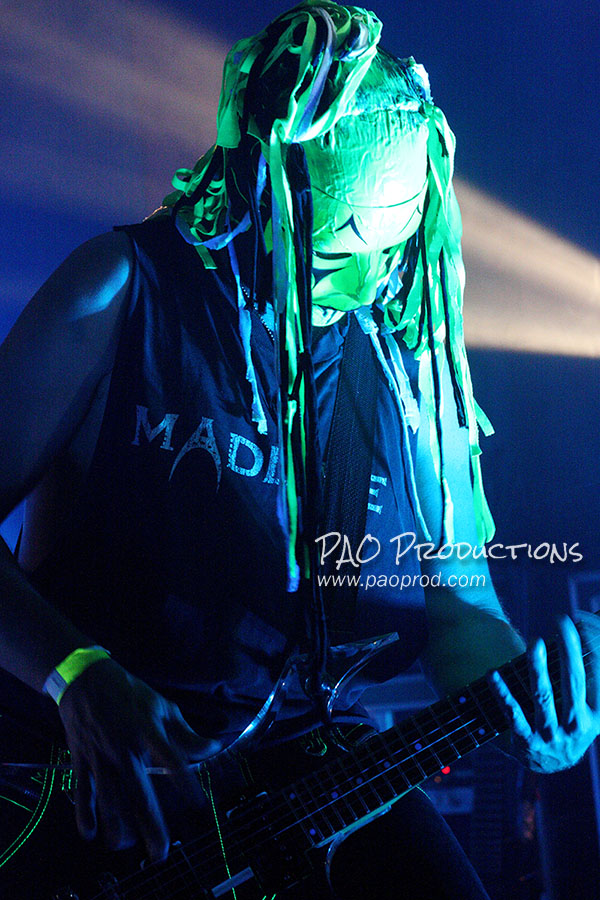
The remainder of my live music photography in 2014 was mostly of my choice local bands, particularly Designed in Kaos and Silver Loves Mercury, with a few short-lived favorites thrown into the mix. There was Honey, a straightforward hard rock band featuring LSD's Holly Wood on bass and fronted by Australian-born singer/guitarist Kes O'Hara. Like Silver Loves Mercury, Honey seemed to have trouble keeping a drummer; unlike with Silver Loves Mercury, I never really warmed up to any of them on a personal level. There were some performances by my friend Jason's band Kin of Ettins and Chase's band Storm the Sun. The Gas Monkey Bar N Grill's outdoor stage became a very late-in-the-game favorite of mine for performance photography, and I got some fantastic shots there. But overall, things were undoubtedly winding down. One highlight of the year was the Razorblade Dolls show at the Curtain Club on June 21st, the first time they'd played live since the Chris Smith debacle several months earlier. Shows would be rare for the next few years, but they hadn't thrown in the towel just yet. The June 21st show proved to be my final time shooting inside Curtain for... a while. It was followed up by a 4th of July show at Trees with Silver Loves Mercury and Designed in Kaos, and then by a November 1st DIK show at the Rail Club.
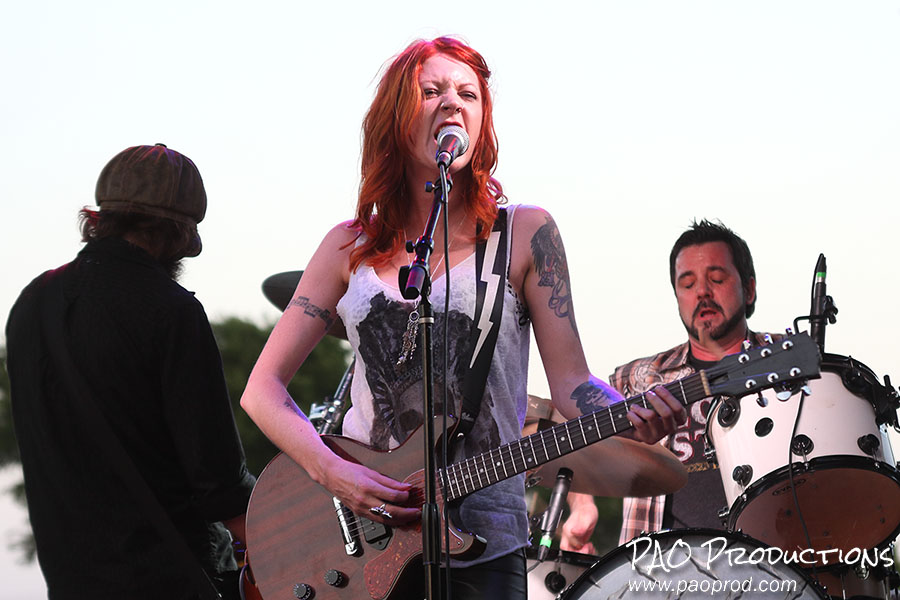
I had given up trying to shoot in Trees after having too many issues with the management. While in earlier days they had always looked the other way at me bringing a camera into local shows, by mid-2014 they had become a real pain in the rear about it. I was reluctant to try taking in a camera as I never knew whether or not they would make a stink about it. On one occasion when Chase's band was playing, they refused to allow it; Chase intervened and tried to work things out for me, but it was a no go – they wouldn't budge. It seemed they had decided to go the route of the arguably more "esteemed" venues like the House of Blues, where the only way to get a professional camera on the inside was through someone on the bill securing a special arrangement for you. Even then, the headlining act could exercise a veto over this if they so chose. Andrea was once supposed to get me a media pass for a Silver Loves Mercury show at the HOB, but she did not, and the management wouldn't budge. The other band playing that night wasn't even a big name; rather, they were a locally-based Journey cover band that played before SLM. I understood not allowing cameras when I saw Loretta Lynn perform there in 2009, but even for the comparatively rare local shows you had to have an "in." The Curtain Club had once hosted big name acts, but Wit's people had never once given me grief about taking a camera into their local shows. It was what it was, and I noticed this stance on photographers slowly becoming more and more prevalent among the clubs that hosted local musicians. The last time I ever photographed a show at Trees was that 4th of July show with Silver Loves Mercury and Designed in Kaos. My friends in Designed in Kaos set things up for me.
I hung it up in late 2014. I'd had enough. I was burned out on the entire experience of band photography. I was tired of the lack of reciprocal support from so many people in the local music scene. And I was even tired of the increasingly difficult parking situation in Deep Ellum since the reopening of Trees. Lack of support in particular weighed heavily against my drive to continue shooting bands. This experience is hardly one unique to me. Many a person who's ever tried to "support the scene" has drunk from a similar well of disappointment, and other photographers I've known have had similar complaints about musicians' and artists' propensity to take work without any recompense in the form of acknowledgement or cross-promotion. For every Jessi Golden, Chase Ditto, Steve Page, and Rah Stitchez in the scene, there are fifty others who will deftly screw photographers out of their due for what they've produced, and many of them will do it deliberately. It was the burnout from having spent years dealing with this that drove me to conclude it was time to stop. No more show and performance recaps, no more listing upcoming performances, and above all, no more more band and live performance photography. I was done, and I began to switch the focus of this website from supporting the arts scenes back to more firmly showcasing my own interests and activities. I continued to go to select shows, but they were were fewer in number, and I went empty-handed, leaving all the camera gear at home. It was going to take something big, I determined, for me take on that particular mantle again.
That something big took place on May 8, 2015. During my early years road tripping across the U.S. and Canada, I often stopped over at the Golden residence in Michigan. On one of these visits, likely in 2013, I told Jessi that I had looked back at what I had captured of With These Words back in the day and wished I had the opportunity for a do-over. I didn't expect such a thing to actually happen – sure, there was that one-off performance of a few songs with Ten Can Riot at the Arcade Bar, but that wasn't the same thing. I told Jessi that if I ever had the chance, I would try again with more refined skills and experience than I'd had the first time around. Then, months after I had decided I was done, she was coming back down to Texas, and With These Words was doing a reunion show. It was a bit of a shock, though a good one, and the excitement was in the air as I made my way into the Curtain Club with my gear for the first time in nearly a year. I don't remember whether I ever considered taking it out of mothballs for a "warm up" ahead of time; most likely I did not. But as the performance got underway, it was clear to me that although I still had the know how, shooting in clubs was no longer second nature to me the way it had been before. I still knew what I needed to do with the camera, where all the controls were and how they were operated, and what I needed to do in the moment to capture shots. But I was out of practice, and it did make a difference especially toward the beginning of the set. Six months of almost zero camera usage had made me quite rusty.
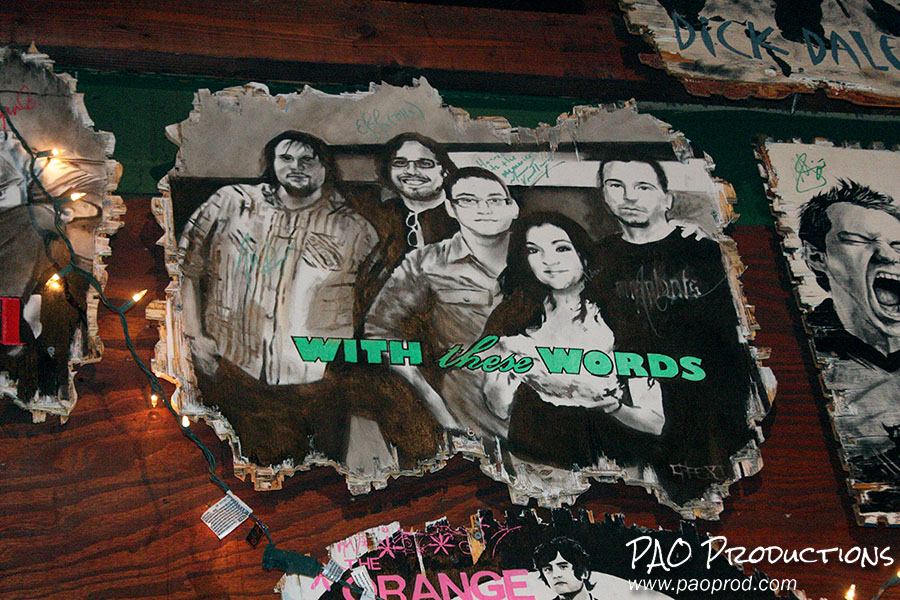
It had been some time since I'd seen With These Words play, but I'd never really lost touch with the band members. I saw Jessi and Justin during my early road trips, and still saw Jake and his fiancée (now wife) Kassey every so often. Justin had moved back to DFW for a while, and a group of us had individually contributed money to help cover the relocation costs. Eddie had joined a band called Def Maybe after WTW's demise, and I had seen them play a couple of times. In truth, I didn't have any real appreciation for Def Maybe or for their music, which struck me as very generic sounding punk. They weren't anywhere near the caliber of the band he'd left with respect to music, performance, or charisma, and my feeling is that Eddie probably felt this way about them, too. I don't think Eddie had ever really recovered from WTW's breakup. He had joined the band in late 2009, coming onboard just before their seven month hiatus for Jessi's pregnancy. With their return to the stage the following summer, he had always seemed to be enjoying himself a great deal while his hair seemed to get shorter and shorter with every show. During the farewell performance at Reno's, he had played through the entire set with a dejected, sorrowful look on his face. As for drummer Michael Villarreal, aka "Micko," I'd seen him pretty regularly in the first two years after the Reno's show, playing with Ten Can Riot, and twice since 2011 with his other band, Dog Company. I'd eventually stopped doing TCR shows, so it had been a while.
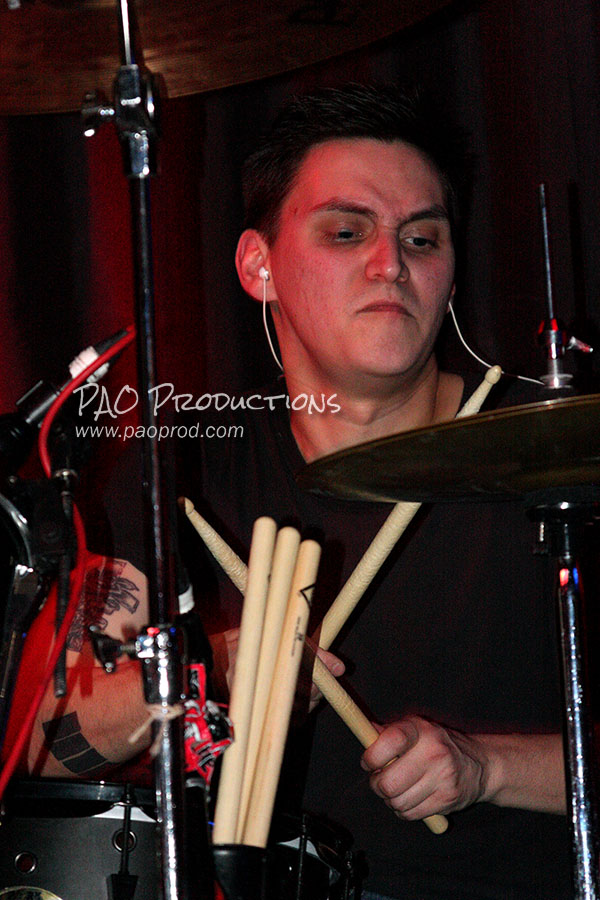
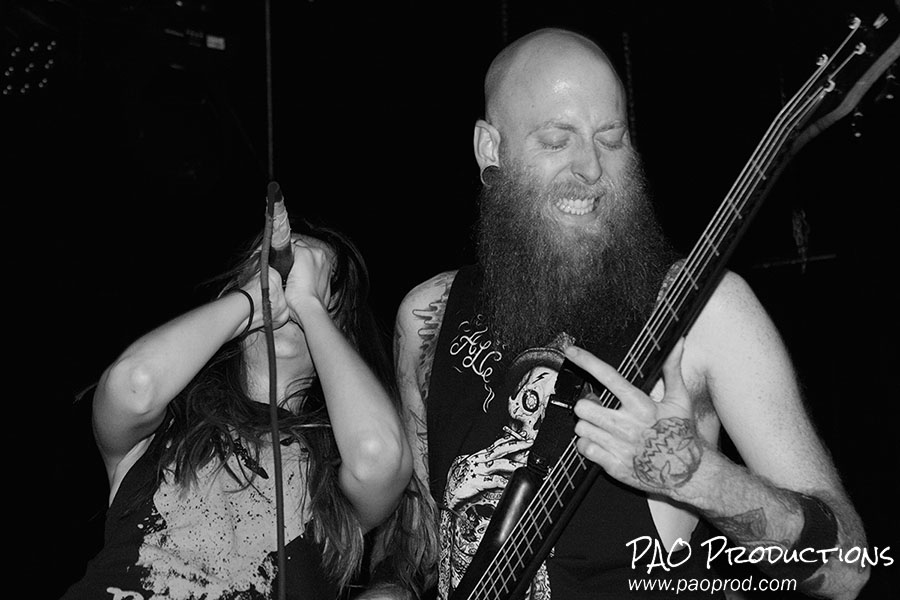
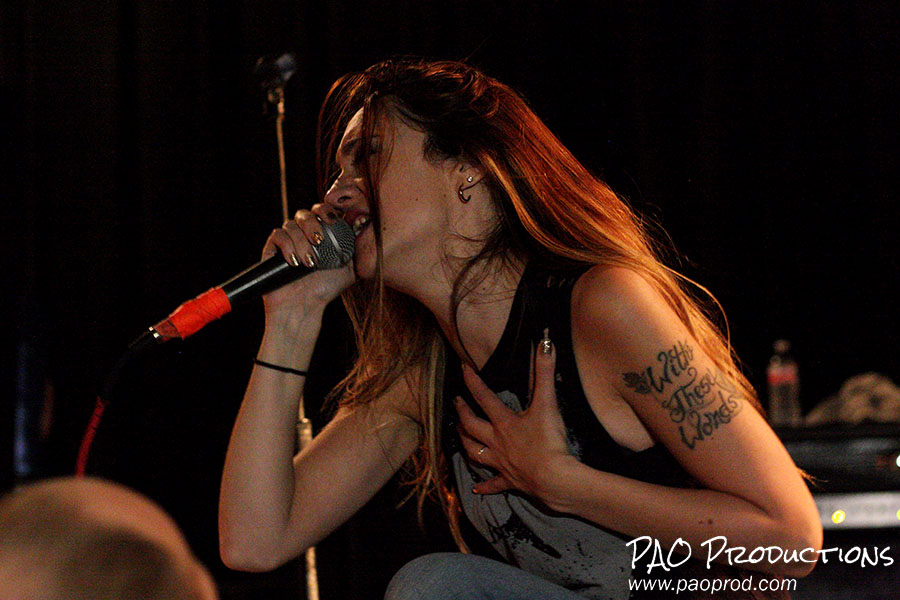
Ten Can Riot and Dog Company opened the reunion show, so Michael played three sets in a row. Both bassists that I remembered from the band, Eddie and Phil, played. Phil had changed his look quite a bit from his WTW days, now sporting a full beard and shaved head. Talk to him, though, and he was the same old Phil. It was great seeing some of the old crew of WTW family and followers again, some of whom I hadn't seen since that farewell night at Reno's. Overall, it was a good experience. I found I still struggled with the lighting at Curtain, which could vary from one moment to another depending on the caprice of whoever was managing it for the night. In the end, I didn't do quite as well overall as I'd hoped to, even after the usual 90% of shots were thrown out, but I did get some usable material. And Eddie was smiling again. Looking back on things, I feel this night was the point where I finally put most of the past to rest, at least as far as my photographic "career" was concerned. I'd gotten a second chance with one of the bands I didn't feel I did proper justice to, and a last opportunity to see one of my favorites that I'd thought I'd never get to see again. From this point on, there wasn't a lot left for me to bring forward from the early days. All of the bands I had followed from back then, save for the Razorblade Dolls, had run their course. And the Dolls were just barely hanging on. No, I wasn't satisfied – I rarely ever was – but in a way, I had come full circle.
But the story isn't over yet. The With These Words reunion was supposed to be the end, but things don't always work out the way they're planned. December 5th found me at the Liquid Lounge for the only other show I photographed in 2015, armed with my trusty old Canon Rebel SLR that I had retired in late 2008. Over the years, I had pulled this camera out of storage two or three times for the hell of it, and I had even used it to photograph (with poor results) one of Emmeline's open mic nights at the Crown & Harp in 2012. On Thanksgiving Day, I had taken it along on an "urban decay" shoot with Alex Pogosov and used it for several photos, and I now I had brought it along with me for the Silver Loves Mercury performance. Did I still have what it took to do a show on film? It had been a really long time, and I was going to find out. This wasn't going to be a "serious" shoot, just something I was going to do because I could. I hadn't used a film camera at Curtain/Liquid in seven years and to be honest I hadn't missed doing so at all. I'd had a staggering number of shots ruined while using film at that venue, not to mention the fact that Curtain was where the SLR I'd originally learned on had bitten the dust.
It was either the very end of 2007 or the very beginning of 2008, I don't remember. What is crystal clear in my memory is that I was using my original 1960s 1000DTL to photograph Screaming Red when the shutter button gave out. The formerly crisp, satisfying click gave way to a limp, rubbery "give", and when I took the unit to Wolf Camera to ask about repairs (they claimed to be able to fix "any" camera), the girl behind the counter asked me if I'd checked the battery. Yeah... I checked the battery on a manually operated camera. As I've mentioned before, most photo processing estabishments catering to the general public were by that time staffed by people who'd never worked with film and didn't know anything about picture taking with a "real" camera with aperture and physical shutter controls. I ended up replacing my old unit with a like model, but the replacement had issues with its light metering. I was able to get by based on prior experience shooting in familiar venues, but just barely, and I ultimately went through two or three others of the same model before I replaced it completely with the Rebel G. As a side note, Screaming Red's frontwoman was a gal by the name of "Screaming" Andrea LaRue. I would quip to Andrea years later that her band broke my camera.
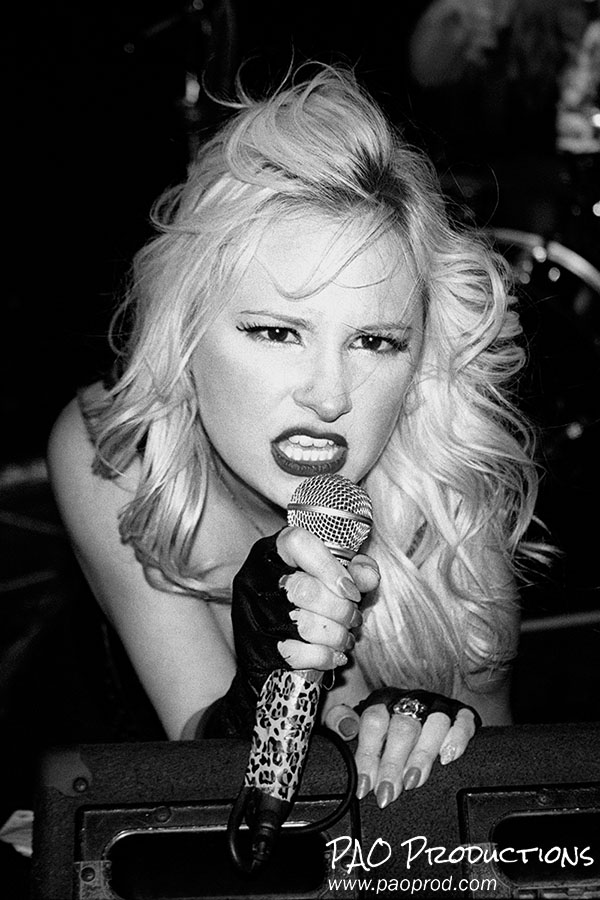
Andrea left Texas in 2015 while in the employ of a marketing firm (one must remember that most rock musicians are actually normal people with regular jobs offstage). The job sent her across the country promoting the firm's product, but Silver Loves Mercury remained a thing despite the singer's prolonged absences. While Andrea continued to perform with the band, scheduling shows to coincide with her periodic visits home, SLM appearances by necessity slowed to a trickle. But the job paid well, well enough to justify going on the road for a corporate entity, and Andrea's stated intention was to save up enough money to fund a later Silver Loves Mercury tour. The Liquid Lounge show took place during one of her sabbaticals to DFW, and the other act on the bill was San Antonio's Nancy Silva Project. I finished off the roll of Kodak UltraMax 400 that I'd used for the earlier urban decay walk, again not taking things too seriously but nevertheless trying to do the best I could. The results were somewhat mixed. In fairness, the Liquid Lounge had always been a challenging venue to shoot in, so I probably did about as well as could be expected especially considering the film stock I was using. One head-on shot of Andrea I decided to render in black and white from a film scan. I think it came out okay.
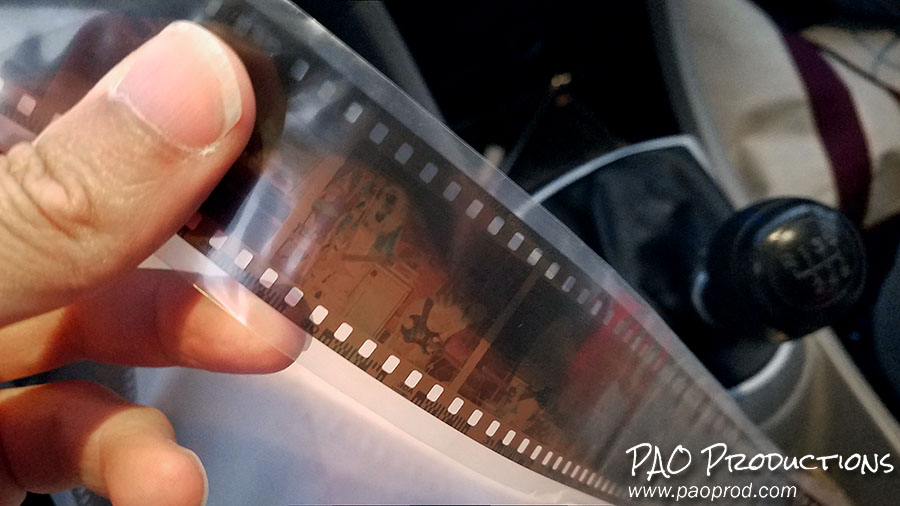
In truth, using 35mm film to photograph a show this late in the game was a stupid idea. That was the simple, unvarnished truth of the matter. While it could be fun to shoot an occasional roll of film, it was what happened afterward that reminded me of why I had stopped and of why I didn't miss dealing with celluloid. Developing, scanning, the entire process of getting something into a format suitable for display online – those were the aspects of the workflow I hated dealing with. Let's face it – although I originally learned photography on film, I have been a digital kid for my entire "career" photographing events from the original open mics at Bill's Records in 2002 all the way up to the present day. I started out with a cheap, inherited flatbed scanner and Photoshop Elements 1.0, scanning photographic prints and then refining them via the computer software. Today, I still deal with analog media on a regular basis for my archival and historical projects, and I have multiple techniques for getting these items digitized. These methods range from scanning prints on a flatbed scanner to using dedicated film scanning equipment to shooting on an easel or against a light box with a DSLR and macro lens. In all these instances, it takes quite a bit of effort to get an image into something I can work with using software and present in a digital format. A digital source eliminates all this effort and inconvenience. And that was why I hardly ever shot film anymore – I needed enough time to pass for me to forget how much of a headache the whole process always ended up being. Nevertheless, I would have one final go at serious band photography on celluloid.
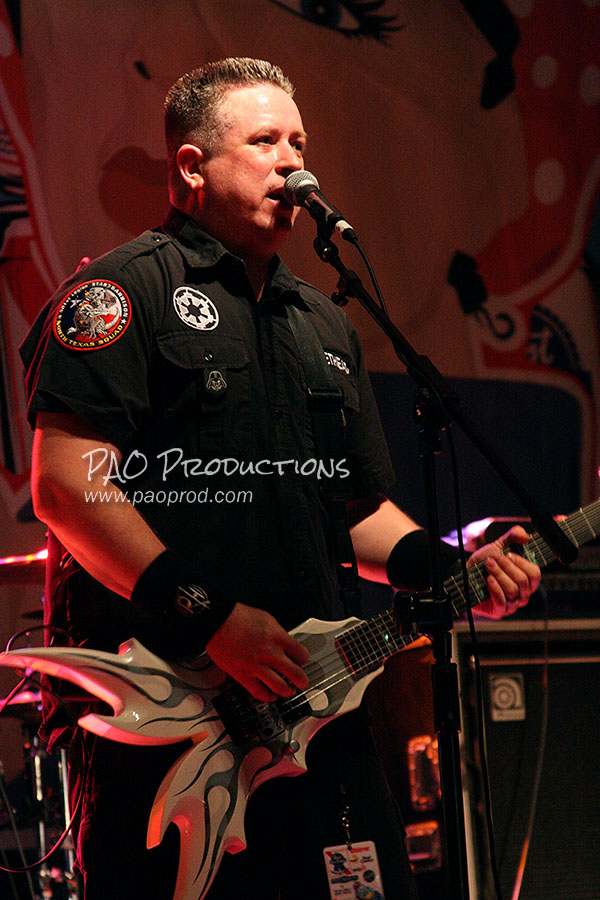
Despite being officially "retired," I started off 2016 with a show at the Rail Club. Kes O'Hara's other band, Hush Money, was playing, and the only reason I was there was because I was out with a certain someone I was borderline seeing at the time. Suffice it to say that I did take my camera, but the Rail had remodeled, and the new stage location wasn't nearly as conducive to capturing striking photos as the old one had been. RivetHead at the Curtain Club was the next show, at the end of February, and when April ushered in the 2016 Deep Ellum Arts Festival, I was there. The Arts Fest presented me with a rare opportunity to photograph a band outdoors on a well lit stage, which was an opportunity I wasn't going to pass up. It so happened that the bands I wanted to see – RivetHead and Designed in Kaos – were playing late in the evening, but this didn't matter; when it got dark out, there was ample stage lighting available to keep things practicable. RivetHead had been one of those bands that had always been around during my live photography career; my first time shooting them was in May 2008 at the Skillman Street Pub, and I had continued to follow them for years. I never knew their bassist Derek all that well, but I always got along well with Steve and Kevin and with Mark Halford, their drummer. By this time Halford had departed and been replaced on drums, and Laura Paleczka, formerly of Faded Grace, Peaceful Revolution Impossible, and a bunch of other bands, had replaced Derek on bass. Both bands delivered stellar performances that evening, and for fun I wielded both my Rebel G and my usual DSLR, alternating between them while being considerably more conservative with the film camera. Afterward, I hung out with the bands for a bit as I often did. It was a good night.
I finished out the year with an average of one show every other week, down precipitously from where things had been just a few years prior. Of twenty-four shows I attended in 2016, I photographed thirteen of them, and these were pretty much all played by the few bands I was still associating with. Madwak, fronted by Patty "Wak," was my most recent of these. I had initially made Patty's acquaintance through Nevermind the Darkness, and then again later on when I was drafted by Rah Stitchez of the Razorblade Dolls as a volunteer for Girls Rock Dallas. Girls Rock Dallas was a nonprofit organization with the very laudable goal of encouraging young girls to pursue music. During a week-long summer camp, participants were organized into groups based on age and given instruction in playing an instrument and in songwriting by volunteer coaches. At the end of the week, a live show was performed in front of a real audience. Both Rah and Emmeline were involved with the organization at one time, and so was Patty. I came onboard as a volunteer photographer (what else?), and many of my photos did end up displayed on the organization's Flickr page. Unfortunately, there were apparently things going on behind the scenes which led things to unravel, but not before Patty had either been kicked out or quit, depending on the version of the story being told. She went on to work with other organizations fostering children's interest in music, one of which, Boys Who Rock, I also did some volunteer photography for. In a crazy coincidence, Patty's old band, Major Issues, had been the first to play that "chick themed" show at Curtain back in January 2007, the very show that gave me my first introductions to Reverent and With These Words.
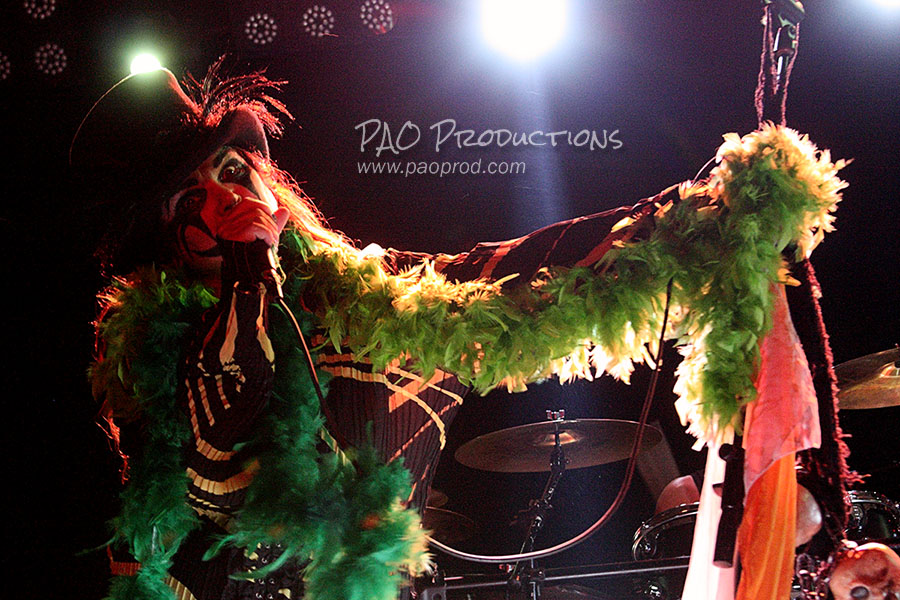
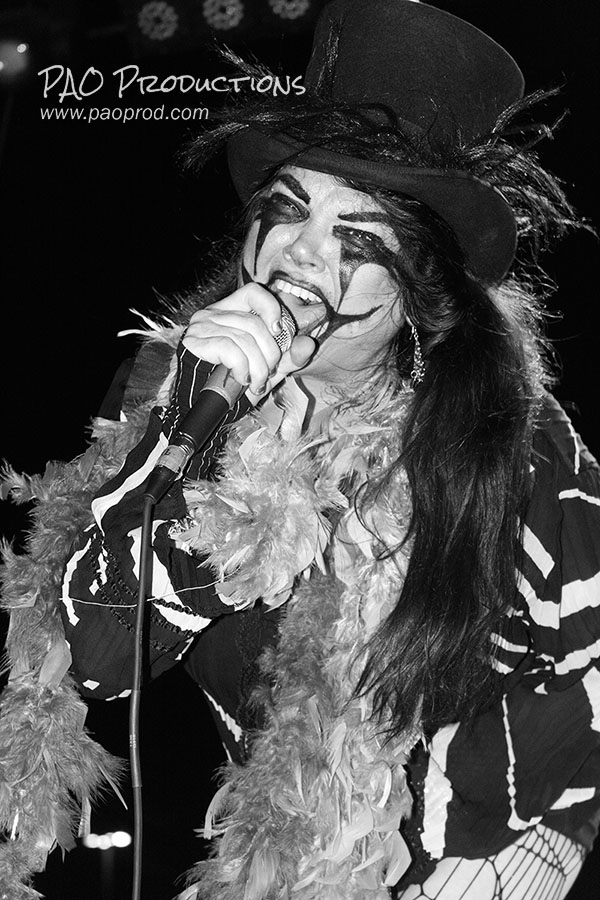
Patty Wak loved to go onstage in heavy makeup, with ostentatiously over the top outfits and a Victorian Western steampunk top hat. When I first saw her out of makeup at a Girls Rock Dallas contributor meeting, I didn't recognize her. As seems to be the norm for female-fronted rock bands, Madwak was often booked in concert with other female-led acts like Electro-Shock Machine, Nevermind the Darkness, Honey, Enamored, and Silver Loves Mercury. At least Madwak's lineup, from what I could tell, remained stable. On the other hand, as I've mentioned before, J.T. and Andrea of Silver Loves Mercury couldn't seem to hold a rhythm section to save their lives. Over the years a revolving door of musicians seemed to make the rounds on bass and drums, with no one combination seeming to last more than a handful of shows in a row. One guy who frequently filled in between "permanent" lineups was the drummer from Obsidian Throne, the band I had seen at Tomcats back in late 2007 that I'd thought was terrible. He would stand in on either bass or drums depending on which slot was currently empty. For a while SLM had a drummer with flailing long hair and a flamboyant, gratuitous style who was great as far as optics but who really needed to focus less on showmanship and more on keeping solid time behind the kit. And at another point they recruited a French guitarist who looked surprisingly at home in a cowboy hat and boots, enough that he later did a stint in local psychobilly act Ghoultown. I never bothered to get to know most of the rhythm players well, as there was a good chance they'd be gone by the next show.
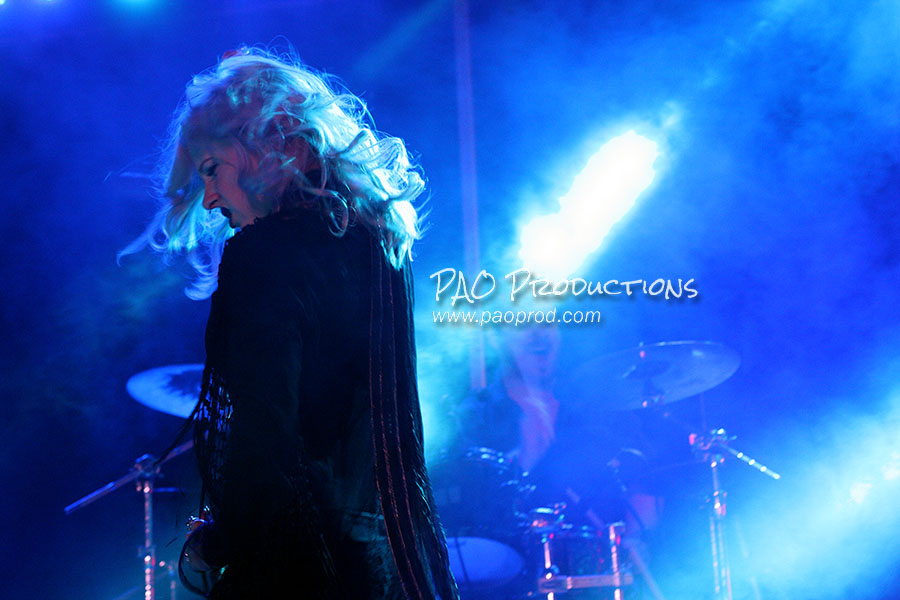
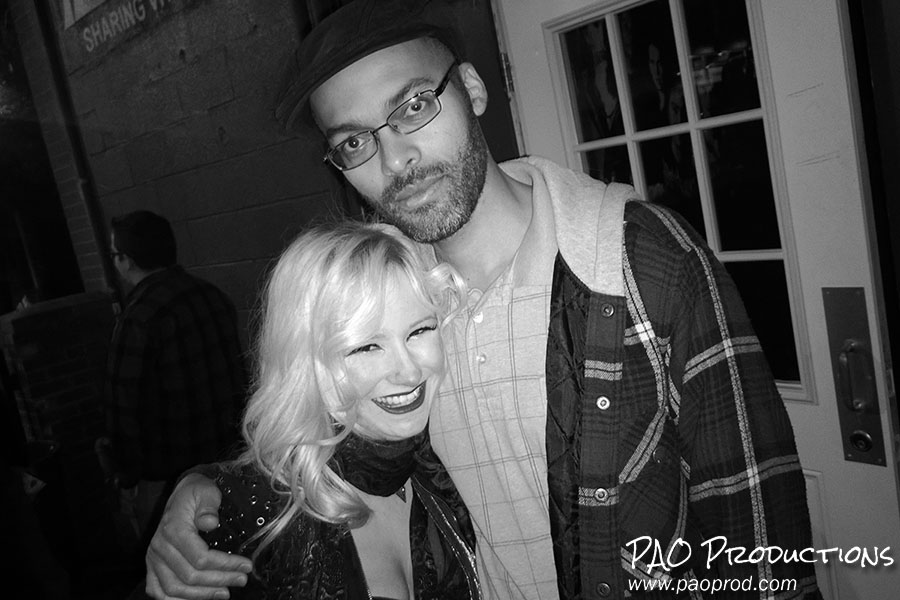
Both Madwak and Silver Loves Mercury ended up on the same roll of 35mm film that I used at the Deep Ellum Arts Festival, Madwak from a November 11th show at O'Rileys and SLM from a December 30th show at the Gas Monkey Bar N Grill. This was the last film I ever shot at a concert, and the last roll of film I would shoot in any capacity until 2024. The Gas Monkey had become one of my favorite venues from a photography standpoint: the stage was high, the lighting and stage effects often dramatic, and I could move about with comparative ease in contrast to most of the other venues I was still frequenting. Oftentimes at a place like Curtain I would have to pick one spot and stay there, as it could get impossible to move around much once the venue got packed. The December Gas Monkey show featured another band I took the opportunity to photograph, Zativah Kid. Zativah Kid was one of Benjamin Bachman's post-Nevermind the Darkness acts, and they went onstage with an act that showcased a giant, air-inflated penis, a prop that I thought was stupid. At the end of the night, Andrea insisted on getting a picture with "all her photographers" together, something I acquiesced to under slight protest. I'd much rather be behind the camera than in front of it. Although I didn't know it at the time, my stint behind the camera that night had recorded the last ever Silver Loves Mercury performance.
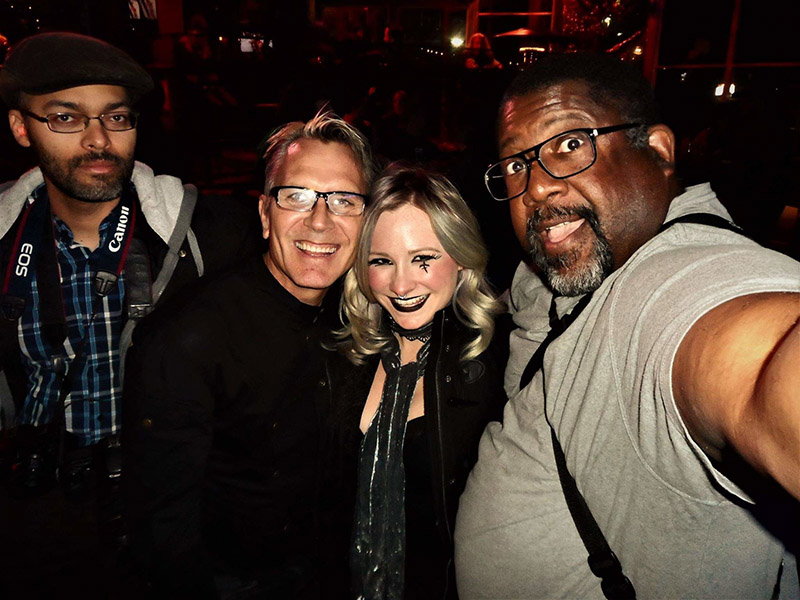
As mentioned earlier, Andrea had taken a job with a marketing firm that sent her traveling across the country, but she would return home on occasion and play a show. This arrangement seemed to work out well until her bandmate and collaborator J.T. Longoria formed another band and essentially buried the Silver Loves Mercury project. Andrea learned of the new development via Facebook while in California. I never heard what precipitated this act that Andrea viewed as a betrayal, but I'm guessing it may have been J.T.'s eagerness to get back onto the stage. He was after all a seasoned performer, producer, and multi-instrumentalist with multiple credits under his belt, including stints with Izzy Stradlin's Ju Ju Hounds and production work for King Diamond, RivetHead, and Volbeat. Whatever his reasons were, J.T.'s new project saw the end of his working relationship with Andrea for a while, though ultimately not forever, and it heralded the end of one of the last of my favorite local bands that was still a going concern. Nor was this the only one of my favorites to play their final show that night. Turmoil within Designed in Kaos culminated in the band imploding and in Rah also getting fired from the Razorblade Dolls. I am privy to certain inside details surrounding these developments, but I'm not going to air any dirty laundry or spill any tea here. Unfortunately, I opted not to shoot DIK that night at the Gas Monkey, so I never captured their final show together.
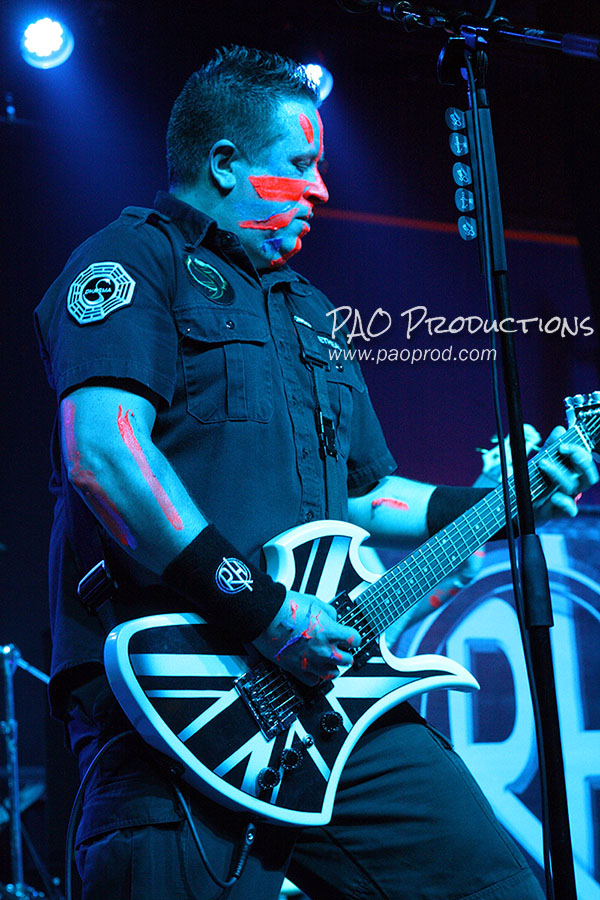
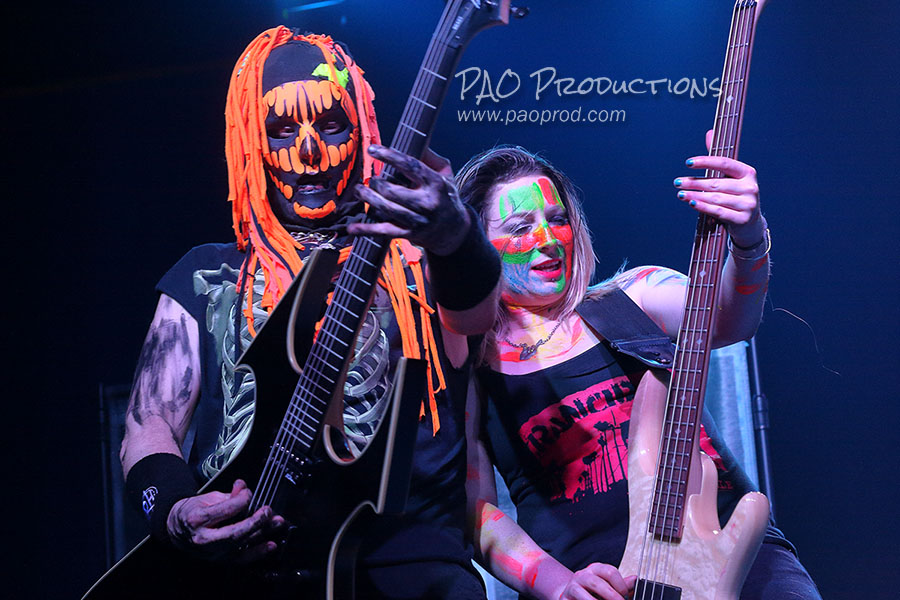
The Gas Monkey show should have marked the end of my career photographing bands, and for all practical purposes, it did. There were three one-offs after that, two of them in 2017 (for Madwak, the Razorblade Dolls, and RivetHead) and one in March 2018 (RivetHead). After March 3, 2018, I was done. There wasn't any hard line drawn anywhere, no formal announcement made on social media, no grand declaration of intent to quit. I just never did any "official" concert photography again. In the years since, I've only snapped a tiny number of live performance photos using my cell phone, mostly to send to people via text messages. I've never had any serious interest whatsoever in documenting a performance via my phone; in fact, I wish more people would put their phones away during shows and actually get into the moment again the way we did in the old days. The Razorblade Dolls show in 2017 felt "wrong" to me without Rah, and since she was (and still is) my friend, I didn't attend any more of their performances after August 2017 until their official "farewell" at O'Riley's more than two years later. I figured I'd see them out, as they were the last band standing from the days I had first dipped my toe into the scene. By then, they were thirteen years in with only two original members left, and they didn't really feel like the Dolls anymore. I attended fourteen shows in 2017, not counting two in Canada during my road trip; eleven in 2018 (not counting four in Canada during Celtic Colours); and seventeen in 2019 (not including three in Canada), the last year before the Covid-19 pandemic upended the entire live performance industry. Six of those seventeen were at city-sponsored outdoor festivals. After February 29, 2020, I was completely checked out, and since then my attendance at live music events has been rare. As far as I'm concerned, that chapter of my life is over.
So what are my final thoughts about my time in the music scene? Overall, I look at it as a growth period and a period of development both personal and avocational. I gained a lot of valuable experience behind the camera. I learned how to manage shooting in challenging conditions, in a highly unforgiving type of environment. I learned how to assert myself with more authority in social situations and learned important lessons about self promotion and online presentation. And I learned some lessons about the more unsavory aspects of the scene – the exploitation of musicians, performers, and, yes, photographers; the ephemeral nature of popularity and the critical requirement of self motivation to avoid losing drive in a scene that sometimes seemed on the verge of a decline; and the importance of strong character in one’s associates. But I also made some friends and acquaintances whom I still respect and admire to this day, even though some of them are now in distant states or cities and we correspond infrequently.
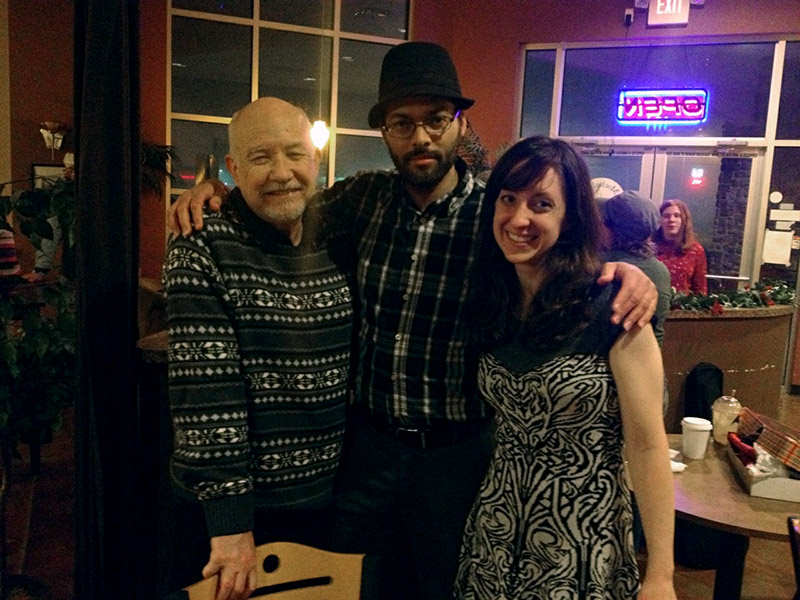
How do you measure success? In life, most of what's worth doing isn't the kind of thing that garners wide recognition for your skills or that confers a high degree of prosperity as traditionally measured. Personal satisfaction and fulfillment have to come from doing something you love doing and from doing it well, and when the creative well runs dry, when that inspiration has been exhausted, you have to know when it's time to move on. I'd been possessed by a passion for live music photography and over a period of years had exorcised it completely from my system. I moved on, and the future for me from a creative standpoint now lies more in my historical research projects and archival efforts than in any real attempts at forging a reputation for contemporary arts scene-related photography. I have some regrets from my years of active immersion amongst musicians and live performers, but I'm proud of much of the body of work I have to show for it. And that work, ultimately, is the true legacy of my years spent photographing the local music scene.