

(Update: I visit the old Fort Worth studio locations in this follow up post)
If you're a follower of this blog and website, you know that one of my interests is photography, both contemporary and historical. I've featured several collections of vintage and antique photos alongside my own, and I'm currently in the midst of a longish-term project to chronicle the histories of early local photographers. Toward this end, about five months ago, I began assembling a collection of Fort Worth-area cabinet cards. These included works by Burdge, Daniel, Mignon, Swartz, Thomason & Leffler, Works, and one of my rare acquisitions from a female photographer, Emma Lucore. I'd never heard of Emma Lucore before then, and I decided to have a look into who she was and how long her studio was in operation.
I soon learned that I was not the first person to take such a deep dive into Emma Lucore's history – John Hall had delved into that rabbit hole before me, as had a volunteer for the Tarrant County Archives. For this work, I have had the privilege of being able to review some of their findings. Everything in the account that follows, however, is based upon the results of my own research. There is a great deal of inaccurate and misleading information out there, particularly via genealogy sites, and everything presented here is based on information that is consistent across the historical record as opposed to crowdsourced. Unverifiable anecdotes and things not relevant to the main narrative have been omitted. Conjecture is employed where appropriate, but never as a substitute for or in lieu of statements which can be supported by factual records. I have included some necessary exposition concerning Lucore's husband and daughter, their histories being intrinsic to the telling of her story as fully and as completely as possible. First and foremost, however, this is the history of Emma Lucore, early Fort Worth photographer. All that out of the way, here is her story.
Details of Emma Lucore's early life are scarce. She was born Emma Jane Hollister in Concord, Michigan sometime in September 1847, the fourth of nine children (as far as can be determined) born to Ebenezer and Louisa Hollister. Emma's younger sister Clara, born in 1850, does not appear to have survived past infancy, and the exact date of Emma's birth does not appear to have been recorded in any currently accessible public records. The senior Hollisters hailed originally from New York, with father Ebenezer recorded by the 1850 U.S. Census taker as a sawyer and mother Louisa (nee Crippen) having no apparent occupation outside the home. The Census reported Ebenezer's business with as having an investment of $3,000 in capital and an average of three male hands on the payroll. Little else about Emma's family survives in public records.
By 1860, the Hollisters had relocated to the state of Iowa, taking up residence in the community of Eden Township, Fremont County. The U.S. Census of that year records Ebenezer and Emma's older brother Francis as farmers, and Louisa as a housekeeper. By this point the family had increased by a further four members, Emma being followed by three younger brothers and a younger sister, bringing the family to a total of nine living members. Significantly, another family had by this time also moved to Iowa, one member of which would come to play a pivotal role in the course of the eventual photographer's life.
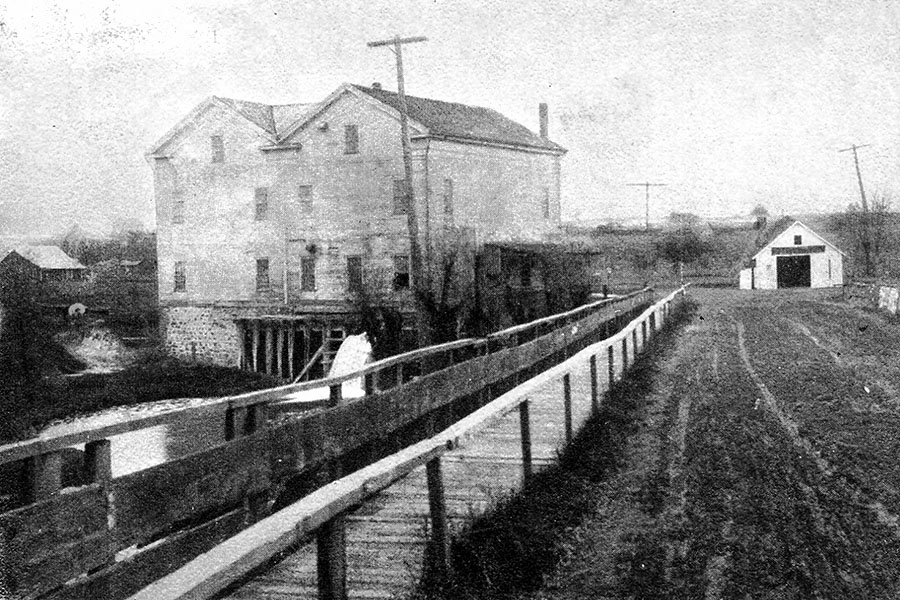
James Bassett Lucore came into the world on August 23, 1837, the eighth of ten children born to Lemuel Lucore III and Rebecca Lucore (nee Bliss). Like all of his siblings, he was born in Pennsylvania, where one sister and one brother did not survive past childhood. Throughout his life he preferred to identify himself by his middle name of Bassett, and official records and city directory listings would generally record his name as Bassett Lucore or Bassett J. Lucore (or even B.J. Lucore) from at least 1850 onward. Bassett's father Lemuel had once hosted elections for the township of Shippen, Pennsylvania, but by 1860 the Lucore family found itself in Linn county, Iowa, on the outskirts of Cedar Rapids and in the adjacent county to the Hollisters. The reasons for this move are lost to history; it may have been motivated by the lure of abundant, available farmland, or perhaps by some other, less practical reason. Whatever the cause behind it, the proximity of the Lucore family to the Hollisters inevitably led to Bassett and Emma crossing paths at some point. Exactly when the two met and what type of courtship took place is not recorded, but it can be surmised that it took place following the end of the conflict that would soon engulf the nation.
In April 1861, the American Civil War began. Draft registration records for the Second Congressional District of Iowa record Bassett as subject to military duty as of July 1863, at the age of twenty-six. Details of his actual service are sketchy at best, but an 1883 Fort Worth Daily Gazette notice suggests that he eventually rose to the rank of Captain. It can be guessed that sometime around (or following) the end of the war in 1865 he was engaged in a courtship of the young lady Emma Hollister, who would turn eighteen years of age in September of that year. What is known is that sometime after Bassett's acquaintance with Emma, the Hollister family relocated to a rural area of Collin County, Texas. The 1870 Census records the Hollister family as farm laborers, with Louisa the apparent head of the household, Ebenezer having died sometime between 1860 and 1870. Whether the family moved before his death or after it is unknown, but it is notable that by the time of the Census taker's visit, Emma was no longer a part of the residence. It seems likely that she accompanied the rest of the family on the move to Texas, given that her marriage to Bassett occurred in Collin County on July 21, 1868, but by 1870, she and Bassett had settled in Cedar Rapids, Iowa. The Census of that year records Bassett's occupation as bookkeeper for Wm. B. Leach & Co., with Emma "keeping house."
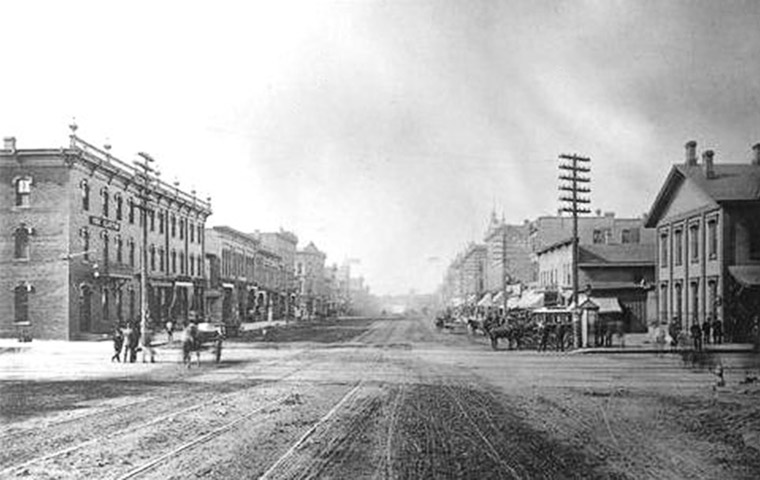

By 1876, Bassett was employed as bookkeeper for R.G. Brock & Co., a firm dealing in "coal, wood, etc." The elder Lucores were now living with him and Emma, an arrangement which had been in place for some three years and which would continue for several more. 1879 would see the death of Bassett's father Lemuel, and his mother Rebecca would follow in February 1883. At this point, freed of the responsibility of caring for Emma's elderly in-laws, the younger Lucores pulled up stakes and undertook a move down to Texas. This was presumably to be closer to Emma's family, though I've never found anything in the historical record to confirm this. The Fort Worth Daily Democrat Advance does record at least one visit made to Fort Worth by a "Miss Lucore" (presumably Emma, misidentified) in May of 1882, which supports this assumption. In any case, the March 25, 1883 edition of the Fort Worth Daily Gazette announced the arrival of "Capt. B.J. Lucore, of Cedar Rapids, Iowa" in the city to visit family, adding that "the captain will probably remain here." And from that point on, the Lucores appear to have thrown in their lot with all the other migrants to post-Reconstruction era Texas.
(Courtesy of the Fort Worth History Center, Fort Worth Public Library. Historic Photograph Collection, A-002)
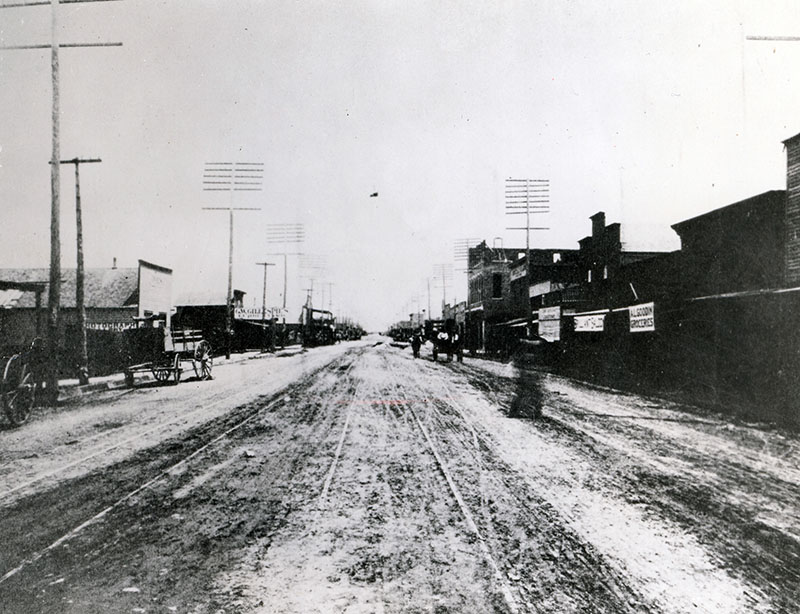
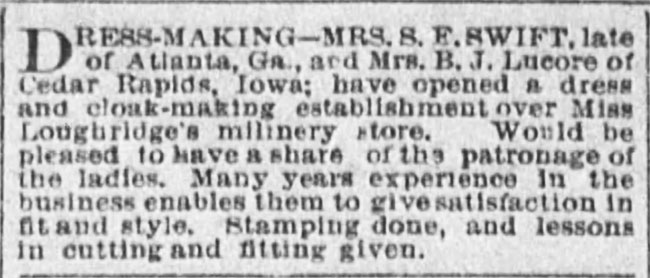
In the 1880s, Fort Worth was a frontier town on the cusp of a major transformation brought about by a railroad revolution and population boom. Taking up residence on the east side of Harding between East 10th and 11th Streets, Bassett found work as a carpenter for J.L. Taft, while Emma began an association with Mattie Loughridge's millinery store at 507 Houston Street. The Daily Gazette ran advertisements seeking housekeepers and blouse makers for the Loughridge establishment in late 1884, with Emma provided as contact. By the end of that year, Emma, in partnership with Mrs. S.F. Swift of Atlanta, Georgia, had set up her own dressmaking establishment above the millinery store. Newspaper advertisements touted the two proprietors' collective years of experience in the trade while also promoting their availability as instructors for cutting and fitting, solicitations which appear to be the earliest available references to Emma's talents as a seamstress. It's unclear how long this business endured; the last reference I found in the classifieds appeared in February 1885, but the Gazette tells of Emma fleeing the summer heat for her "old home in Cedar Rapids" as of mid-July of that year. The following year saw Bassett transferring a tract of land in West Cedar Rapids to Frank and Anna Ledar for $2,200, but, more importantly, Emma sent to press what appear to be the earliest surviving records of her work in the field of photography.
On September 16, 1886, the Cedar Rapids Gazette carried an advertisement for the "New Photograph Gallery in the opera house block," where negatives could be made to order and cabinet cards procured for $2.00 a dozen. The "opera house block" referred to the recently built Greene's Opera House, completed in August 1881, whose location served as a kind of hub for multiple nearby artistic establishments. These included the Krebs Bros. art store, Emma Curtiss's art studio, and Snell's Patent Water Colors. A "Miss Brockway" had given art instruction at a studio inside the opera house building itself, and, after October of 1885, artist Charles E. Hooven operated an apparently successful portrait studio inside the opera house block. Hooven's final (accessible) advertisements for his studio appeared in April of 1886, while Emma's first recorded advertisements for her photograph gallery made their appearance in late August. Although it can't be stated for certain, a survey of period advertisements referencing the area surrounding the opera house suggests that Emma may have taken over Hooven's location. Perhaps she had remained in Cedar Rapids through the previous year's summer and winter and on into August of 1886, or else she had made a second (possibly intended to be recurring) annual visit there with the same goal of escaping the heat. Whatever the case, surviving newspaper announcements identify the Cedar Rapids gallery as Emma Lucore's earliest known photography studio. How long this Iowa location endured is unknown, as is the date on which Emma returned to Texas. Emma doesn't appear to have returned to Cedar Rapids following that eventual departure; as for the studio, there appear to be no records of it beyond 1886, suggesting it was very short-lived.

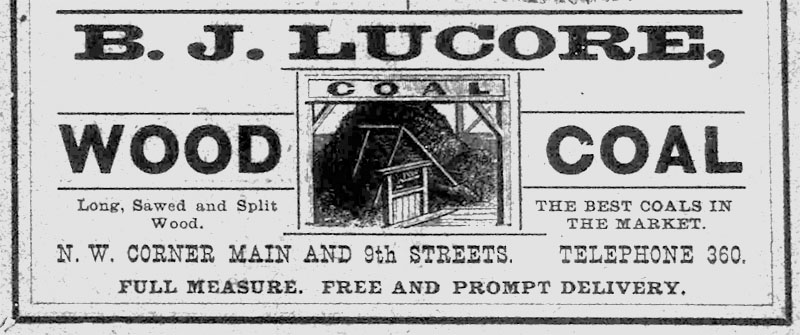
In December of that year, the first ads for J.B. Lucore & Co. appeared in Fort Worth's Daily Gazette. Situated at the northwest corner of Main and 9th Streets, the Lucore yard represented a joint venture between Bassett Lucore and butcher Alexander Canto, and its stock in trade consisted of stove wood, coal, ash, oak cord, and fuel. In keeping with Bassett's preferred naming convention, the 1888-89 Morrison & Fourmy's General Directory of the City of Fort Worth included the soon rechristened enterprise of B.J. Lucore & Co. within its business directory; the Lucores' residential address was given as 109 East 3rd Street, between Main and Rusk (present-day Commerce Street), right next to the recently constructed Fort Worth Opera House. That location on 3rd Street became the headquarters for a second Lucore business run jointly by Mrs. Emma Lucore and former New York photographer Gurney E. Ward, the establishment of which was proclaimed by an attractive quarter page advertisement in the year's city directory.
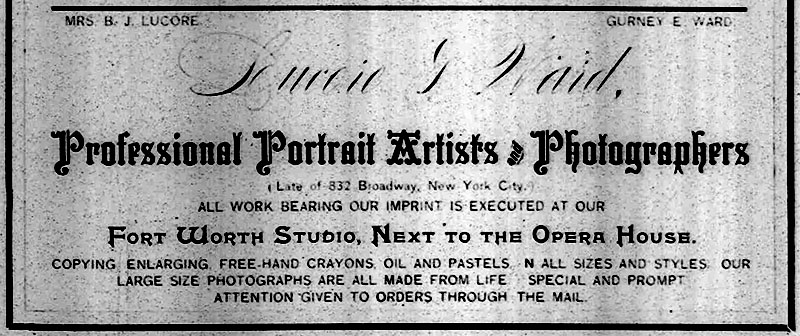
Exactly what brought about this partnership is unknown. I have not been able to uncover any clues as to what brought Ward to Fort Worth or what led him and Emma Lucore to enter into business together. Certainly the fact of Ward having a woman as business partner would have been seen as somewhat irregular during the time period. It was unusual for sure – while Emma Lucore was not the first woman in Fort Worth, or in Texas, to work in the business, during the late nineteenth century, photography studios owned by women were much fewer in number and female photographers far less common in comparison to their male counterparts. Thirty miles to the east in Dallas, the Mistresses Travis and Birkland operated a studio at 505 Main Street (present-day 805 Main) from 1886-1887, and a daguerreotypist identified only as "Mrs. Davis" had set up temporary shop in Houston as far back as December 1843, but these were mere currents in the stream of an overwhelmingly male-dominated industry. The earlier Cedar Rapids studio may have whetted an appetite in Emma for making her own way separate from that of Bassett. It's also possible that the brief tenure, and perhaps failure, of the Iowa studio had impelled her to now partner with a more established photographer. The fact that the Fort Worth photo gallery was likewise set up in an opera house block is an interesting circumstance for which the historical record provides no insights.
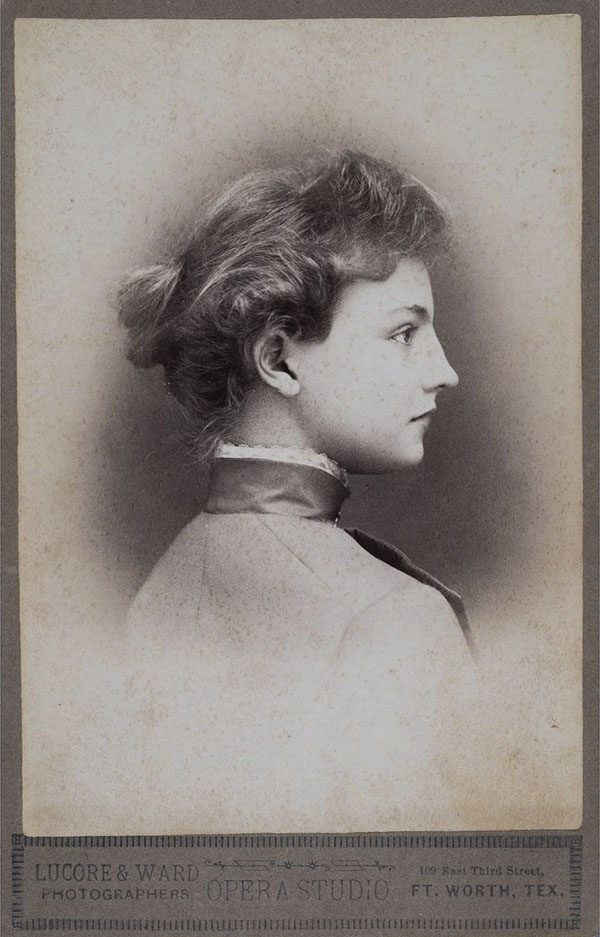
(From the collection of John Hall/Rodeo Tintype)
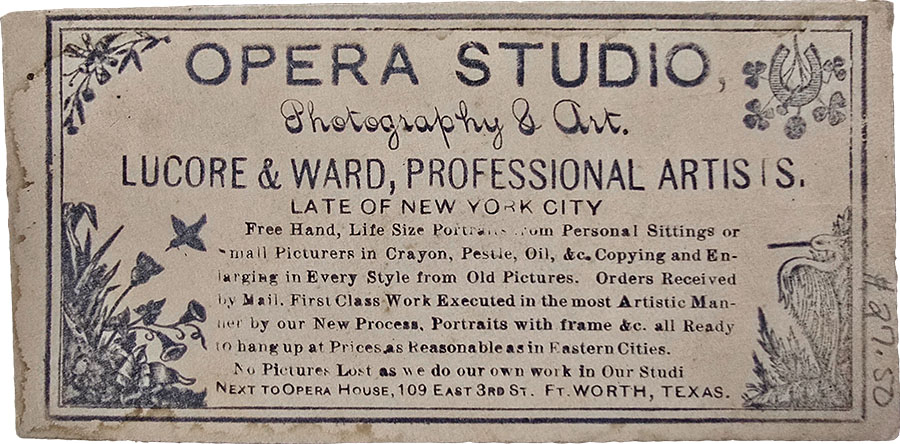
(Dalton Hoffman Collection, Tarrant County Archives)
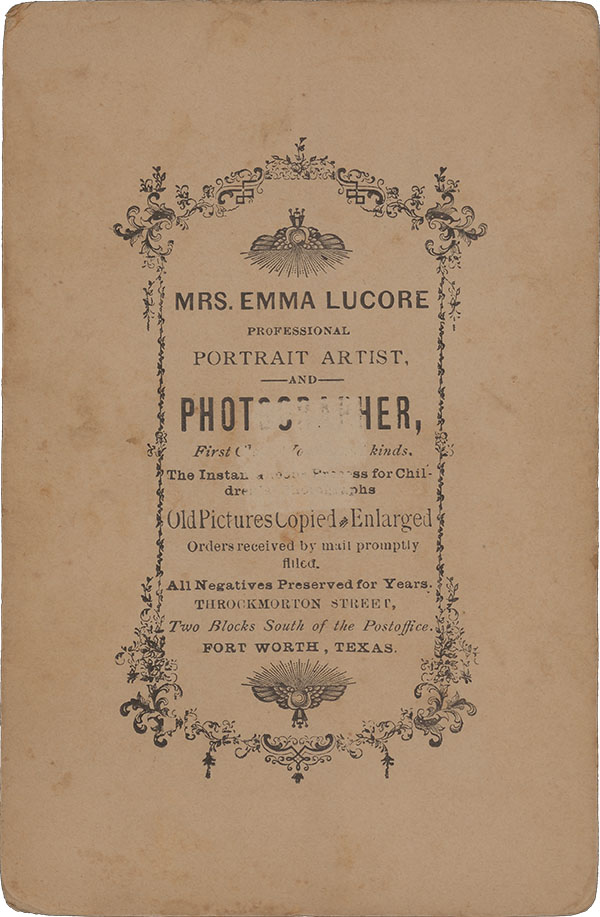
The partnership with Ward persisted for around two years. Patrons looking to have photos taken and their likenesses preserved for posterity could call upon the Opera Studio for guaranteed "first class work" done entirely in house. In addition to the standard industry fare, Lucore & Ward, Professional Artists offered life-sized portraits alongside the usual crayons, cabinet cards, and cartes de visite. Enlargements were available, copies could be made of previously printed works, and print materials boasted of "The Instantaneous Process for Children's Photographs." Mail order service was even offered, with "special and prompt attention given" to orders received via the postal service. Business was evidently brisk enough to warrant the acquisition and opening of a studio five blocks away at 808 Main Street, at the present-day location of the Little Red Wasp Kitchen & Bar, just one block northwest of the Lucore & Co. yard. Whether this was a successor studio, or one run concurrently with its antecedent, is up for debate. I could not uncover a single piece of information from any proper source that allows for a definitive placement in the Lucore timeline for the Main Street studio; indeed, there appear to be no archived advertisements or mentions of it whatsoever in any currently accessible media, historical or otherwise. Contemporary newspaper advertisements and articles (at least those which are available) never reference it by name, and available city directories point only to the studio on East 3rd and the later one on Throckmorton. All we have for 808 Main are the cabinet cards themselves, which bear the unmistakable imprint of "Lucore & Ward," and the 808 Main Street address on both front and back.
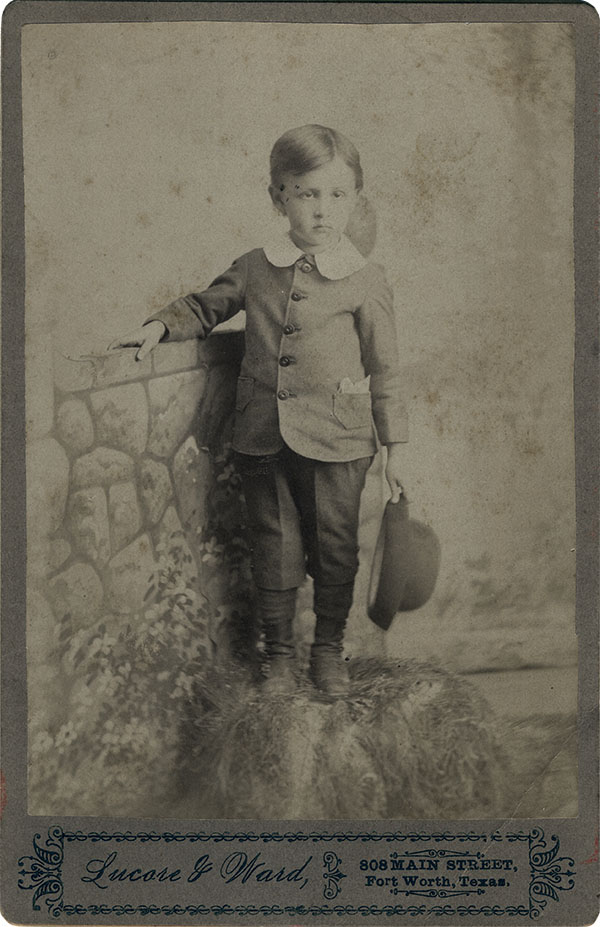
The photography outfit Sawyer & Brittingham is known to have occupied the Main Street space during the late 1880s, and a November 1889 announcement in the Kansas-based Wichita Star tells of their return from Fort Worth, Texas and their opening of a new gallery over Mosbacher's jewelry store. Additionally, the 1889 Sanborn fire insurance maps for Fort Worth recorded the presence of photography studios on both East 3rd and Main. Taken together with the known year of Ward's departure, these facts seem to point to a time frame of around 1889 for Lucore & Ward's Main Street residency, placing it after the opening of the Opera House studio. Two January 1888 notices published in the newspaper informed readers of letters awaiting pickup at the post office, one of them addressed to the "Opera Studio." While not conclusive proof, this does lend additional support to the probable chronology. Although it's possible that the two Lucore & Ward studios were operated simultaneously, running two locations within a quarter mile of each other doesn't seem like a viable business strategy, particularly given the number of competing studios already operating in the area. I thus favor the assumption that the Opera House studio closed for an unknown reason, and Lucore & Ward relocated to the recently vacated quarters on Main.
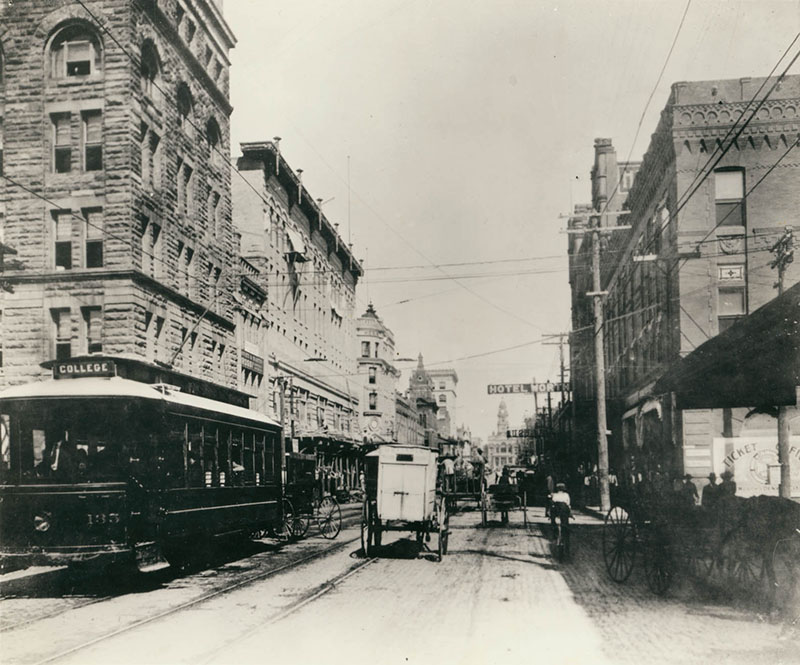
(Courtesy of the Fort Worth History Center, Fort Worth Public Library. Historic Photograph Collection, A-0006)
Just how much of a role Gurney Ward played in the actual day-to-day of the business with Emma is unclear. Despite his being a seasoned photographer, there's no firm evidence that he had any involvement with daily operations aside from lending the use of his name, an act which may have conferred a modicum of legitimacy to the outfit. On the other hand, there's little in the historical record to prove that Emma herself played much of a role in the internal functioning of the studio outside of her role as proprietor. Indeed, in the days and months following Ward's eventual departure, she would publish numerous advertisements in the Daily Gazette seeking experienced men and women (but mostly men) to work in retouching, copying, printing, and actual photography, as well as for management of the gallery itself. Interestingly, the 1888-89 Fort Worth city directory lists the 109 E. 3rd Street address as Ward's residence. Was he boarding with the Lucores, perhaps? The answer to this is unknown, but in 1890, his partnership with Emma dissolved, Ward relocated to Abilene, where he entered into a partnership with photographer T.C. Tune. He would buy out Tune's share of the business one month later, and eventually set out on multiple mining expeditions in pursuit of buried treasure.[1]
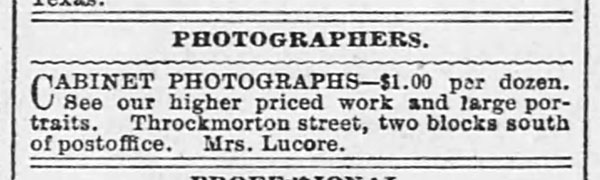
Ward's 1890 departure seems to have coincided with the closure of the 3rd and/or Main Street studios. Bereft now of a business partner, Emma soldiered on as sole proprietor of a new location on Throckmorton Street, two blocks south of the old post office. Keeping the business afloat entailed the procurement of significant help in the form of a manager with as many as seven additional men brought on as assistants. Cabinet cards, advertised at $1.00 per dozen during the spring of 1890, rose in price to $3.00 per dozen during the busy season for the studio's "best work." Based on the higher rate, and on newspaper advertisements seeking "an operator who can retouch and manage a first-class gallery having seven men as helpers," one can presume that business was fairly good during at least a portion of the time the Throckmorton studio was in operation. The final business listing for Emma Lucore appears in the 1892 Morrison & Fourmy city directory, and following that, no further record of her in connection with photography exists. The historical record is silent regarding the reason for her retirement, but there is one possibility that cannot be discounted: in 1890, she and Bassett adopted their daughter, Ethel.
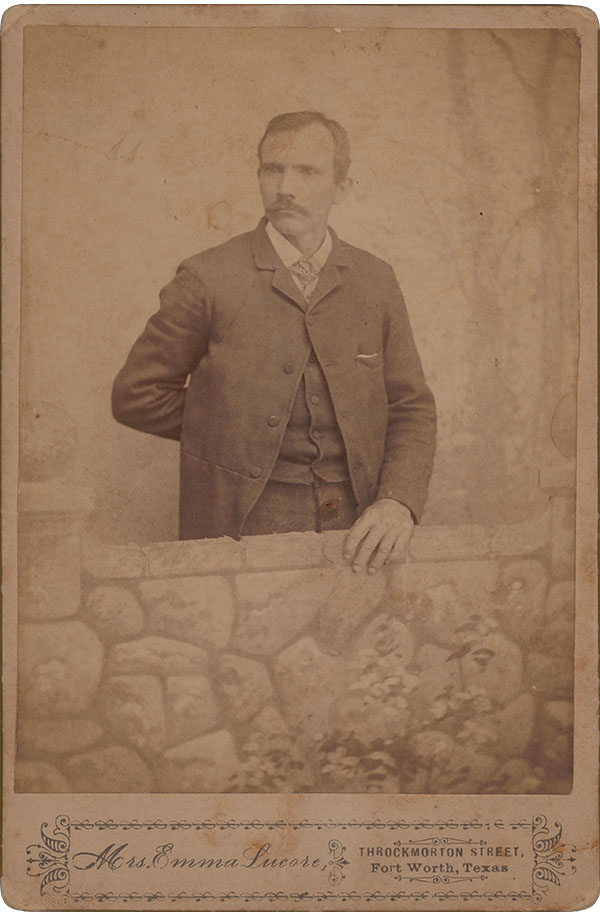
(Courtesy Tarrant County Archives)
(Courtesy Tarrant County Archives)
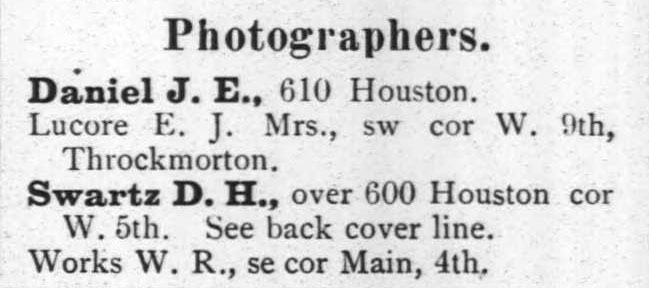
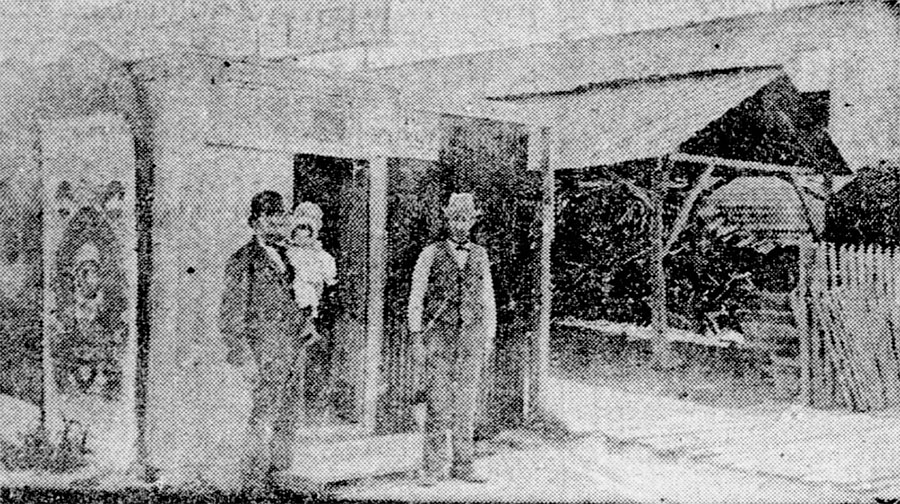
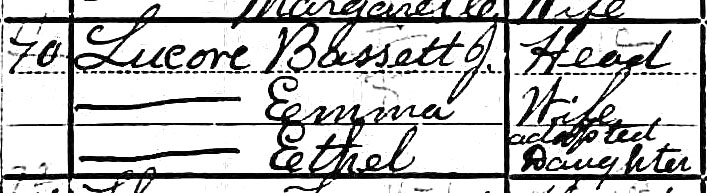
The record of Ethel Lucore's early years is murky. Inconsistencies abound as to her birthplace, birth year, and age at any given time. Unfortunately, the vast majority of the 1890 Census has not survived, but a 1900 Census taker recorded Ethel's birthplace as the state of Missouri, her father born in Illinois and her mother born in what appears to read as French Canada. What is consistent over time is Ethel's birthday of August 26th. The 1900 Census records an age of eight years, one of the first of an ongoing series of age discrepancies which would be reinforced through various paperwork and print announcements across multiple decades despite its veracity being contradicted by available evidence. Eventually, a birth date of August 26, 1890 would be formally established in official records.[2] The inaccuracy of the presumed 1891 birth year is backed up by newspaper solicitations placed by Emma in October of 1890 seeking "a woman to take care of gallery and do housework for small family." A photograph of the Lucore yard at 9th and Main, said to date to 1890 (but probably taken in 1891), provides further reinforcement. In the image two hat-wearing men can be seen posed in front of the entrance. One of them – presumably Bassett – is holding a little girl on his arm.
In the years since he had originally set up shop, Bassett had actively managed the wood and coal company to at least some degree of success. By the year of Ethel's adoption, he was in partnership with John T. McGraw and was advertising low rates for fuel to all potential customers via not only the Daily Gazette, but even in Torchlight Appeal, the local "Negro" paper. Things weren't all sunshine and roses – the 1891 County Court Docket recorded cases involving both him and Emma against C.F. Smith, presumably for monies owed, and the Fort Worth Daily Gazette related an 1893 incident involving gunfire associated with Bassett's attempt to collect on a debt. Overall, though, there is scant if any indication that Lucore & Co. was anything less than sufficiently prosperous. Perhaps it was decided that Bassett's business venture should be the one to provide for the family and that Emma should be at home with their adopted child, in keeping with the proprieties of the time. We don't know and can only guess.
Whatever the reasons behind it, Emma appears to have made her exit from the photography business near the end of, or shortly after, 1892. The city directory of that year records her and Bassett as residing at the northeast corner of 12th Street and Jones in North Fort Worth. Subsequent editions of Morrison & Fourmy's General Directory through the end of the century omit Emma's name entirely, suggesting that she was engaged in domestic pursuits and thus not meriting inclusion at a time when non-working, non-widowed married women were often ignored in directory listings. Bassett continued with his business, entering a partnership with Thomas Hill by 1892 and seeking additional laborers alongside the usual advertisements for fuel and wood. By mid-decade, seemingly on his own and no longer in conjunction with a business partner, he expanded into produce and dairy, re-situating "Lucore's" a block farther south to 1004-1006 Main Street. This may have been indicative of a change in his fortunes, or perhaps an early sign of a desire to change industries. All indications are that by 1899, Lucore & Co. as it had once existed was no more, with Bassett having taken to advertising furnished rooms at 1010 Houston Street in November of that year. The 1900 Census taker recorded his occupation as that of landlord, with no occupation listed for Emma, and with Ethel recorded as "at school." This was to be the final time the Lucores were officially documented as a unit.
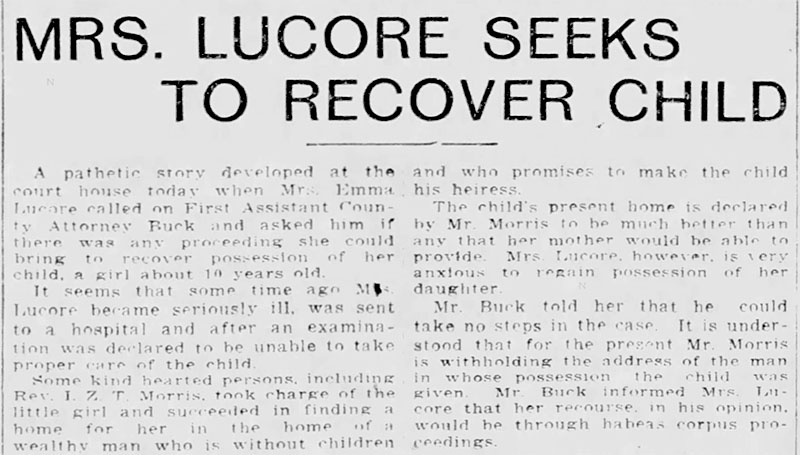
In October 1900, Emma filed for divorce from Bassett. The marriage, however happy it may have been at its inception, had clearly ceased to be so by this time, and the notice in the Fort Worth Morning Register recorded Emma's allegations against her husband as "cruelty and unfaithfulness." The ensuing divorce proceedings marked the beginning of a sharp decline in the fortunes of the seamstress and one-time photography entrepreneur. In March of 1901, barely five months after the divorce filing, Emma's mother Louisa died in Sentinel, Oklahoma. Louisa's obituary indicated the cause was heart disease, and that she had frequently visited Emma at her home in Fort Worth. By September, perhaps in a bid to make ends meet, Emma took to work for T.P. Day of 52 Main Street, peddling copies of a book memorializing the recently-assassinated president McKinley. Period advertisements show she was not alone in this effort, with The Illustrious Life of William McKinley, Our Martyred President being simultaneously hawked by numerous other agents with additional representatives being solicited. May of 1902 found Emma facing charges for trespassing, and the month of June saw the disappearance of a nine-year-old horse from her residence (whether it was ever recovered is unclear). By November, Emma had fallen ill and was in need of assistance, and this led, tragically, to perhaps the greatest misfortune of them all: the removal by authorities of her daughter Ethel.

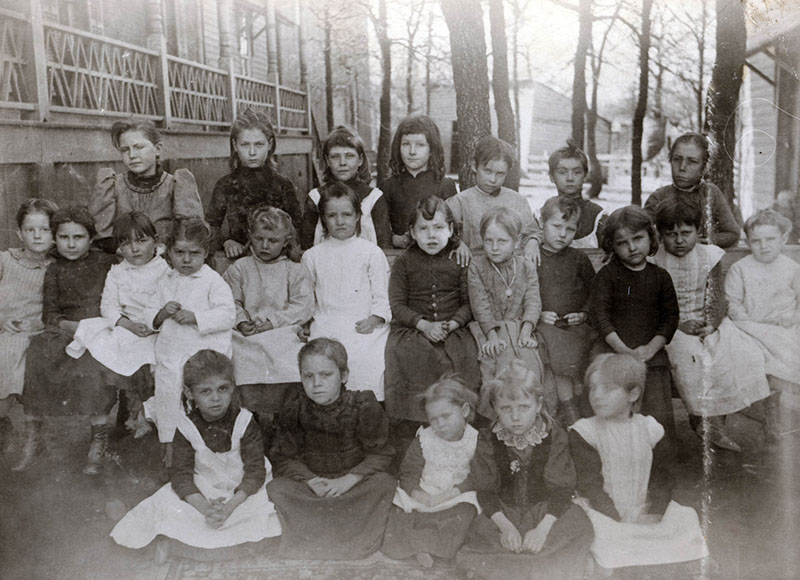
Exactly when the removal took place is unclear. The rationale given for Ethel's displacement was that Emma was in a "low state of health" with a hospital examination proving her unable to properly care for her. Upon her recovery, Emma engaged in a months-long effort to regain custody, seeking relief via the courts and pleading her case to the Fort Worth Benevolent Orphans' Home board of trustees. As a consequence of her mother's illness, Ethel had been handed over to the Home, where she spent several months before being placed in the custody of an unnamed individual outside of the city. Records available through genealogy sites suggest that this location was in Paris, Texas, some 120 miles from Fort Worth, and that the chosen benefactor was a man of means who lacked children of his own. Whether or not Emma was eventually made aware of her daughter's location is unconfirmed, but it's quite possible that she was based on anecdotal accounts of correspondence between Ethel and Bassett. Unfortunately, Emma's pleas to the authorities fell on deaf ears. On September 4, 1903, Emma's request to regain custody of Ethel was denied by County Judge Robert F. Milam, who refused to issue an order for the child's return on the grounds that she had been placed in a good home.
(Courtesy of the Fort Worth History Center, Fort Worth Public Library. Historic Photograph Collection, G-0035)
And what of Bassett during this period? In early 1902 he transferred two lots in North Fort Worth to the Fort Worth National Bank, possibly the lots for the home he had once shared with Emma. Following the divorce, he returned to Cedar Rapids, where members of his family still lived. The 1906 Cedar Rapids City and Business Directory recorded the now sixty-nine-year-old Bassett J. Lucore working as a watchman for the Warfield-P-H, Co, and residing on North 11th Street. He would ultimately die in January 1907. For the entirety of this time, he appears to have kept in touch with his adopted daughter via letters, initially addressed to her in Fort Worth and then to Paris, Texas through mid-1903 and early 1904 before following her to Denver, Colorado. These letters are the best indication that he (and likely also Emma) were aware of Ethel's whereabouts, or that there was at least an intermediary who could facilitate communication. Certainly the divorce of the Lucores and Emma's subsequent status as a single parent had factored heavily into the decision to remove Ethel, with Bassett's absence likely proving decisive.
It is here that Ethel's history and movements become a bit muddled. Statements made via the figures involved in her removal and by Bassett's letters strongly suggest a residence in Texas. A 1918 announcement appearing in the Republican City Ranger however, indicates that she ended up in Republican City, Nebraska by 1904. Although this seems like an inconsistency, it is supported by a strong body of evidence pulled together by cross-referencing different sources and published accounts from years later. How and why Ethel ended up in Republican City is unclear from publicly available information. Whether Emma ever regained official legal custody of her is also unclear, but their separation would not be a permanent one. The 1904 Morrison & Fourmy city directory records Emma as rooming on East 2nd Street in Fort Worth (incorrectly denoting her as widowed), but following that entry she disappears from any available city directories until 1907, when she turns up as Emma Hollister in Denver, Colorado at 1033 Broadway. Residing at that same apparent boarding house was one Ethel Lucore, student. Did Emma meet up with her adopted daughter in Nebraska and move with her to Colorado? Did she follow her to Denver? Did the wealthy individual in whose custody Ethel was placed foot the bill for her nursing studies? These are questions that can only potentially be answered by Ethel's descendants, and will not be addressed here. However the two ended up in Denver together, it is clear that they had been reunited, and from this point onward they would never lose contact.


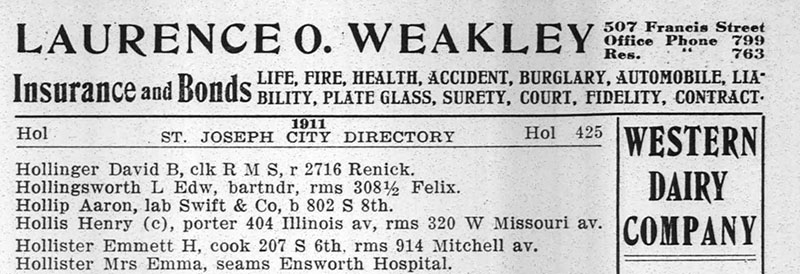
Around 1907 or sometime not long after, following the completion of Ethel's nursing training, mother and daughter moved to Pawnee City, Nebraska. Ethel would eventually meet fireman Clarence Karns of Holt county, Missouri, and the two of them would marry on December 1, 1909. With Ethel leaving for a life on a farm in Benton, Missouri, Emma was left alone to care for herself. Now sixty-two years old, she supported herself as a seamstress, and, along with Ethel, she took up work with the American Women's League. By 1911 Emma was working as a seamstress at the Ensworth Hospital in St. Joseph, Missouri. She continued to visit Ethel regularly over the next few years, traveling back and forth between St. Joseph and Mound City, Missouri, often staying for long spells, employing her sewing skills in support of orphans and the disadvantaged all the while. An October 1915 call to action placed in the Mound City News-Independent requested that usable scraps of material useful for making items of clothing be sent to E. Hollister for use toward the Sheltering Arms Orphanage of St. Joseph. During wartime (a time which saw Ethel working at Noyes Hospital in St. Joseph), Emma worked via the Women's Service League as a club director for their Children's Department, and during the winter of 1917 she committed herself to Red Cross service work.
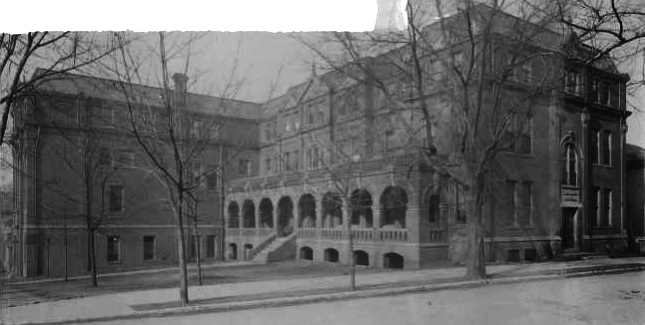
(Public domain, courtesy of The State Historical Society of Missouri)
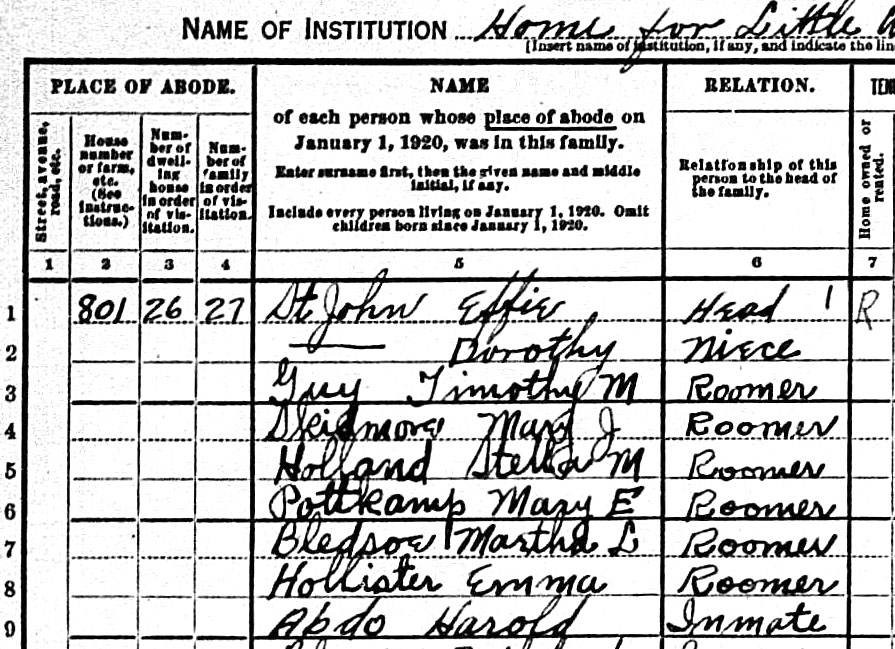
By 1920 Emma had settled permanently in St. Joseph, Missouri, taking up residence at the Home for Little Wanderers. Information concerning her specific time there are scant; what can be pieced together from the few public records and society notices related to her suggest that, following the war, her life centered around her work with the organization and around visiting Ethel and her family. The Census of that year records her as a wage worker and sewing room superintendent, and the 1924 St. Joseph city directory – one of the last in which she appeared – refers to her as a seamstress for the Home. Her photography days now long behind her, Emma appears to have dedicated herself fully to her charitable pursuits of the previous decade. In late 1924, Ethel, now residing in Savannah, Missouri, was granted a divorce from Clarence Karns. She would subsequently remarry to farmer/rancher Byron Ufford and move to Morrill county, Nebraska, where the two of them welcomed the birth of their daughter in August of 1930. Emma's final visit to her own adopted daughter, likely made to meet the new addition to the family, took place shortly afterward.
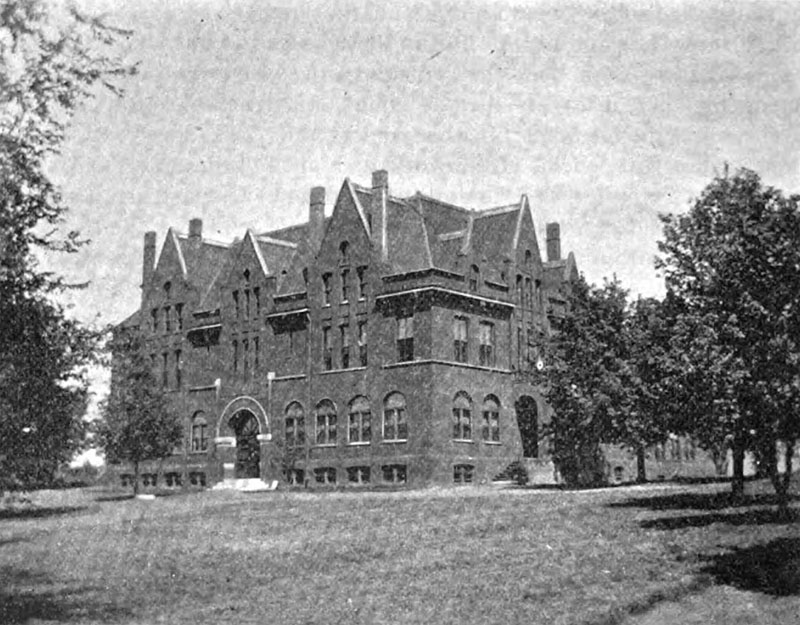
(Public domain, originally published in Medical Herald, 1895)
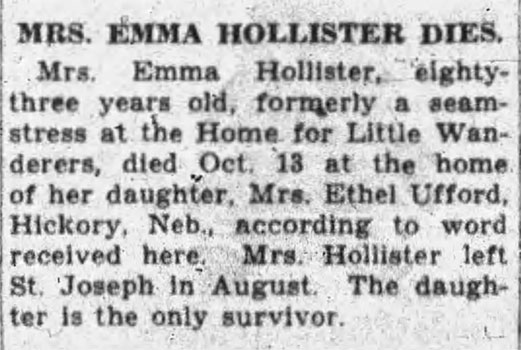
The St. Joseph newspapers of September 1, 1930 reported a previous day's slip and fall at the corner of Twenty-fourth and Felix Streets. The victim, eighty-three-year-old Mrs. Emma Hollister, was taken to Noyes-Baptist Hospital where she was treated for bruises, her injuries judged as not serious. One month later, Mrs. Hollister was in Hickory, Nebraska, outside Bridgeport, where she passed away, the victim of an apparent stroke. Her cause of death was recorded as apoplexy, and she was cremated following a service at the W.A. Canaday Mortuary in Bridgeport. Whether the previous month's fall was a contributing factor is unknown; what is for certain is that her final nine days were spent in the company of family, with the daughter whose custody she had once fought so hard to recover.
Emma Lucore was a pioneer whose name and legacy are today recognized only by a small cadre of historians and early photography aficionados. With this post, I've tried to give some insight into her life and accomplishments, and to call attention to her as one of the important names in the story of nineteenth century Fort Worth. Unfortunately, examples of her studios' output are quite scarce and hard to come by in the twenty-first century. And despite at least one of her studios having evidently been a hive of activity, at least for a time, no reliably authenticated photos of Lucore herself appear to have surfaced publicly. A handful of images in which individuals are identified as Emma Lucore have made the rounds on genealogy sites, but there are obvious discrepancies when their age and provenance are viewed in context of the timeline I've been able to assemble from extant historical records. What motivated her, how she found her way into the photography industry, the exact level of skill she had behind the camera and how much of her output she produced with her own hands versus the amount produced by hired hands – the answers to all these questions remain as frustratingly elusive at the end of my research into her as they were going into it. Certainly nothing in her life (that we know of) prior to the establishment of the first studio suggested that she would make a name for herself in photography, but make a name she did. Nearly four decades after the end of her career, The Fort Worth Star-Telegram ran a piece titled "Down Memory Lane," which called out the Lucore studios on Throckmorton and Main alongside the more recognized, better remembered outfits run by Kline, Blair, Leffler, and Daniel. It was a good company to be in, indeed.
- 1. Gurney Ward is well known for his adventures in pursuit of allegedly lost Spanish treasure, an obsession which arguably overshadows his not inconsiderable time spent in the photography business. The Spider Rock Treasure: A Texas Mystery of Lost Spanish Gold by Steve Wilson (published 2004), describes many of these quests in detail.
- 2. On June 2, 1955, Ethel applied in the Andrew County, Missouri civil court for declaratory judgment of date and place of birth, a case which was heard by the court in November of that year. Ethel's 1963 death certificate thus states her birth date as August 26, 1890 and her birthplace as Texas, and lists her parents as Bassett and Emma (although it incorrectly records Bassett as Basil J. Lucore).
Greetings:
Tonight I found the DOD for her business partner for some years, Gurney E. Ward, Sr. He moved from TX to NM. I created a FAG memorial for him.
https://www.findagrave.com/memorial/306401168/gurney-enoch-ward
His daughter, Jewel, provided the DC info. I recently purchased 2 nice Lucore & Ward photos. They are a part of my 2026 RTH mini-grant for the Portal to Texas History. They should appear in 1.5-2 yrs. once I get them to UNT.
Thanks!
I wonder if those were the two photos in the eBay auction that just ended? 😄 I believe the T.B. Willis collection that’s on the Portal right now includes card images from a few studios I’ve been trying to source for a long time, for future blog posts (Scott, Rohde, Willyerd, Harper & Co., Atkinson, and some alternate logos for a few others). Good to hear from you!
Hi,
Are familiar with TX photographer, Philip G. Saboungi ?
https://www.findagrave.com/memorial/275108908/philip-g-saboungi
My source of his info. was a Kevin Mackey.
Best,
T B Willis
No, I have never heard of him.