
bookmark_borderGhosts of DFW music history: Tombstone Factory

This is part of a continuing series of posts exploring locations of former DFW musical landmarks and the stories behind them.

Tombstone Factory show flyer, 1986
During the mid to late 1980s, the Fort Worth metal scene was on fire. While Dallas had its coffee shops, punk clubs, and new wave hot spots, a burgeoning rock music scene with its own distinctive identity was gaining currency on the west side. Of course, these two cultural movements did not exist in a vacuum, and as geography would suggest, there was indeed crossover between them which was evidenced by the existence of certain venues and a sharing of some of the principal players, fans, and musicians. But, broadly speaking, the west side of town was the more metal, a more welcoming place for headbangers and longhairs and for those interested in a more hardcore style of music. On the far westernmost edge of town there was Joe's Garage, but for those who were perhaps unenthusiastic about the long drive, there was the Tombstone Factory.

The story of the Tombstone Factory's origin has become legendary, repeated vigorously and vociferously in person, online, and via the printed page. It has been shared via anecdotes and reminiscences and secondhand accounts, circulated year after year both by word of mouth and electronically, echoed again and again in blogs and social media posts and print articles to an ever widening audience. It has found increasing legitimacy not only among those who were actually there, but among those who have since come afterward. Yet the full story of the Tombstone Factory – and its surprising antecedent – has never heretofore been told. Where the building came from, the reasons behind its construction and unique design, how it actually came to get its name, and what it actually was in its previous life – these are questions whose answers have until now been obscured by local mythology, conjecture, or even outright misinformation, for decades. The actual history is as surprising as it is unexpected, involving creatives and participants from very different communities with barely any connection between them save the one which resulted, indirectly, in the Factory's well-known name. That is the story that will be told here, and it begins in a most unlikely place.

Continue reading "Ghosts of DFW music history: Tombstone Factory"
bookmark_borderLoving Day

June 12, or Loving Day, is an unofficial holiday set aside to mark the anniversary of the 1967 Loving v. Virginia Supreme Court decision. Loving finally affirmed the right of interracial couples to marry in all fifty states - and, not incidentally, legitimized the very existence of people like me into law - in the sixteen states where such unions were still illegal. In recognition of this anniversary, I have assembled a collection of thirty-two photos depicting both obvious and likely examples of such couples, most of them everyday people, from both before and after the Loving decision, as immortalized via the photographer's lens. Most are drawn from my vintage and antique photo collection.

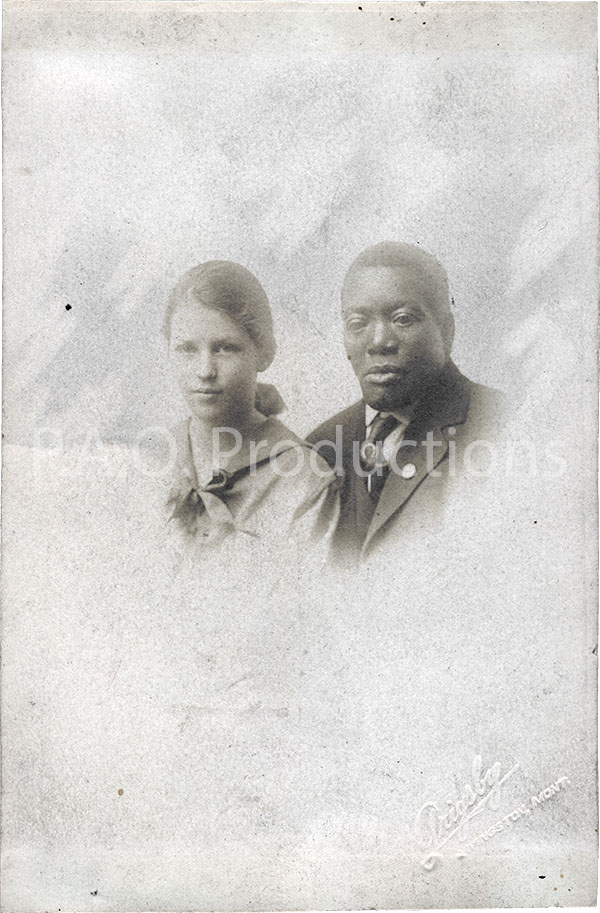
Montana couple, circa late 1900s/early 1910s

Late nineteenth century Montana had its share of discriminatory practices, even if it was something of an outlier in the U.S. as a whole with its lack of enforced segregation in public schools, universal (male) suffrage, and (until 1909) lack of a law prohibiting interracial marriage between whites and non-whites. Discrimination and prejudice did of course exist, but this couple - if they were a couple, as they appear to be - apparently decided to weather those particular storms together. Photographer Victor Grigsby opened his first Livingston studio in early 1908, placing the time of this photo at around the end of the aughts or the 1910s.
Montana interracial couple, early 1900s
Montana couple, circa early 1900s
Continue reading "Loving Day"