The adventures and various works of a photographer, road tripper, former patron of the local arts, aspiring app developer, and late night coffee drinker and conversationalist.
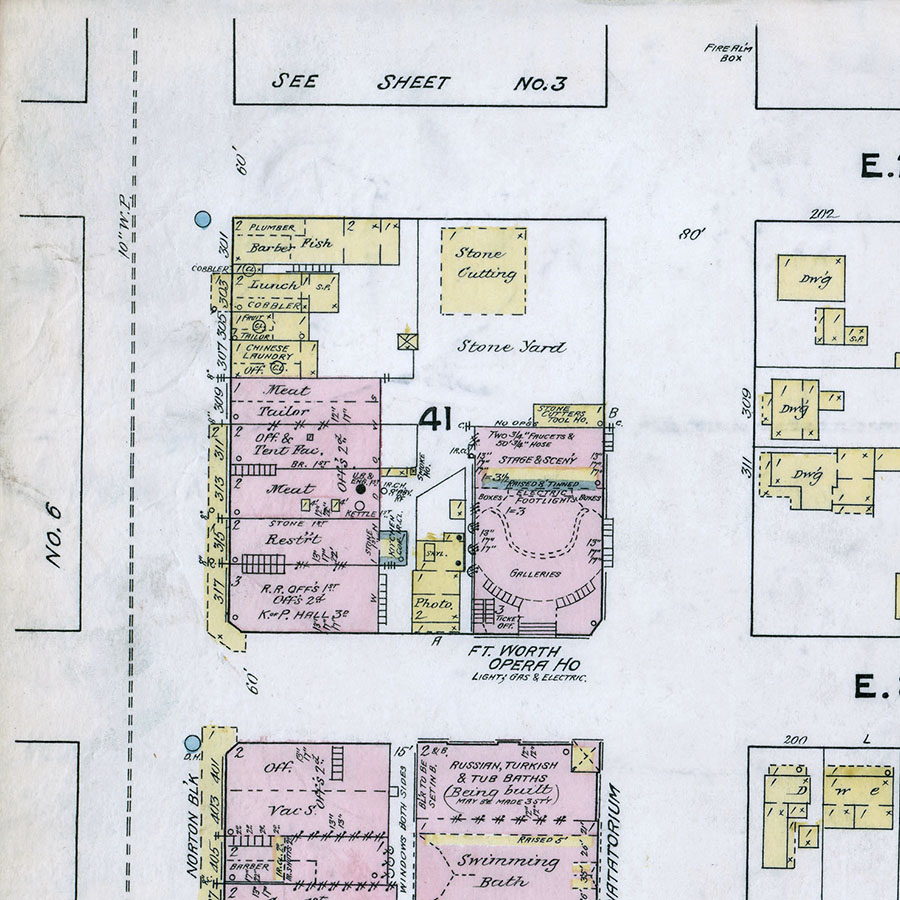
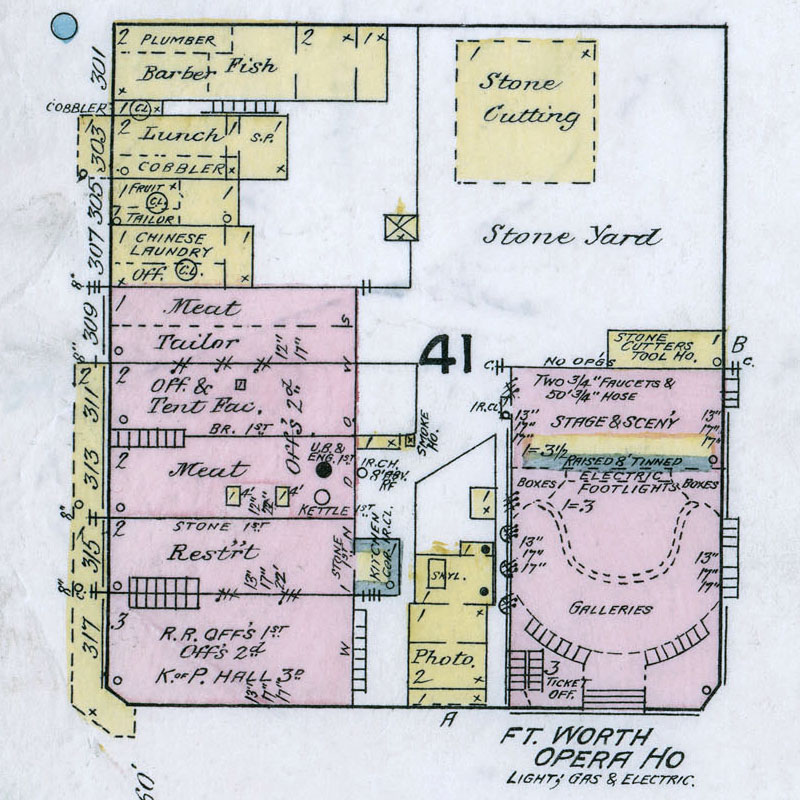
Emma Lucore's first Fort Worth studios were at 109 E 3rd Street, next door to the original Fort Worth Opera House, and at 808 Main Street, one block north of husband Bassett's wood and coal yard. Both these original studio locations are still in use today by active businesses. I paid a few visits to the area to get a look at the sites as they stand in the 21st century. On one of my visits, I was accompanied by a friend.
Detail of 1889 Sanborn insurance map, recording the Fort Worth Opera House and photo studio next door
Continue reading "Emma Lucore follow up: Visiting the old locations in 2025"
(Update: I visit the old Fort Worth studio locations in this follow up post)
If you're a follower of this blog and website, you know that one of my interests is photography, both contemporary and historical. I've featured several collections of vintage and antique photos alongside my own, and I'm currently in the midst of a longish-term project to chronicle the histories of early local photographers. Toward this end, about five months ago, I began assembling a collection of Fort Worth-area cabinet cards. These included works by Burdge, Daniel, Mignon, Swartz, Thomason & Leffler, Works, and one of my rare acquisitions from a female photographer, Emma Lucore. I'd never heard of Emma Lucore before then, and I decided to have a look into who she was and how long her studio was in operation.
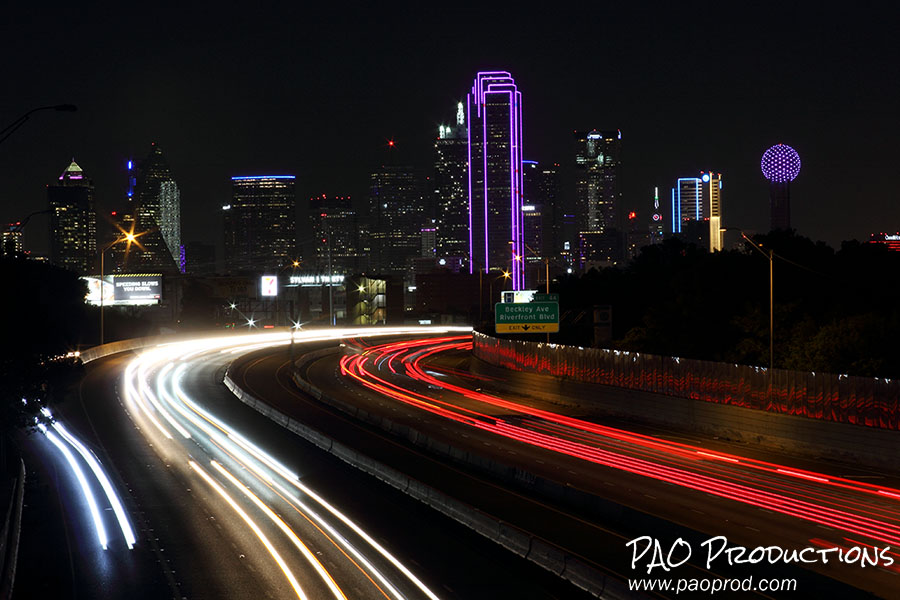
Photographing nighttime skylines is one of my favorite pursuits when I go out with my camera. On many of my road trips across both the United States and Canada, I've tried to do this whenever possible, and I've captured both partial and full skylines in cities such as Vancouver, Montreal, Edmonton, Detroit, Philadelphia, and New York. Closer to home, I've spent a good amount of time looking for the best vantage points in the Dallas area to capture a good view of the Downtown skyline, and I'm presenting several of those here. These are spots where it's practical for a normal person to take a photo, and the places listed below are all easily accessible without a lot of effort.
N. Edgefield Avenue bridge over Interstate 30
A great place to capture the full Dallas skyline is on North Edgefield Avenue over Interstate 30, just south of Fort Worth Avenue. Not only does this location give one of the best views of the skyline, it also offers a chance to get some cool light trails at night via a long exposure. And, unlike some of the other spots on this list, it provides a view of Downtown which includes Reunion Tower.
This area feels a bit sketchy, so if you're doing night shooting it might not be a bad idea to take along a companion to watch your back.
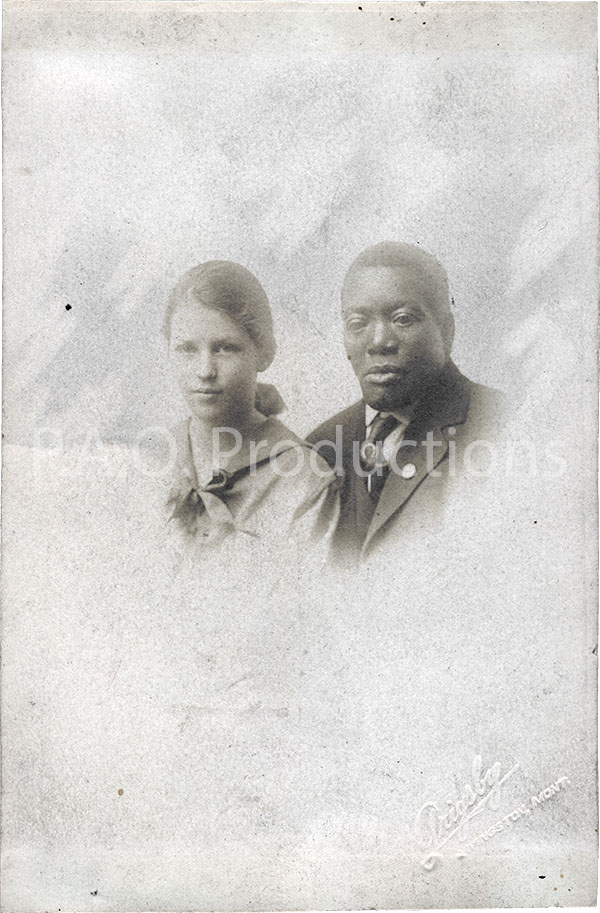
June 12, or Loving Day, is an unofficial holiday set aside to mark the anniversary of the 1967 Loving v. Virginia Supreme Court decision. Loving finally affirmed the right of interracial couples to marry in all fifty states - and, not incidentally, legitimized the very existence of people like me into law - in the sixteen states where such unions were still illegal. In recognition of this anniversary, I have assembled a collection of thirty-two photos depicting both obvious and likely examples of such couples, most of them everyday people, from both before and after the Loving decision, as immortalized via the photographer's lens. Most are drawn from my vintage and antique photo collection.
Montana couple, circa late 1900s/early 1910s
Late nineteenth century Montana had its share of discriminatory practices, even if it was something of an outlier in the U.S. as a whole with its lack of enforced segregation in public schools, universal (male) suffrage, and (until 1909) lack of a law prohibiting interracial marriage between whites and non-whites. Discrimination and prejudice did of course exist, but this couple - if they were a couple, as they appear to be - apparently decided to weather those particular storms together. Photographer Victor Grigsby opened his first Livingston studio in early 1908, placing the time of this photo at around the end of the aughts or the 1910s.
Montana couple, circa early 1900s
Continue reading "Loving Day"