The adventures and various works of a photographer, road tripper, former patron of the local arts, aspiring app developer, and late night coffee drinker and conversationalist.
(Update: I visit the old Fort Worth studio locations in this follow up post)
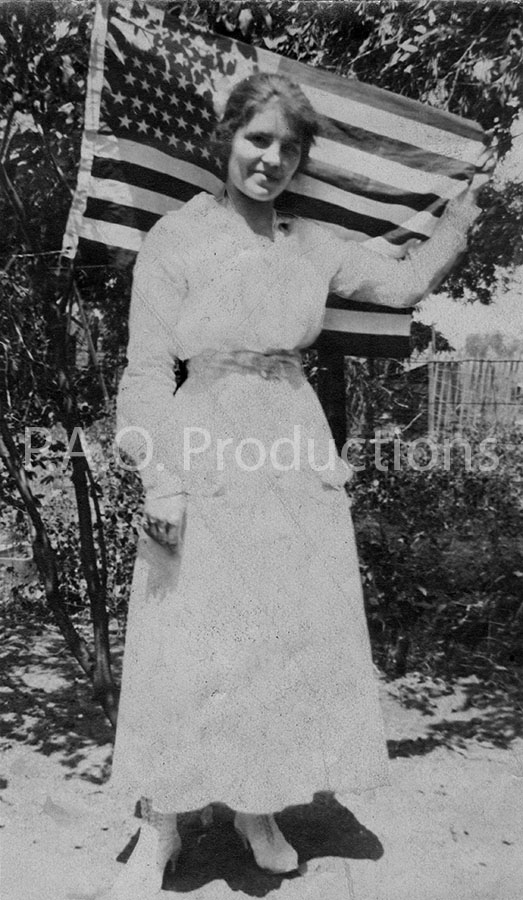
If you're a follower of this blog and website, you know that one of my interests is photography, both contemporary and historical. I've featured several collections of vintage and antique photos alongside my own, and I'm currently in the midst of a longish-term project to chronicle the histories of early local photographers. Toward this end, about five months ago, I began assembling a collection of Fort Worth-area cabinet cards. These included works by Burdge, Daniel, Mignon, Swartz, Thomason & Leffler, Works, and one of my rare acquisitions from a female photographer, Emma Lucore. I'd never heard of Emma Lucore before then, and I decided to have a look into who she was and how long her studio was in operation.
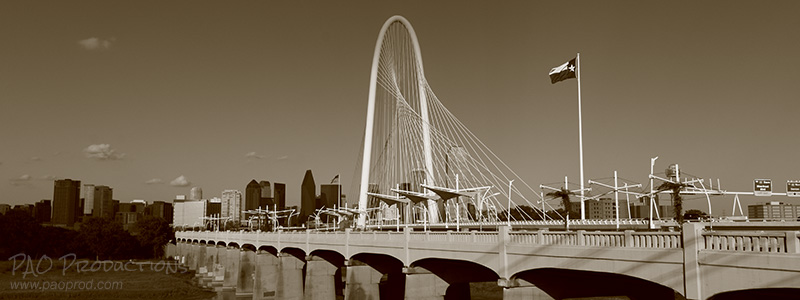
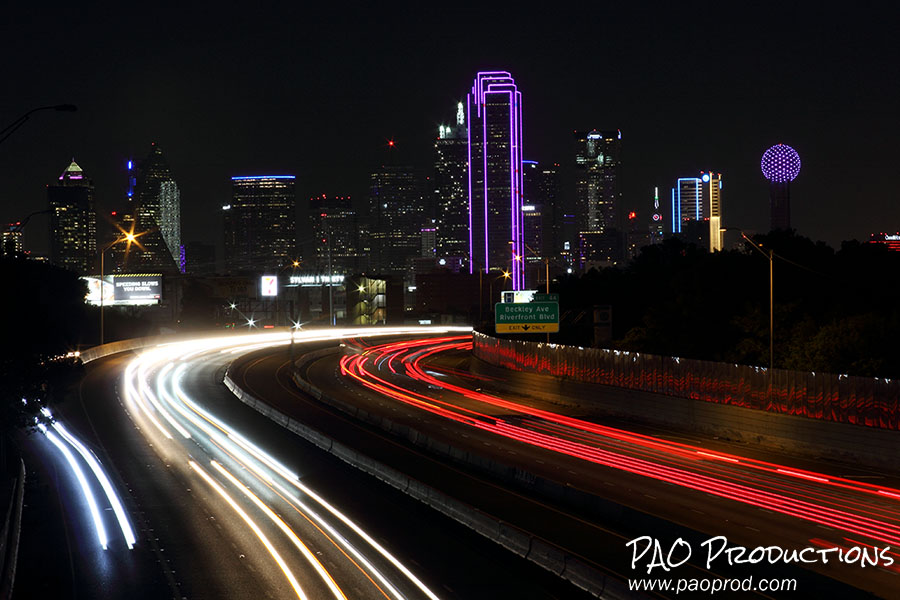
Photographing nighttime skylines is one of my favorite pursuits when I go out with my camera. On many of my road trips across both the United States and Canada, I've tried to do this whenever possible, and I've captured both partial and full skylines in cities such as Vancouver, Montreal, Edmonton, Detroit, Philadelphia, and New York. Closer to home, I've spent a good amount of time looking for the best vantage points in the Dallas area to capture a good view of the Downtown skyline, and I'm presenting several of those here. These are spots where it's practical for a normal person to take a photo, and the places listed below are all easily accessible without a lot of effort.
N. Edgefield Avenue bridge over Interstate 30
A great place to capture the full Dallas skyline is on North Edgefield Avenue over Interstate 30, just south of Fort Worth Avenue. Not only does this location give one of the best views of the skyline, it also offers a chance to get some cool light trails at night via a long exposure. And, unlike some of the other spots on this list, it provides a view of Downtown which includes Reunion Tower.
This area feels a bit sketchy, so if you're doing night shooting it might not be a bad idea to take along a companion to watch your back.
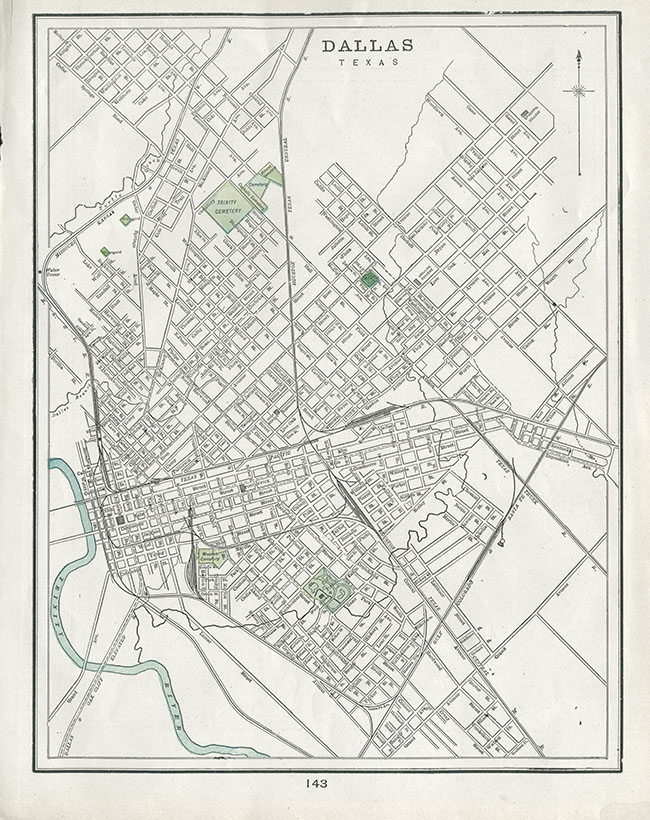
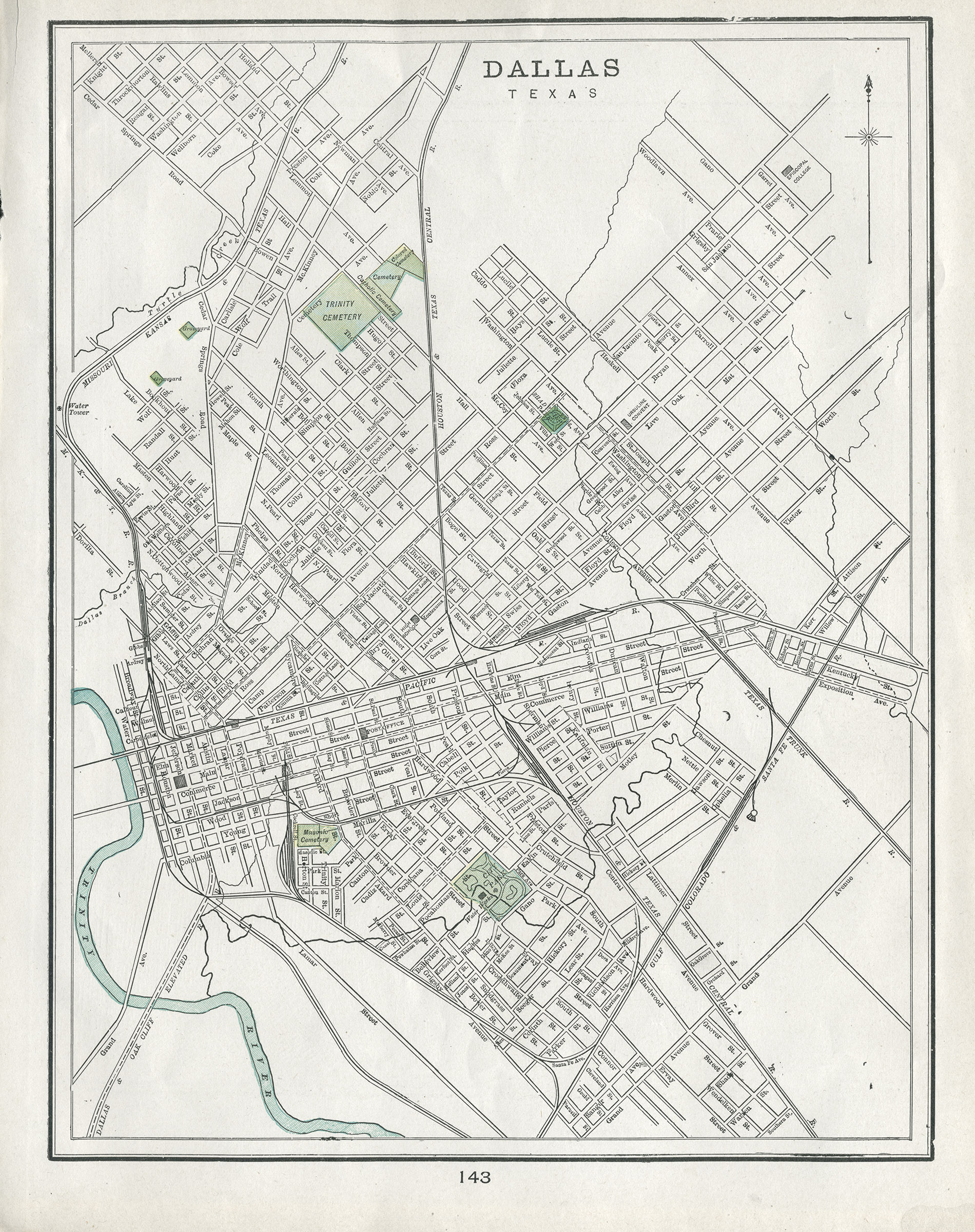
Some time ago I acquired this original copy of a map of early Dallas. The map was advertised as being from 1902, but the streets as laid out are more indicative of Dallas in the late 1880s. The map shows not only the layout of Dallas's road system as it existed in the late 19th century, but also shows the original names of a great number of streets before subsequent changes were made over succeeding decades. Sycamore north of Commerce Street hasn't yet been renamed to Akard, and Carondelet north of Pacific Avenue, by the Trinity River, hasn't yet been renamed as an extension of Ross Avenue. Present-day Record Street still shows as Jefferson, Ervay Street is still Oleander north of Pacific Avenue, and the route of present-day Saint Paul Street still exists as Masten and Evergreen Streets. Streets that are long gone, such as Calhoun and Walnut Streets north of Carondelet, are depicted. And there are also some slight inaccuracies: for example, Harwood is amusingly misspelled as "Hardwood" south of Commerce Street. Lastly, you can see the original alignment of the Trinity River before its relocation and straightening in 1928. Oak Cliff, Dallas's then-sister city and not yet annexed, is not represented.
The map page, which has a map of San Francisco on the other side, was one page of what was clearly a larger volume. It's likely that the same map was reproduced year after year in whatever volume this was (assuming it was a recurring collection). Thus, it's possible that my particular copy does indeed date to 1902. Without seeing the entire collection, I can't be sure.
You can download this scan in a larger size here. I've also uploaded it to the Internet Archive in an extra large size.
I believe this type of historical information should be made easily available and accessible to the public, not barricaded behind paywalls or hoarded behind closed doors by museums, archives, and collectors.
This is part of a continuing series of posts exploring locations of former DFW musical landmarks and the stories behind them.
Tombstone Factory show flyer, 1986
During the mid to late 1980s, the Fort Worth metal scene was on fire. While Dallas had its coffee shops, punk clubs, and new wave hot spots, a burgeoning rock music scene with its own distinctive identity was gaining currency on the west side. Of course, these two cultural movements did not exist in a vacuum, and as geography would suggest, there was indeed crossover between them which was evidenced by the existence of certain venues and a sharing of some of the principal players, fans, and musicians. But, broadly speaking, the west side of town was the more metal, a more welcoming place for headbangers and longhairs and for those interested in a more hardcore style of music. On the far westernmost edge of town there was Joe's Garage, but for those who were perhaps unenthusiastic about the long drive, there was the Tombstone Factory.
The story of the Tombstone Factory's origin has become legendary, repeated vigorously and vociferously in person, online, and via the printed page. It has been shared via anecdotes and reminiscences and secondhand accounts, circulated year after year both by word of mouth and electronically, echoed again and again in blogs and social media posts and print articles to an ever widening audience. It has found increasing legitimacy not only among those who were actually there, but among those who have since come afterward. Yet the full story of the Tombstone Factory – and its surprising antecedent – has never heretofore been told. Where the building came from, the reasons behind its construction and unique design, how it actually came to get its name, and what it actually was in its previous life – these are questions whose answers have until now been obscured by local mythology, conjecture, or even outright misinformation, for decades. The actual history is as surprising as it is unexpected, involving creatives and participants from very different communities with barely any connection between them save the one which resulted, indirectly, in the Factory's well-known name. That is the story that will be told here, and it begins in a most unlikely place.